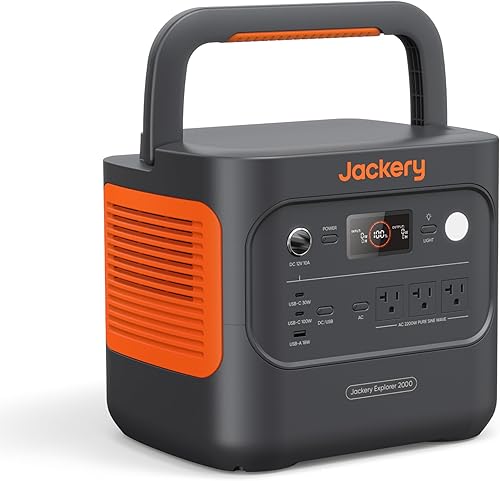
Goal Zero Yeti 700 vs. EcoFlow RIVER 3 Plus
As an Amazon Associate I earn from qualifying purchases. Read our affiliate disclosure.
Top picks at a glance
 Best for more runtimeGoal Zero Yeti 700View on Amazon
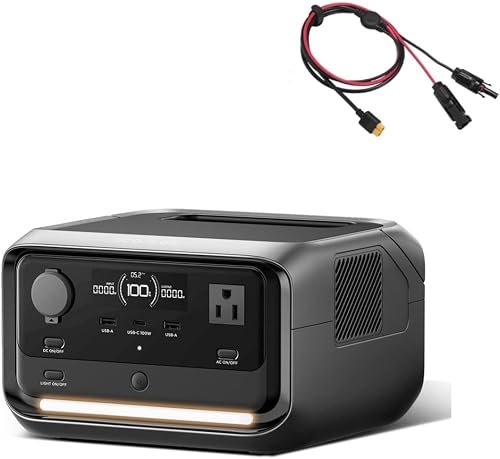 Best for a light packEcoFlow RIVER 3 PlusView on Amazon
The Goal Zero Yeti 700 is the better choice if you want a full weekend of light loads from one charge. It holds 677 Wh against the RIVER’s 286 Wh. The EcoFlow RIVER 3 Plus makes more sense if you carry it often, since it weighs 10.4 lb, about half of the Yeti’s 20.3 lb.
We compared the two using the specs Goal Zero and EcoFlow published as of November 2026. We have not handled or tested either unit.
Yeti 700 vs. RIVER 3 Plus at a glance
| Spec | Goal Zero Yeti 700 | EcoFlow RIVER 3 Plus |
|---|---|---|
| Capacity | 677 Wh | 286 Wh |
| Add a battery? | Not chainable | Yes, up to 858 Wh |
| AC output | 600 W | 600 W |
| AC charge | About 1.7 hours on fast charge | 1 hour |
| Solar input | 200 W | Not listed |
| UPS switchover | Not listed | Under 10 ms |
| Use range | -4°F to 140°F | Not listed |
| Battery rating | 4,000+ cycles to 80% | Over 10 years to 80%, per EcoFlow |
| Weight | 20.3 lb | 10.4 lb |
| Warranty | 5 years | 5 years |
What’s the same
Both stop at 600 W of AC output. That rules out coffee makers, hair dryers, and most other heating appliances on either unit. If you need more than 600 W, look at a 1 kWh station instead.
Both use LiFePO4 batteries, and both carry a 5-year warranty.
Where the Goal Zero Yeti 700 wins
Runtime: 677 Wh is 2.4 times the RIVER’s capacity, all in one box with nothing extra to connect.
Temperature range: Goal Zero rates the Yeti for use from -4°F to 140°F. We couldn’t find a temperature range on EcoFlow’s page for the RIVER.
Published solar figure: Goal Zero lists 200 W of solar input and a 3.8-hour solar refill at that rate. EcoFlow gives a solar time of as fast as 1.5 hours, but no input wattage.
Where the EcoFlow RIVER 3 Plus wins
Weight: at 10.4 lb, it’s the one you can slip into a day bag or carry with one hand.
Charging speed: EcoFlow lists a full wall charge in 1 hour. The Yeti needs about 1.7 hours on fast charge.
UPS switchover: EcoFlow lists under 10 ms, which suits a router or small home office. We didn’t find a switchover time for the Yeti 700.
Room to grow: you can add an Extra Battery later to reach 858 Wh. Goal Zero says the Yeti 700 isn’t chainable.
How many phone and laptop charges?
Assume a 45 W load, such as a laptop charging, and 85% of each battery reaching the device.
| Model | Usable energy | Hours at 45 W |
|---|---|---|
| Goal Zero Yeti 700 | About 575 Wh | About 12.8 hours |
| EcoFlow RIVER 3 Plus | About 243 Wh | About 5.4 hours |
| RIVER 3 Plus with Extra Battery | About 729 Wh | About 16.2 hours |
The two stations in detail
Goal Zero Yeti 700
- Capacity
- 677 Wh
- AC output
- 600 W
- Solar input
- 200 W
- Weight
- 20.3 lb
Who it's for: People who need more energy than a small station holds, but mostly run low-power devices.
Strengths
- Rated for use down to -4°F
- Fills the gap between small and 1 kWh stations
- Rated to keep 80% capacity after 4,000+ cycles
Weaknesses
- 600 W limits what you can run
- 200 W of solar input is low
EcoFlow RIVER 3 Plus
- Capacity
- 286 Wh
- AC output
- 600 W
- AC charge
- 1 hour
- Weight
- 10.4 lb
Who it's for: People who mainly charge phones and laptops or keep Wi-Fi on, and want a station that's easy to carry.
Strengths
- Easy to carry at 10.4 lb
- Expandable to 858 Wh
- Listed at under 30 dB
Weaknesses
- Small capacity for high-power devices
- 600 W limits what you can run
How to choose
- You camp for two or more nights without recharging: Goal Zero Yeti 700
- You camp in freezing or very hot weather: Goal Zero Yeti 700, which has a published range for both
- You mostly need power for a day trip or the car: EcoFlow RIVER 3 Plus
- You want a backup for Wi-Fi at home too: EcoFlow RIVER 3 Plus, for its listed switchover time
- You aren’t sure how much you’ll need: the RIVER, since you can add a battery later
Our full reviews of the Yeti 700 and RIVER 3 Plus cover each one in more depth. For more small options, see our lightweight power station picks.
FAQ
Is the Goal Zero Yeti 700 or the EcoFlow RIVER 3 Plus better for camping?
For overnight trips, the Yeti 700 is better because it stores 677 Wh, more than twice the RIVER 3 Plus. The RIVER 3 Plus suits day trips, where its 10.4 lb weight matters more than runtime.
Can the Yeti 700 or the RIVER 3 Plus run a coffee maker?
Often not. Both are limited to 600 W of AC output, and many coffee makers are rated above that. Check your appliance’s label before you plug it in.
Can I take either one on a plane?
No. Both the Yeti 700, at 677 Wh, and the RIVER 3 Plus, at 286 Wh, are over the FAA’s 160 Wh limit for lithium batteries. Our travel guide explains the rule.
Can I add capacity to either station later?
Only to the RIVER 3 Plus. EcoFlow says its Extra Battery raises capacity to 858 Wh, while Goal Zero says the Yeti 700 isn’t chainable.