Goal Zero Yeti 700 Review: What the Specs Tell You
As an Amazon Associate I earn from qualifying purchases. Read our affiliate disclosure.
At a glance
 Best step up from a small stationGoal Zero Yeti 700View on Amazon
The Goal Zero Yeti 700 fills the gap between small stations and 1 kWh models, with 677 Wh at 20.3 lb. It has a wide temperature range, but its 600 W output and 200 W solar input hold it back.
For this review we relied on the specs Goal Zero published as of November 2026. We haven’t tested the Yeti 700.
Goal Zero Yeti 700 key specs
| Spec | Goal Zero Yeti 700 |
|---|---|
| Capacity | 677 Wh |
| Battery | LiFePO4, 4,000+ cycles to 80% |
| AC output | 600 W, 1,000 W surge |
| Solar input | 200 W |
| AC charge | About 1.7 hours on fast charge |
| Solar charge | 3.8 hours at 200 W |
| Use and charge range | -4°F to 140°F, 32°F to 125.6°F |
| Weight | 20.3 lb |
| Warranty | 5 years |
Who is the Goal Zero Yeti 700 for?
- Campers who need more energy than a small station holds
- People who use their station in very hot or very cold weather
- Anyone running low-power devices for a long time
Skip it if you need to run appliances over 600 W, or want a lot of solar input.
Goal Zero Yeti 700 strengths
Temperature range: Goal Zero lists use from -4°F to 140°F, the widest range we could confirm.
Battery rating: 4,000+ cycles to 80% capacity is a strong figure for this size.
Size: at 20.3 lb, it’s lighter than every 1 kWh model we compare.
Goal Zero Yeti 700 weaknesses
Output: 600 W is the same as the much smaller RIVER 3 Plus.
Solar input: 200 W is low, though it still refills in under four hours at that rate.
No expansion: Goal Zero says it isn’t chainable, and we didn’t find an expansion battery.
Goal Zero Yeti 700
- Capacity
- 677 Wh
- AC output
- 600 W
- Solar input
- 200 W
- Weight
- 20.3 lb
Who it's for: People who need more energy than a small station holds, but mostly run low-power devices.
Strengths
- Rated for use down to -4°F
- Fills the gap between small and 1 kWh stations
- Rated to keep 80% capacity after 4,000+ cycles
Weaknesses
- 600 W limits what you can run
- 200 W of solar input is low
How long will the Goal Zero Yeti 700 run?
Plan on roughly 575 Wh from the 677 Wh battery, based on 85% efficiency.
| Load | Estimated runtime |
|---|---|
| 50 W | About 11.5 hours |
| 100 W | About 5.8 hours |
| 500 W | About 1.2 hours |
How does the Goal Zero Yeti 700 compare?
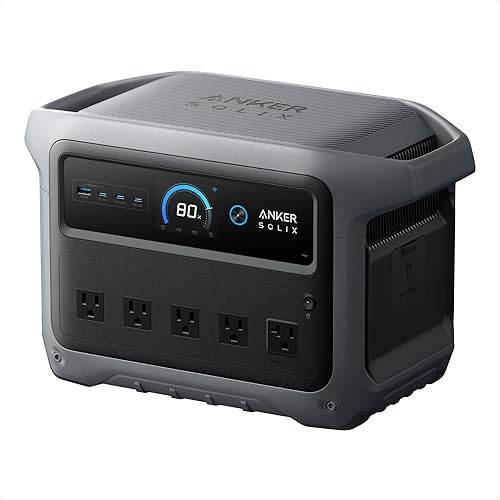
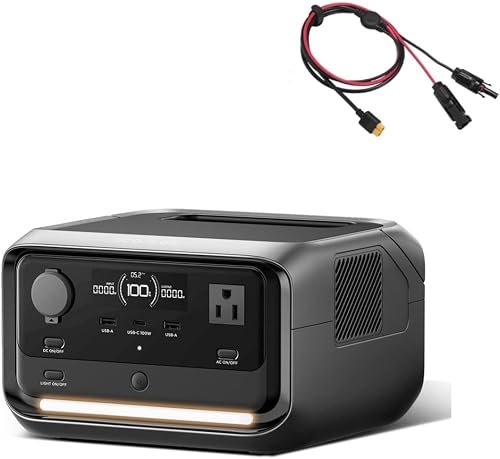
Its closest rivals on capacity are the Anker SOLIX C1000 Gen 2 and EcoFlow DELTA 3 Plus, both larger batteries. It’s the lightest of the three at 20.3 lb. Wh per pound is our arithmetic from the listed specs in the other columns.
| Model | Capacity | AC output | Weight | Capacity per pound |
|---|---|---|---|---|
| Goal Zero Yeti 700 | 677 Wh | 600 W | 20.3 lb | 33.3 Wh/lb |
| Anker SOLIX C1000 Gen 2 | 1,024 Wh | 2,000 W | 24.9 lb | 41.1 Wh/lb |
| EcoFlow DELTA 3 Plus | 1,024 Wh | 1,800 W | 27.6 lb | 37.1 Wh/lb |
How to choose
Consider the Yeti 700 if you want a mid-size station for low-power devices. For more output at a little more weight, read the Jackery Explorer 1000 v2 review. For a smaller option, read the EcoFlow RIVER 3 Plus review. See also our cold-weather picks.
FAQ
Is the Yeti 700 good in cold weather?
Goal Zero rates it for use down to -4°F, but not for charging below 32°F.
Can I use it while charging?
Goal Zero mentions passthrough charging on its page.
Can it run a coffee maker?
Probably not, as many are rated above its 600 W output. Check the label first.