EcoFlow DELTA 3 Plus Review: What the Specs Tell You
As an Amazon Associate I earn from qualifying purchases. Read our affiliate disclosure.
At a glance
 Best for solar and expansionEcoFlow DELTA 3 PlusView on Amazon
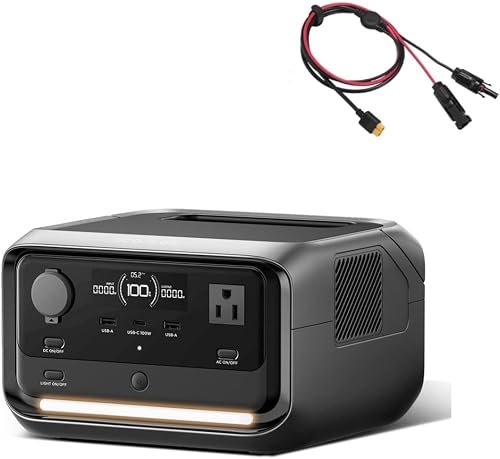
The EcoFlow DELTA 3 Plus is the most flexible 1 kWh model we compare. It takes a lot of solar, charges quickly from a vehicle with the right accessory, and can grow to 5 kWh. Its standard output is a little lower than the Anker C1000 Gen 2’s.
What follows is a spec-based review using EcoFlow’s published figures from November 2026. We haven’t tried the DELTA 3 Plus.
EcoFlow DELTA 3 Plus key specs
| Spec | EcoFlow DELTA 3 Plus |
|---|---|
| Capacity | 1,024 Wh, expandable to 5 kWh |
| Battery rating | 4,000 cycles to 80% capacity |
| AC output | 1,800 W, or 2,200 W with X-Boost |
| Listed surge | 3,600 W |
| Solar input | 1,000 W across two inputs |
| AC charge | 56 minutes at 1,500 W |
| Car charge | About 1.3 hours from an 800 W source |
| UPS switchover | Under 10 ms |
| Noise | 30 dB listed |
| Weight | 27.6 lb |
| Warranty | 5 years |
Who is the EcoFlow DELTA 3 Plus for?
- Van owners and campers who recharge from solar or while driving
- People who want to start small and add batteries later
- Households that want one station for trips and outages
Skip it if you need the most standard AC output in a portable box, or want the lightest 1 kWh model.
EcoFlow DELTA 3 Plus strengths
Solar input: 1,000 W is the most for its size of any model with a listed solar figure. EcoFlow lists a full solar charge in 70 minutes at that level.
Expansion: compatible extra batteries can take it up to 5 kWh.
Car charging: a full charge in about 1.3 hours is fast, though it needs EcoFlow’s 800 W Alternator Charger, which is a separate item.
EcoFlow DELTA 3 Plus weaknesses
Standard output: 1,800 W is lower than the Anker C1000 Gen 2’s 2,000 W.
Weight: it’s 2.7 lb heavier than the Anker, and 3.8 lb heavier than the Jackery Explorer 1000 v2.
Base capacity: 1 kWh can run out quickly for full-time use, so plan on daily recharging or an extra battery.
EcoFlow DELTA 3 Plus
- Capacity
- 1,024 Wh
- AC output
- 1,800 W
- Solar input
- 1,000 W
- Weight
- 27.6 lb
Who it's for: Campers and van owners who want fast recharging, strong solar input, and the option to add batteries later.
Strengths
- Expandable to 5 kWh
- 1,000 W of solar input
- Full charge in about 1.3 hours from an 800 W car source
Weaknesses
- Fast car charging needs a separate Alternator Charger
- 1 kWh base capacity is modest for full-time use
How long will the EcoFlow DELTA 3 Plus run?
Our math uses 85% efficiency, leaving about 870 Wh from the 1,024 Wh pack.
| Load | Estimated runtime |
|---|---|
| 100 W | About 8.7 hours |
| 500 W | About 1.7 hours |
| 1,000 W | About 52 minutes |
How does the EcoFlow DELTA 3 Plus compare?
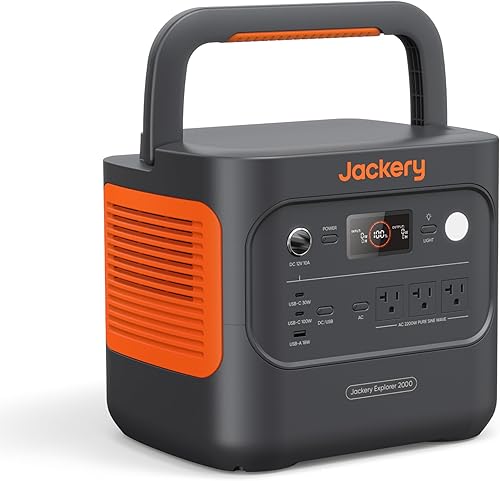
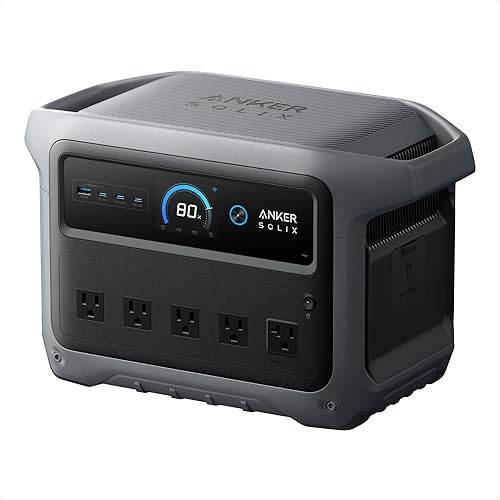
The Anker SOLIX C1000 Gen 2 shares its 1,024 Wh capacity, and the Jackery Explorer 1000 v2 is the next closest. It’s the heaviest of this trio. The specs are as listed by each brand, and capacity per pound is our division of Wh by lb.
| Model | Capacity | AC output | Weight | Capacity per pound |
|---|---|---|---|---|
| EcoFlow DELTA 3 Plus | 1,024 Wh | 1,800 W | 27.6 lb | 37.1 Wh/lb |
| Anker SOLIX C1000 Gen 2 | 1,024 Wh | 2,000 W | 24.9 lb | 41.1 Wh/lb |
| Jackery Explorer 1000 v2 | 1,070 Wh | 1,500 W | 23.8 lb | 45.0 Wh/lb |
How to choose
Buy the DELTA 3 Plus if recharging and room to grow matter most. See how it stacks up against the Anker C1000 Gen 2, or read our picks for van life and solar charging.
FAQ
Which extra batteries work with it?
EcoFlow lists DELTA 3, DELTA 2, DELTA 2 Max, and DELTA Pro 3 extra batteries, connected with an Alternator Charger XT150 Output Cable. Check the current compatibility list before you buy.
Is the Alternator Charger included?
Not with the station on its own. It’s a separate item, and it needs installing.
How quiet is it?
EcoFlow lists 30 dB, and says it’s almost silent under 600 W. Makers may not measure in the same way, so treat this as a rough figure.