Best Power Station for Solar Charging
As an Amazon Associate I earn from qualifying purchases. Read our affiliate disclosure.
Top picks at a glance
 Best for most peopleEcoFlow DELTA 3 PlusView on Amazon
 Best 2 kWh optionBLUETTI Elite 200 V2View on Amazon
 Most solar inputAnker SOLIX F3800 PlusView on Amazon
For solar charging, the EcoFlow DELTA 3 Plus is our first choice. It takes 1,000 W of solar into a 1 kWh battery, which is the most for its size of any model with a listed solar figure. If you need more capacity, the BLUETTI Elite 200 V2 takes the same 1,000 W into a 2 kWh battery.
Solar input figures are the published numbers as of November 2026. We haven’t tested charging on these models.
Quick comparison
Total solar input is only part of the story. A big battery needs more solar to fill, so we also divide input by capacity. A higher number means the station can refill faster, if you have enough panels.
| Model | Max solar input | Capacity | Watts per kWh | Best-case full charge |
|---|---|---|---|---|
| EcoFlow DELTA 3 Plus | 1,000 W | 1,024 Wh | 977 | About 1 hour |
| Anker SOLIX F3800 Plus | 3,200 W | 3,840 Wh | 833 | About 1.2 hours |
| EcoFlow DELTA Pro 3 | 2,600 W | 4 kWh | 635 | About 1.6 hours |
| Goal Zero Yeti 1500 | 900 W | 1,505 Wh | 598 | About 1.7 hours |
| Anker SOLIX C1000 Gen 2 | 600 W | 1,024 Wh | 586 | About 1.7 hours |
| BLUETTI Elite 200 V2 | 1,000 W | 2,073.6 Wh | 482 | About 2.1 hours |
| Jackery Explorer 1000 v2 | 400 W | 1,070 Wh | 374 | About 2.7 hours |
| Jackery Explorer 2000 v2 | 400 W | 2,042 Wh | 196 | About 5.1 hours |
The best-case time is capacity divided by maximum input. It assumes you have enough panels and are getting their full output, which is rare. For realistic figures, see how long solar charging takes.
EcoFlow DELTA 3 Plus: best for most people
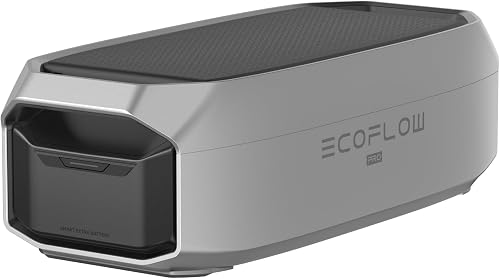
EcoFlow lists 1,000 W of solar input across two 500 W inputs, and a full solar charge in 70 minutes at that level. You won’t need all that to start. It’s a sensible size for camping, and it can grow to 5 kWh with extra batteries.
EcoFlow DELTA 3 Plus
- Capacity
- 1,024 Wh
- AC output
- 1,800 W
- Solar input
- 1,000 W
- Weight
- 27.6 lb
Who it's for: Campers and van owners who want fast recharging, strong solar input, and the option to add batteries later.
Strengths
- Expandable to 5 kWh
- 1,000 W of solar input
- Full charge in about 1.3 hours from an 800 W car source
Weaknesses
- Fast car charging needs a separate Alternator Charger
- 1 kWh base capacity is modest for full-time use
BLUETTI Elite 200 V2: best 2 kWh option
BLUETTI lists 1,000 W of solar input, at 12 V to 60 V and up to 20 A. That’s two and a half times as much as the similarly sized Jackery Explorer 2000 v2. At 53.4 lb, it suits parked setups, and its car input is low at 96 W on 12V or 192 W on 24V, so solar matters more here.
BLUETTI Elite 200 V2
- Capacity
- 2,073.6 Wh
- AC output
- 2,600 W
- Solar input
- 1,000 W
- Weight
- 53.4 lb
Who it's for: People who stay parked, run on solar, and don't need to carry their station far.
Strengths
- About 2 kWh in one unit
- 1,000 W of solar input
- LiFePO4 battery
Weaknesses
- Heavy to carry at 53.4 lb
- Car input is only 96 W on 12V or 192 W on 24V
Anker SOLIX F3800 Plus: most solar input
Anker lists 3,200 W across two ports, with up to 1,600 W each at 11 V to 165 V. Anker says it can recharge in under two hours in optimal sunlight. Its wider voltage range also gives you more freedom to wire panels in series. It’s a large unit at 136.7 lb, so it suits a cabin or RV.
Anker SOLIX F3800 Plus
- Capacity
- 3,840 Wh
- AC output
- 6,000 W
- Solar input
- 3,200 W
- Weight
- 136.7 lb
Who it's for: RV owners and homeowners with heavy or 240V loads who can keep a large unit in one place.
The photo also shows the Home Power Panel, which Amazon sells with this model in some listings. Check what's included before you buy.
Strengths
- 120V and 240V output
- TT-30 RV port
- Supports up to six 3.84 kWh expansion batteries
Weaknesses
- Very heavy at 136.7 lb, though it has wheels
- AC charging input is 1,800 W
How to choose
- Work out your daily energy use. Our panel guide shows how to turn that into panel watts.
- Pick a station that accepts that many watts. Leave room if you plan to add panels.
- Check the voltage range. It decides how you can wire your panels. See series vs. parallel.
- Check the connector. Plugs vary by brand, so you may need an adapter.
FAQ
Does a higher solar input always mean faster charging?
Only if you have enough panels and sun. A station rated for 1,000 W won’t charge any faster than a 200 W panel can supply.
How many panels does it take to reach 1,000 W?
On paper, five 200 W panels. Real output is usually lower, so you may not reach the limit even with that many.
Can I use panels from another brand?
Often, but check the voltage, current, and plug first. Our solar panel comparison covers what to look for.