Best Solar Generator for Beginners
As an Amazon Associate I earn from qualifying purchases. Read our affiliate disclosure.
Top picks at a glance
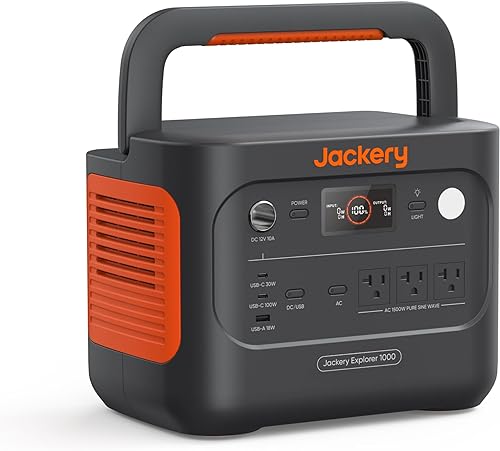 Best station for a first setupJackery Explorer 1000 v2View on Amazon
 Best panel to pair with itJackery SolarSaga 200WView on Amazon
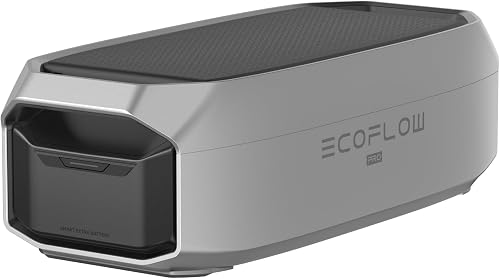
 Best station with room to growEcoFlow DELTA 3 PlusView on Amazon
 Best panel for an EcoFlow setupEcoFlow 220W BifacialView on Amazon
For your first solar generator, we’d pair the Jackery Explorer 1000 v2 with the Jackery SolarSaga 200W. Jackery lists a solar charge time for this exact pairing, at 7.5 hours. If you want to grow later, the EcoFlow DELTA 3 Plus with the EcoFlow 220W Bifacial gives you much more room.
These beginner solar picks use specs published as of November 2026, and we haven’t tested any of these sets.
What is a solar generator?
A solar generator is a portable power station sold with one or more solar panels. The term is mostly marketing, since the station stores power and the panels collect it. Nothing burns fuel.
Quick comparison
| Setup | Station capacity | Max solar input | Panel rating | Estimated energy per day |
|---|---|---|---|---|
| Jackery Explorer 1000 v2 + SolarSaga 200W | 1,070 Wh | 400 W | 200 W | About 700 Wh |
| EcoFlow DELTA 3 Plus + 220W Bifacial | 1,024 Wh | 1,000 W | 220 W front | About 770 Wh |
How much power to expect
The watt rating on a panel is measured under test conditions. In real use, you usually get less because of the sun’s angle, heat, clouds, and shade. A simple estimate is:
Panel watts × peak sun hours × 0.7 = watt-hours per day
For example, a 200 W panel with 5 peak sun hours gives 700 Wh per day. The 0.7 is a rule of thumb, so expect less in winter or on cloudy days.
Jackery Explorer 1000 v2: best station for a first setup
It’s the lightest 1 kWh station we compare, and it takes up to 400 W of solar, which leaves room for a second panel.
Jackery Explorer 1000 v2
- Capacity
- 1,070 Wh
- AC output
- 1,500 W
- Solar input
- 400 W
- Weight
- 23.8 lb
Who it's for: Campers who want about 1 kWh at a low weight and don't run appliances over 1,500 W.
Strengths
- Lightest 1 kWh model we compare
- LiFePO4 battery
- 3,000 W surge rating
Weaknesses
- Lower AC output than the Anker C1000 Gen 2
- Cycle rating is listed to 70% or more, not 80%
Jackery SolarSaga 200W: best panel to pair with it
It’s a natural match for Jackery stations, and it’s the lightest panel we compare. Jackery lists about 25% efficiency and an IP68 rating.
Jackery SolarSaga 200W
- Rated power
- 200 W
- Open-circuit voltage
- 22 V
- Water rating
- IP68
- Weight
- 14.33 lb
Who it's for: Jackery station owners who want a 200 W panel that's easy to carry.
Strengths
- Lightest panel we compare
- About 25% listed efficiency
- Bifacial design
Weaknesses
- Jackery's regional pages disagree on some specs
- Check the plug if you own another brand
EcoFlow DELTA 3 Plus: best station with room to grow
With 1,000 W of solar input and expansion up to 5 kWh, you can start small and add later. Read our full DELTA 3 Plus review.
EcoFlow DELTA 3 Plus
- Capacity
- 1,024 Wh
- AC output
- 1,800 W
- Solar input
- 1,000 W
- Weight
- 27.6 lb
Who it's for: Campers and van owners who want fast recharging, strong solar input, and the option to add batteries later.
Strengths
- Expandable to 5 kWh
- 1,000 W of solar input
- Full charge in about 1.3 hours from an 800 W car source
Weaknesses
- Fast car charging needs a separate Alternator Charger
- 1 kWh base capacity is modest for full-time use
EcoFlow 220W Bifacial: best panel for an EcoFlow setup
It has a little more rated power, and EcoFlow lists a 175 W rear rating, which only helps when light reflects behind the panel.
EcoFlow 220W Bifacial
- Rated power
- 220 W front
- Open-circuit voltage
- 21.5 V
- Water rating
- IP68
- Weight
- 15.4 lb
Who it's for: Buyers who want a little more rated power from a portable panel, and can use it where light reflects behind it.
Strengths
- Highest rated power of the 200 W class panels here
- 25% listed efficiency
- 175 W rear rating
Weaknesses
- Rear output depends on reflected light
- Three in series exceed a 60 V limit
How to choose
- Decide if you need solar at all. Panels make the most sense for trips of more than a few days, or long outages. For a weekend trip, a station charged at home may be enough.
- Match the input limit. A station only accepts a set amount of solar power.
- Check the voltage range. Your panels must fall within the station’s limits.
- Check the connector. Buying from one brand keeps this simple.
- Choose folding or rigid panels. Folding panels are easy to carry, and rigid panels suit a fixed setup such as an RV roof.
FAQ
Do solar generators work on cloudy days?
Yes, but they collect much less. Plan around your cloudiest days, not your sunniest.
Can I use a solar generator indoors?
The station can be used indoors, as it has no exhaust. The panels need to be outside in the sun.
Can I add panels later?
Yes, up to your station’s input limit. Check the large solar array guide before you wire them together.