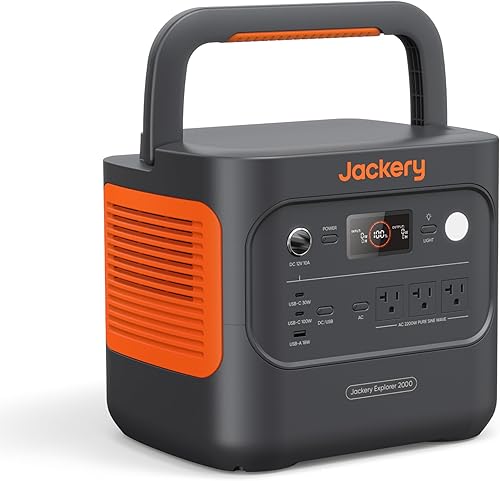
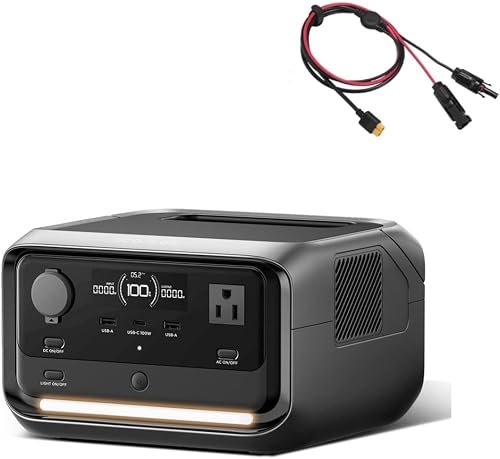
EcoFlow DELTA 3 Plus vs. Anker SOLIX C1000 Gen 2
As an Amazon Associate I earn from qualifying purchases. Read our affiliate disclosure.
Top picks at a glance
 Best for solar and expansionEcoFlow DELTA 3 PlusView on Amazon
 Best for high-power appliancesAnker SOLIX C1000 Gen 2View on Amazon
These two have the same 1,024 Wh capacity, so the choice comes down to how you’ll use them. Pick the EcoFlow DELTA 3 Plus if you want more solar input or may add batteries later. Pick the Anker SOLIX C1000 Gen 2 if you want more standard AC output in a lighter box.
We set these 1 kWh stations side by side using published specs from November 2026. We haven’t tested them.
Side by side
| Spec | EcoFlow DELTA 3 Plus | Anker SOLIX C1000 Gen 2 |
|---|---|---|
| Capacity | 1,024 Wh | 1,024 Wh |
| AC output | 1,800 W | 2,000 W |
| Listed peak | 3,600 W surge with X-Boost | 3,000 W peak |
| Solar input | 1,000 W | 600 W |
| Full AC charge | 56 minutes | 49 minutes |
| Weight | 27.6 lb | 24.9 lb |
| Expandable | Up to 5 kWh | No |
| Battery rating | 4,000 cycles to 80% | 4,000 cycles to 80% |
| UPS switchover | Under 10 ms | Under 10 ms |
Where the DELTA 3 Plus wins
Solar: EcoFlow lists 1,000 W of solar input, compared with 600 W for the Anker. If you have the panels for it, you can refill the battery faster in limited sun.
Expansion: extra batteries can take it up to 5 kWh, while the Anker has no expansion option at all.
Car charging: EcoFlow lists a full charge in about 1.3 hours from an 800 W Alternator Charger. That’s a separate purchase, but it’s a strong option for van life.
EcoFlow DELTA 3 Plus
- Capacity
- 1,024 Wh
- AC output
- 1,800 W
- Solar input
- 1,000 W
- Weight
- 27.6 lb
Who it's for: Campers and van owners who want fast recharging, strong solar input, and the option to add batteries later.
Strengths
- Expandable to 5 kWh
- 1,000 W of solar input
- Full charge in about 1.3 hours from an 800 W car source
Weaknesses
- Fast car charging needs a separate Alternator Charger
- 1 kWh base capacity is modest for full-time use
Where the C1000 Gen 2 wins
Standard output: 2,000 W is higher than the DELTA’s standard 1,800 W, which gives you more room for a coffee maker or microwave. EcoFlow’s X-Boost mode raises its listed output to 2,200 W, but the standard rating is the safer number to plan around.
Weight: it’s 2.7 lb lighter, which you’ll notice if you carry it often.
Cold use: Anker lists a discharge range down to -4°F. We couldn’t find an operating range on EcoFlow’s product page, so check the manual if this matters to you.
Anker SOLIX C1000 Gen 2
- Capacity
- 1,024 Wh
- AC output
- 2,000 W
- Solar input
- 600 W
- Weight
- 24.9 lb
Who it's for: People who want about 1 kWh and 2,000 W in a portable box, and don't need to add batteries.
Strengths
- 49-minute full AC charge
- 2,000 W output, 3,000 W peak
- Rated to keep 80% capacity after 4,000 cycles
Weaknesses
- Not expandable
- Lower solar input than the DELTA 3 Plus
Where they’re close
Both use batteries rated to keep 80% of their capacity after 4,000 cycles, and both list a UPS switchover of under 10 ms. Charging speeds are also close. Anker’s 49-minute figure uses its UltraFast mode, and EcoFlow’s 56-minute figure uses 1,500 W of AC input.
Noise figures are harder to compare. EcoFlow lists 30 dB and Anker lists 20 dB, but the two makers may not measure under the same conditions.
How to choose
- Camping with solar, or van life: DELTA 3 Plus
- Planning to grow your backup system: DELTA 3 Plus
- Running higher-power kitchen appliances: C1000 Gen 2
- Carrying it often: C1000 Gen 2
Need help with the numbers? Try the runtime calculator, or see our van life picks.
FAQ
Do these two have the same capacity?
Yes. The EcoFlow DELTA 3 Plus and the Anker SOLIX C1000 Gen 2 are both listed at 1,024 Wh.
Which one charges faster from a wall outlet?
Anker lists 49 minutes in UltraFast mode, and EcoFlow lists 56 minutes. In practice, the gap is small.
Can I add batteries to the C1000 Gen 2?
No. Anker says it has no expansion feature. The DELTA 3 Plus can grow to 5 kWh.