Best Anker SOLIX C1000 Gen 2 Alternatives
As an Amazon Associate I earn from qualifying purchases. Read our affiliate disclosure.
Top picks at a glance
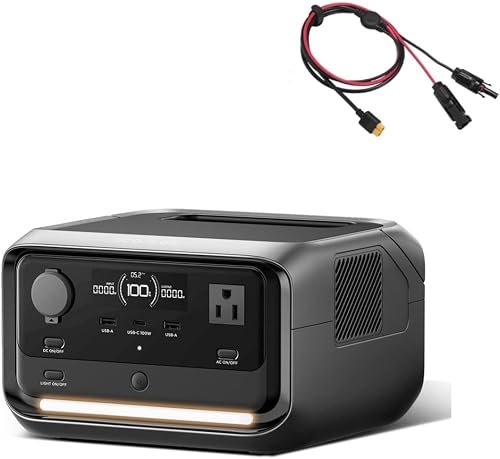
 Closest alternativeEcoFlow DELTA 3 PlusView on Amazon
 Best for lighter carryingJackery Explorer 1000 v2View on Amazon
 Best for cold tripsGoal Zero Yeti 1500View on Amazon
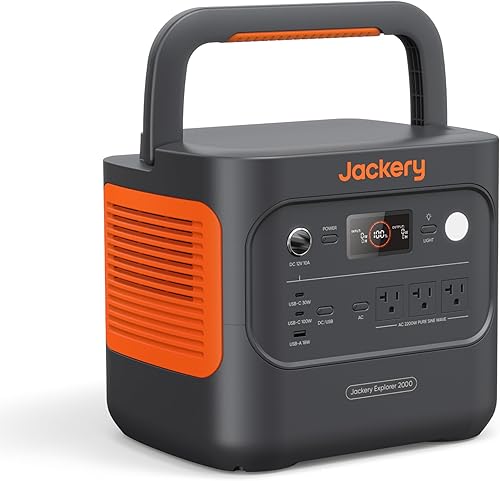 Best step up to 2 kWhJackery Explorer 2000 v2View on Amazon
The EcoFlow DELTA 3 Plus is the closest alternative to the Anker SOLIX C1000 Gen 2. It has the same 1,024 Wh capacity, takes more solar, and can grow to 5 kWh. To carry less, look at the Jackery Explorer 1000 v2. If 1 kWh is too small, the Jackery Explorer 2000 v2 about doubles the capacity.
Every figure here is a published spec from November 2026, apart from the runtime math we point out. We haven’t used the Anker or any of its four alternatives.
When does the C1000 Gen 2 fall short?
The Anker does a lot well, as our C1000 Gen 2 review shows. None of the stations below matches its 49-minute AC charge, so think twice before you switch if quick wall charging matters most.
It’s worth shopping around for three reasons:
- You’ll outgrow 1 kWh: Anker says this model has no expansion feature.
- You charge mainly from solar: its 600 W input trails the DELTA 3 Plus.
- You need longer runtimes: heavy loads can drain 1,024 Wh quickly.
Anker SOLIX C1000 Gen 2 alternatives compared
| Model | Capacity | AC output | Solar input | Full AC charge | Weight | Add batteries? |
|---|---|---|---|---|---|---|
| Anker SOLIX C1000 Gen 2 | 1,024 Wh | 2,000 W | 600 W | 49 minutes | 24.9 lb | No |
| EcoFlow DELTA 3 Plus | 1,024 Wh | 1,800 W | 1,000 W | 56 minutes | 27.6 lb | Yes, up to 5 kWh |
| Jackery Explorer 1000 v2 | 1,070 Wh | 1,500 W | 400 W | About 1.6 hours | 23.8 lb | Not confirmed |
| Goal Zero Yeti 1500 | 1,505 Wh | 2,000 W | 900 W | About 1.1 hours | 52.75 lb | No |
| Jackery Explorer 2000 v2 | 2,042 Wh | 2,200 W | 400 W | About 1.75 hours | 39.5 lb | No |
How long would each one run a 300 W load?
This table is our own estimate. We took 85% of each listed capacity, then divided by 300 W. A real load will change these numbers.
| Model | Estimated runtime at 300 W |
|---|---|
| Anker SOLIX C1000 Gen 2 | About 2.9 hours |
| EcoFlow DELTA 3 Plus | About 2.9 hours |
| Jackery Explorer 1000 v2 | About 3 hours |
| Goal Zero Yeti 1500 | About 4.3 hours |
| Jackery Explorer 2000 v2 | About 5.8 hours |
EcoFlow DELTA 3 Plus: closest alternative
Runtime stays the same, because both start at 1,024 Wh. What changes is how you refill and grow it. You get 400 W more solar input, and extra batteries can take it to 5 kWh. Van owners can also add EcoFlow’s separate Alternator Charger for a listed 1.3-hour charge from an 800 W car source.
In return, you give up 200 W of standard AC output and carry 2.7 lb more. See our DELTA 3 Plus and C1000 comparison for more detail.
EcoFlow DELTA 3 Plus
- Capacity
- 1,024 Wh
- AC output
- 1,800 W
- Solar input
- 1,000 W
- Weight
- 27.6 lb
Who it's for: Campers and van owners who want fast recharging, strong solar input, and the option to add batteries later.
Strengths
- Expandable to 5 kWh
- 1,000 W of solar input
- Full charge in about 1.3 hours from an 800 W car source
Weaknesses
- Fast car charging needs a separate Alternator Charger
- 1 kWh base capacity is modest for full-time use
Jackery Explorer 1000 v2: best for lighter carrying
This is the only alternative here that weighs less than the Anker, though the saving is just 1.1 lb. You also get 46 Wh more capacity, and its 3,000 W surge rating lines up with Anker’s 3,000 W peak.
Look closely at what you’d lose. Standard output drops by 500 W, solar input is 200 W lower, and the cold limit rises to 14°F from -4°F. Jackery also lists cycles to 70% or more, while Anker lists 80%.
Jackery Explorer 1000 v2
- Capacity
- 1,070 Wh
- AC output
- 1,500 W
- Solar input
- 400 W
- Weight
- 23.8 lb
Who it's for: Campers who want about 1 kWh at a low weight and don't run appliances over 1,500 W.
Strengths
- Lightest 1 kWh model we compare
- LiFePO4 battery
- 3,000 W surge rating
Weaknesses
- Lower AC output than the Anker C1000 Gen 2
- Cycle rating is listed to 70% or more, not 80%
Goal Zero Yeti 1500: best for cold trips
Goal Zero matches the Anker’s -4°F use rating and 2,000 W output, then adds 481 Wh of capacity. Its 900 W solar input is also higher, and Goal Zero lists an IPX4 water rating.
The trade-off is size. At 52.75 lb, it weighs more than twice as much as the Anker, so it suits a truck bed or base camp better than a walk to the campsite.
Goal Zero Yeti 1500
- Capacity
- 1,505 Wh
- AC output
- 2,000 W
- Solar input
- 900 W
- Weight
- 52.75 lb
Who it's for: People who want a mid-size station for cold trips and can handle the weight.
Strengths
- Rated for use down to -4°F
- 900 W of solar input
- Rated to keep 80% capacity after 4,000 cycles
Weaknesses
- Heavy for its capacity at 52.75 lb
- Not compatible with expansion batteries
Jackery Explorer 2000 v2: best step up to 2 kWh
Choose this one when capacity is the problem. It about doubles the Anker’s runtime, adds 200 W of AC output, and lists a 4,400 W surge rating. It’s also 13.25 lb lighter than the smaller Yeti 1500.
You’d carry 14.6 lb more than the Anker, and you still can’t add batteries. Solar input also falls to 400 W, which is low for a battery this size.
Jackery Explorer 2000 v2
- Capacity
- 2,042 Wh
- AC output
- 2,200 W
- Surge
- 4,400 W
- Weight
- 39.5 lb
Who it's for: Households that want about 2 kWh one person can move, with no plans to expand.
Strengths
- About 2 kWh at 39.5 lb
- 4,400 W surge rating
- LFP battery
Weaknesses
- Heavier to move than 1 kWh models
- Not expandable
How to choose
- Decide whether 1 kWh is enough. If it is, compare the DELTA 3 Plus and the Explorer 1000 v2. If it isn’t, compare the Yeti 1500 and the Explorer 2000 v2.
- Check your largest appliance. Each station’s AC output has to cover it, and the Explorer 1000 v2 stops at 1,500 W.
- Think about how you’ll recharge. Solar users should favor the DELTA 3 Plus or the Yeti 1500.
- Think about the carry. Picture moving 52.75 lb from your car before you pick the Yeti.
Want a wider view? See our camping picks.
FAQ
What is the closest alternative to the Anker SOLIX C1000 Gen 2?
The EcoFlow DELTA 3 Plus. It has the same 1,024 Wh capacity, with 1,000 W of solar input and room to expand to 5 kWh, but its AC output is 1,800 W instead of 2,000 W.
Which C1000 Gen 2 alternative is lighter?
Only the Jackery Explorer 1000 v2, at 23.8 lb compared with 24.9 lb for the Anker. It also has a lower AC output, at 1,500 W.
Does any alternative charge as fast as the C1000 Gen 2?
None of the four matches the Anker’s listed 49 minutes on AC power. The EcoFlow DELTA 3 Plus comes closest at 56 minutes.
Which alternative suits cold-weather camping?
The Goal Zero Yeti 1500 is rated for use down to -4°F, the same as the Anker. Charging has a separate limit, and both list 32°F as the lowest charging temperature.