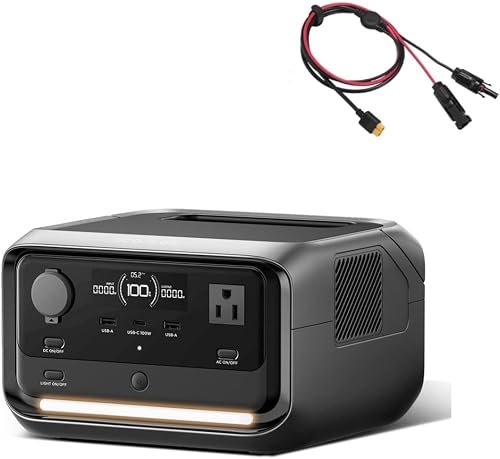
Best Power Station for Cold Weather
As an Amazon Associate I earn from qualifying purchases. Read our affiliate disclosure.
Top picks at a glance
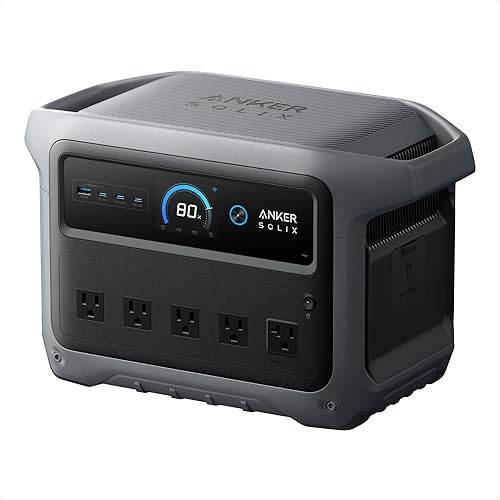 Best for the coldest daysAnker SOLIX C1000 Gen 2View on Amazon
 Most capacity at -4°FGoal Zero Yeti 1500View on Amazon
 Lightest -4°F optionGoal Zero Yeti 700View on Amazon
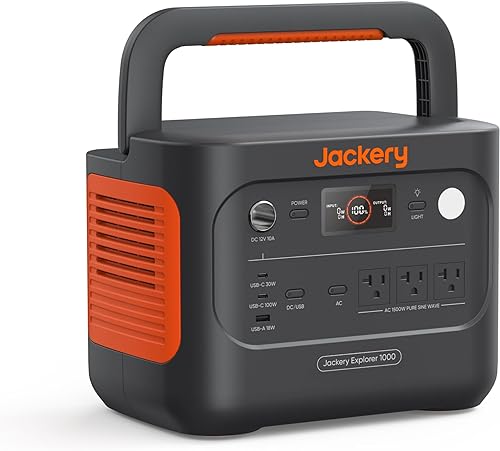 Lightest 1 kWh optionJackery Explorer 1000 v2View on Amazon
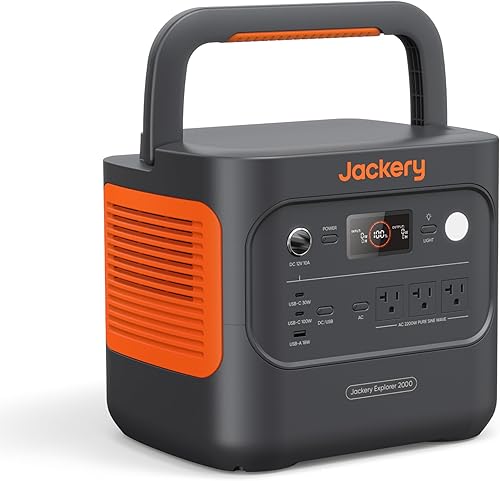 Best for long winter tripsJackery Explorer 2000 v2View on Amazon
For cold-weather trips, we’d pick the Anker SOLIX C1000 Gen 2. It’s rated down to -4°F, the lowest limit we could confirm, and it’s far lighter than the Goal Zero Yeti 1500, which has the same limit and more capacity. If you need the most runtime, the Jackery Explorer 2000 v2 holds about twice as much energy but stops at 14°F.
Temperature limits here come from specs published as of November 2026. We haven’t tested these stations in the cold.
Quick comparison
| Model | Use down to | Charge down to | Capacity | Weight |
|---|---|---|---|---|
| Anker SOLIX C1000 Gen 2 | -4°F | 32°F | 1,024 Wh | 24.9 lb |
| Goal Zero Yeti 1500 | -4°F | 32°F | 1,505 Wh | 52.75 lb |
| Goal Zero Yeti 700 | -4°F | 32°F | 677 Wh | 20.3 lb |
| Jackery Explorer 1000 v2 | 14°F | 32°F | 1,070 Wh | 23.8 lb |
| Jackery Explorer 2000 v2 | 14°F | 32°F | 2,042 Wh | 39.5 lb |
The EcoFlow DELTA Pro 3 lists the same limits as the Jackery models, but at 113.5 lb it’s not a practical choice for most winter trips. We left out models whose temperature limits we couldn’t find on the maker’s product page. That doesn’t mean they perform worse, so check the manual if you’re considering one.
Why charging is the real limit
All five stations can run below freezing, but none is rated to charge there. This matters because of how lithium batteries behave. Battery University explains that charging lithium-ion cells below 32°F can plate metallic lithium onto the anode, and that this damage is permanent.
So if your station sits in a cold truck or tent, bring it somewhere warmer than 32°F before you plug it in. That includes solar panels, which can start charging as soon as the sun comes up.
How long will each station run in the cold?
These estimates assume 85% efficiency. Treat them as a best case, as batteries generally deliver less energy in the cold.
| Model | 50 W load | 100 W load |
|---|---|---|
| Anker SOLIX C1000 Gen 2 | About 17 hours | About 9 hours |
| Goal Zero Yeti 1500 | About 26 hours | About 13 hours |
| Goal Zero Yeti 700 | About 12 hours | About 6 hours |
| Jackery Explorer 1000 v2 | About 18 hours | About 9 hours |
| Jackery Explorer 2000 v2 | About 35 hours | About 17 hours |
Anker SOLIX C1000 Gen 2: best for the coldest days
Anker lists a discharge range of -4°F to 104°F, which gives you 18 more degrees than the Jackery models. It also has a 2,000 W output. It charges between 32°F and 104°F.
Anker SOLIX C1000 Gen 2
- Capacity
- 1,024 Wh
- AC output
- 2,000 W
- Solar input
- 600 W
- Weight
- 24.9 lb
Who it's for: People who want about 1 kWh and 2,000 W in a portable box, and don't need to add batteries.
Strengths
- 49-minute full AC charge
- 2,000 W output, 3,000 W peak
- Rated to keep 80% capacity after 4,000 cycles
Weaknesses
- Not expandable
- Lower solar input than the DELTA 3 Plus
Goal Zero Yeti 1500: most capacity at -4°F
Goal Zero lists a discharge range of -4°F to 104°F, the same low limit as the Anker, with about 50% more capacity. It also has an IPX4 water resistance rating. At 52.75 lb, it suits a truck or camper better than a long walk.
Goal Zero Yeti 1500
- Capacity
- 1,505 Wh
- AC output
- 2,000 W
- Solar input
- 900 W
- Weight
- 52.75 lb
Who it's for: People who want a mid-size station for cold trips and can handle the weight.
Strengths
- Rated for use down to -4°F
- 900 W of solar input
- Rated to keep 80% capacity after 4,000 cycles
Weaknesses
- Heavy for its capacity at 52.75 lb
- Not compatible with expansion batteries
Goal Zero Yeti 700: lightest -4°F option
At 20.3 lb, this is the easiest way to get a -4°F rating. Goal Zero lists a discharge range of -4°F to 140°F. Its 600 W output and 677 Wh capacity suit low-power devices, not heaters or cooking.
Goal Zero Yeti 700
- Capacity
- 677 Wh
- AC output
- 600 W
- Solar input
- 200 W
- Weight
- 20.3 lb
Who it's for: People who need more energy than a small station holds, but mostly run low-power devices.
Strengths
- Rated for use down to -4°F
- Fills the gap between small and 1 kWh stations
- Rated to keep 80% capacity after 4,000+ cycles
Weaknesses
- 600 W limits what you can run
- 200 W of solar input is low
Jackery Explorer 1000 v2: lightest 1 kWh option
It’s the lightest 1 kWh model here, which helps if you’re hauling gear across snow or ice. Jackery lists a discharge range of 14°F to 113°F, so it suits cool nights better than deep winter.
Jackery Explorer 1000 v2
- Capacity
- 1,070 Wh
- AC output
- 1,500 W
- Solar input
- 400 W
- Weight
- 23.8 lb
Who it's for: Campers who want about 1 kWh at a low weight and don't run appliances over 1,500 W.
Strengths
- Lightest 1 kWh model we compare
- LiFePO4 battery
- 3,000 W surge rating
Weaknesses
- Lower AC output than the Anker C1000 Gen 2
- Cycle rating is listed to 70% or more, not 80%
Jackery Explorer 2000 v2: best for long winter trips
With about twice the capacity, this is the better choice for several days away from an outlet. It has the same 14°F limit, so keep it inside your cabin, camper, or vehicle on very cold nights.
Jackery Explorer 2000 v2
- Capacity
- 2,042 Wh
- AC output
- 2,200 W
- Surge
- 4,400 W
- Weight
- 39.5 lb
Who it's for: Households that want about 2 kWh one person can move, with no plans to expand.
Strengths
- About 2 kWh at 39.5 lb
- 4,400 W surge rating
- LFP battery
Weaknesses
- Heavier to move than 1 kWh models
- Not expandable
Cold-weather tips
- Start with a full charge: do it indoors before you leave.
- Keep it off the ground: snow and ice pull heat away, so a wood board or foam pad helps.
- Don’t cover the vents: blankets can trap heat, so leave the air openings clear.
- Never warm it with a flame or heater: let it come up to temperature slowly in a warm room.
Want to check your own load? Use the runtime calculator, or read about LiFePO4 and lithium-ion batteries.
How to choose
- Find your coldest temperature. Below 14°F, only the C1000 Gen 2 and the two Goal Zero models here are rated to run.
- Plan where you’ll charge. All five need to be at 32°F or warmer, so you’ll need a warm spot.
- Allow extra capacity. Expect less than the estimates above in the cold, so size up if you can.
- Consider the carry. The weights here run from 20.3 lb to 52.75 lb.
FAQ
Can I charge a power station below freezing?
None of these models are rated for it. All five list 32°F as the lowest charging temperature.
Which model works in the coldest weather?
Three models here share the lowest limit, at -4°F: the Anker SOLIX C1000 Gen 2, Goal Zero Yeti 1500, and Goal Zero Yeti 700.
Can I leave it in my truck overnight?
Only if the temperature stays within the maker’s limits. If it drops lower, bring the station inside, and check the manual for storage limits.