Best LiFePO4 Power Station
As an Amazon Associate I earn from qualifying purchases. Read our affiliate disclosure.
Top picks at a glance
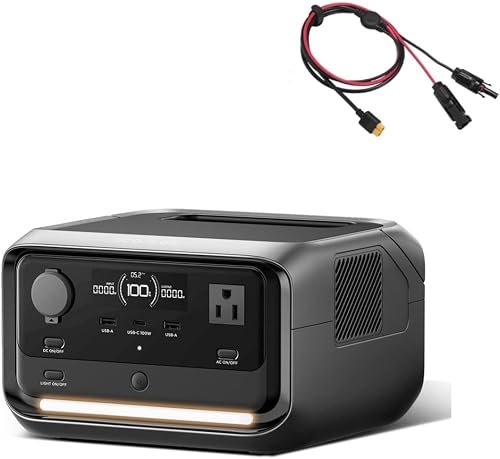
 Best 1 kWh optionEcoFlow DELTA 3 PlusView on Amazon
 Best 2 kWh optionDJI Power 2000View on Amazon
 Best for home backupEcoFlow DELTA Pro 3View on Amazon
Our top LiFePO4 choice is the EcoFlow DELTA 3 Plus. It uses LiFePO4 cells rated for 4,000 cycles to 80% capacity, and it’s still easy to carry. If you need more capacity, the DJI Power 2000 lists over 80% after 4,000 cycles.
We confirmed battery chemistry on published specs in November 2026, and we haven’t tested these stations.
Quick comparison
| Model | Capacity | Battery rating | Weight |
|---|---|---|---|
| EcoFlow DELTA 3 Plus | 1,024 Wh | 4,000 cycles to 80% | 27.6 lb |
| DJI Power 2000 | 2,048 Wh | Over 80% after 4,000 cycles | About 48.5 lb |
| EcoFlow DELTA Pro 3 | 4 kWh | 4,000 cycles to 80% | 113.5 lb |
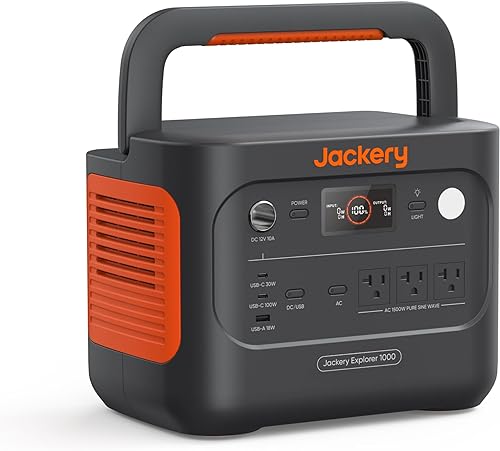
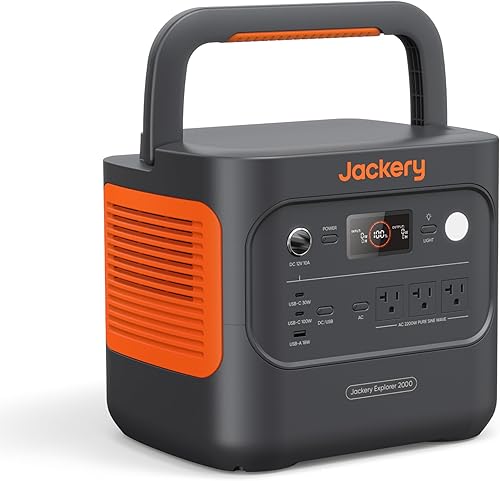
Other models we compare also use LiFePO4, but some list different ratings. Jackery lists 4,000 cycles to 70% or more for the Explorer 2000 v2, for example, and Renogy lists 3,000 cycles for the PowerStation 2000. Anker’s C1000 Gen 2 page gives a cycle rating but doesn’t name the battery type, so we left it out here.
LiFePO4 vs. lithium-ion
LiFePO4, also written LFP, stands for lithium iron phosphate. Older and lighter models often use a lithium-ion chemistry called NMC, which stands for nickel manganese cobalt.
| LiFePO4 | NMC lithium-ion | |
|---|---|---|
| Typical cycle life | Often 3,000 or more | Often 500 to 1,000 |
| Weight for the same capacity | Heavier | Lighter |
| Thermal stability | Generally higher | Generally lower |
These are typical figures, and they vary by model.
What a cycle count means
One cycle is one full discharge and recharge. A rating of 4,000 cycles to 80% means the battery should still hold about 80% of its original capacity after that many cycles.
Compare both numbers. 4,000 cycles to 80% and 4,000 cycles to 70% aren’t the same promise. Battery age also matters, so a high rating is most useful for frequent use, such as living in a van or running off-grid.
EcoFlow DELTA 3 Plus: best 1 kWh option
It pairs a strong rating with 1,000 W of solar input and the option to grow to 5 kWh. Read our full DELTA 3 Plus review.
EcoFlow DELTA 3 Plus
- Capacity
- 1,024 Wh
- AC output
- 1,800 W
- Solar input
- 1,000 W
- Weight
- 27.6 lb
Who it's for: Campers and van owners who want fast recharging, strong solar input, and the option to add batteries later.
Strengths
- Expandable to 5 kWh
- 1,000 W of solar input
- Full charge in about 1.3 hours from an 800 W car source
Weaknesses
- Fast car charging needs a separate Alternator Charger
- 1 kWh base capacity is modest for full-time use
DJI Power 2000: best 2 kWh option
DJI says it maintains over 80% capacity after 4,000 cycles, and it has a 3,000 W output. It can also take up to 10 expansion batteries.
DJI Power 2000
- Capacity
- 2,048 Wh
- AC output
- 3,000 W
- Expansion
- Up to 22,528 Wh
- Weight
- About 48.5 lb
Who it's for: People who want high output from a 2 kWh station and may add batteries later.
Strengths
- 3,000 W output
- Takes up to 10 expansion batteries
- Rated to keep over 80% capacity after 4,000 cycles
Weaknesses
- Solar charging needs a separate DJI module or charger
- Heavy to carry at about 48.5 lb
EcoFlow DELTA Pro 3: best for home backup
It has the same 4,000-cycle rating in a much larger system, with 120V and 240V output. Read our full DELTA Pro 3 review.
EcoFlow DELTA Pro 3
- Capacity
- 4 kWh
- AC output
- 4,000 W
- Voltage
- 120V and 240V
- Expansion
- Up to 12 kWh per unit
Who it's for: Homeowners who want 120V and 240V backup and may add batteries over time.
Strengths
- Expands to 12 kWh on one unit, more as a multi-unit system
- 120V and 240V output
- Rated to keep 80% capacity after 4,000 cycles
Weaknesses
- Lower continuous output than the F3800 Plus
- More capacity than small essential loads need
How to choose
- Think about how often you’ll use it. Cycle ratings matter most with frequent use.
- Compare the percentage as well as the cycle count. Look for the capacity each rating refers to.
- Size it for your needs. See our beginner’s guide to work out capacity.
- Check the weight. LiFePO4 is generally heavier for the same capacity.
FAQ
Is LiFePO4 better than lithium-ion?
For frequent use, usually yes, as it typically lasts much longer. Older NMC models are often lighter, which can suit occasional use.
Are LFP and LiFePO4 the same?
Yes. They’re two names for lithium iron phosphate.
Does a higher cycle rating mean it lasts longer?
Usually, but check what each rating means. Makers measure to different capacity levels, and battery age matters too.