Best Goal Zero Yeti 1500 Alternatives
As an Amazon Associate I earn from qualifying purchases. Read our affiliate disclosure.
Top picks at a glance
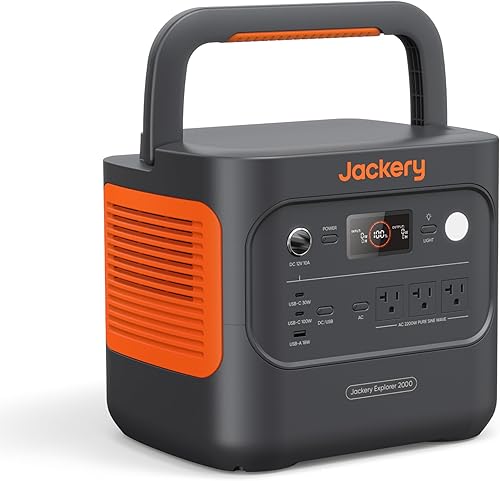 Best for more energy per poundJackery Explorer 2000 v2View on Amazon
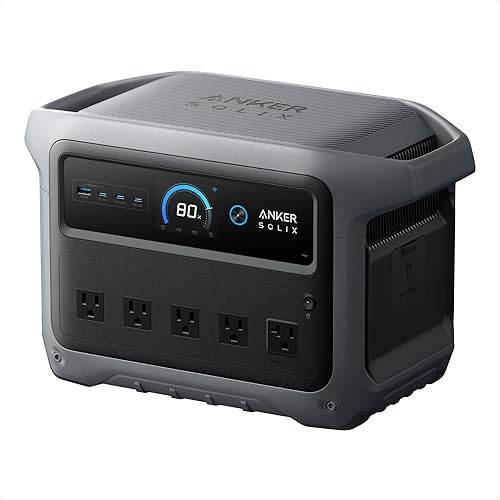 Best for cold weatherAnker SOLIX C1000 Gen 2View on Amazon
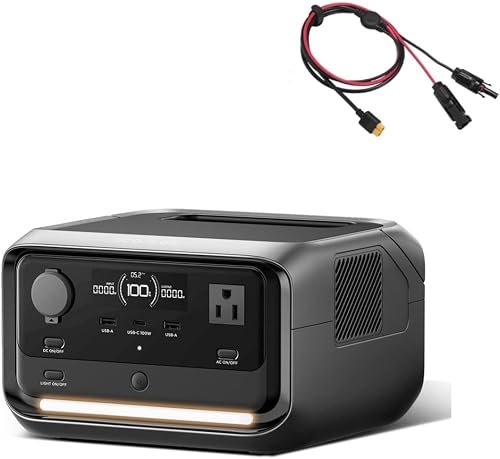
 Best for adding batteriesEcoFlow DELTA 3 PlusView on Amazon
The Jackery Explorer 2000 v2 is our first pick if the Yeti 1500’s weight is the problem. It holds 537 Wh more and weighs 13.25 lb less. If you chose the Yeti for cold-weather use, the Anker SOLIX C1000 Gen 2 shares its -4°F rating at under half the weight. For a system you can grow, the EcoFlow DELTA 3 Plus expands to 5 kWh.
We built this list from the specs each maker published as of November 2026. We have not tested the Yeti 1500 or any of the alternatives.
Why look past the Yeti 1500?
The Yeti 1500 has real strengths, as our Yeti 1500 review explains. It’s rated for use down to -4°F, has IPX4 water resistance, and takes 900 W of solar. Buyers tend to look elsewhere for two reasons:
- Weight: at 52.75 lb, it carries 28.5 Wh per lb, one of the lowest figures among the stations we compare.
- No expansion: Goal Zero says it doesn’t work with its expansion modules or older Yeti batteries.
One thing to know up front: we couldn’t confirm an IPX rating for any of the alternatives below. If water resistance is the reason you want the Yeti, it may still be the right pick.
Yeti 1500 alternatives compared
| Model | Capacity | AC output | Solar input | Use range | Weight | Wh per lb |
|---|---|---|---|---|---|---|
| Goal Zero Yeti 1500 | 1,505 Wh | 2,000 W | 900 W | -4°F to 104°F | 52.75 lb | 28.5 |
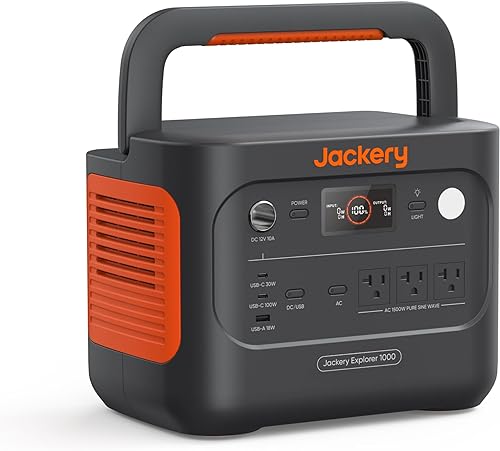
| Jackery Explorer 2000 v2 | 2,042 Wh | 2,200 W | 400 W | 14°F to 113°F | 39.5 lb | 51.7 |
| Anker SOLIX C1000 Gen 2 | 1,024 Wh | 2,000 W | 600 W | -4°F to 104°F | 24.9 lb | 41.1 |
| EcoFlow DELTA 3 Plus | 1,024 Wh, expandable to 5 kWh | 1,800 W | 1,000 W | Not confirmed | 27.6 lb | 37.1 |
We worked out the Wh per lb column from each maker’s capacity and weight. The other figures are published specs.
Jackery Explorer 2000 v2: best for more energy per pound
This is the swap that gets you more of everything except solar input. You get 2,042 Wh against 1,505 Wh, 200 W more AC output, and a 4,400 W surge rating. At 51.7 Wh per lb, it stores nearly twice as much per pound as the Yeti.
The Jackery isn’t a cold-weather station on paper, though. Jackery lists use down to 14°F, not -4°F. It also takes 400 W of solar, less than half the Yeti’s 900 W, and you can’t add batteries.
Jackery Explorer 2000 v2
- Capacity
- 2,042 Wh
- AC output
- 2,200 W
- Surge
- 4,400 W
- Weight
- 39.5 lb
Who it's for: Households that want about 2 kWh one person can move, with no plans to expand.
Strengths
- About 2 kWh at 39.5 lb
- 4,400 W surge rating
- LFP battery
Weaknesses
- Heavier to move than 1 kWh models
- Not expandable
Anker SOLIX C1000 Gen 2: best for cold weather
Anker rates the C1000 Gen 2 for use down to -4°F, the same as the Yeti. It matches the Yeti’s 2,000 W output at 24.9 lb, less than half the weight. Anker also lists a 49-minute wall charge and an under-10 ms UPS switchover.
What you lose is capacity. At 1,024 Wh, it holds about two-thirds of the Yeti’s energy. Like the Yeti, it can’t take extra batteries, so that’s the most you’ll ever have.
Anker SOLIX C1000 Gen 2
- Capacity
- 1,024 Wh
- AC output
- 2,000 W
- Solar input
- 600 W
- Weight
- 24.9 lb
Who it's for: People who want about 1 kWh and 2,000 W in a portable box, and don't need to add batteries.
Strengths
- 49-minute full AC charge
- 2,000 W output, 3,000 W peak
- Rated to keep 80% capacity after 4,000 cycles
Weaknesses
- Not expandable
- Lower solar input than the DELTA 3 Plus
EcoFlow DELTA 3 Plus: best for adding batteries
If the Yeti’s fixed capacity is what bothers you, the DELTA 3 Plus starts at 1,024 Wh and expands to 5 kWh. It also takes 1,000 W of solar, slightly more than the Yeti’s 900 W, at about half the weight.
Its standard output is 1,800 W, or 2,200 W with X-Boost, a bit below the Yeti’s 2,000 W standard rating. We didn’t find a use temperature range in our DELTA 3 Plus specs, so we can’t say how it compares in the cold.
EcoFlow DELTA 3 Plus
- Capacity
- 1,024 Wh
- AC output
- 1,800 W
- Solar input
- 1,000 W
- Weight
- 27.6 lb
Who it's for: Campers and van owners who want fast recharging, strong solar input, and the option to add batteries later.
Strengths
- Expandable to 5 kWh
- 1,000 W of solar input
- Full charge in about 1.3 hours from an 800 W car source
Weaknesses
- Fast car charging needs a separate Alternator Charger
- 1 kWh base capacity is modest for full-time use
Runtime from one charge at 150 W
Here’s what each base unit could deliver to a steady 150 W load, such as a 12V fridge and lights at a campsite. We assume 85% of each battery reaches your gear.
| Model | Usable energy | Hours at 150 W |
|---|---|---|
| Jackery Explorer 2000 v2 | About 1,736 Wh | About 11.6 hours |
| Goal Zero Yeti 1500 | About 1,279 Wh | About 8.5 hours |
| Anker SOLIX C1000 Gen 2 | About 870 Wh | About 5.8 hours |
| EcoFlow DELTA 3 Plus | About 870 Wh | About 5.8 hours |
How to choose
- You want more capacity without more weight: Jackery Explorer 2000 v2
- You use your station below 14°F: Anker SOLIX C1000 Gen 2, or stay with the Yeti
- You want to add batteries later: EcoFlow DELTA 3 Plus
- You need water resistance and a large solar input: stay with the Yeti 1500
For a direct matchup, read our Yeti 1500 vs. C1000 Gen 2 comparison. Our cold-weather picks cover more options for winter use.
FAQ
What is the best alternative to the Goal Zero Yeti 1500?
For most buyers, the Jackery Explorer 2000 v2. It stores 2,042 Wh, about 537 Wh more than the Yeti 1500, and weighs 39.5 lb, which is 13.25 lb less. It isn’t rated for use as cold as the Yeti, though.
Which Yeti 1500 alternative works in the cold?
The Anker SOLIX C1000 Gen 2 is rated for use down to -4°F, the same as the Yeti 1500. Neither one is rated to charge below 32°F.
Is any alternative as water resistant as the Yeti 1500?
We couldn’t confirm an IPX rating for the Jackery Explorer 2000 v2, Anker C1000 Gen 2, or EcoFlow DELTA 3 Plus. Goal Zero lists IPX4 for the Yeti 1500, so it’s the safer pick if splashes are a concern.
Can I add batteries to any of these alternatives?
Yes, to the EcoFlow DELTA 3 Plus, which expands to 5 kWh. Jackery says the Explorer 2000 v2 can’t take extra batteries, and Anker says the same of the C1000 Gen 2.