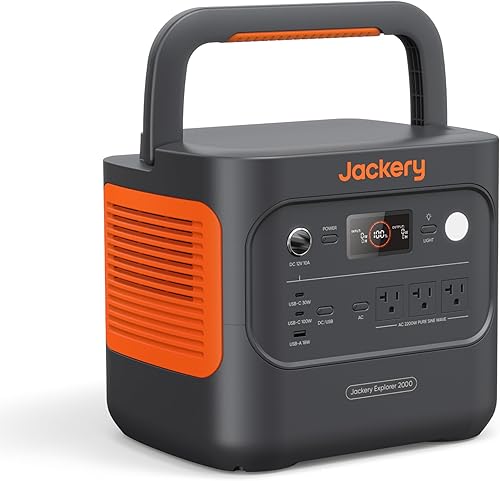
Goal Zero Yeti 1500 vs. Anker SOLIX C1000 Gen 2
As an Amazon Associate I earn from qualifying purchases. Read our affiliate disclosure.
Top picks at a glance
 Best for more capacityGoal Zero Yeti 1500View on Amazon
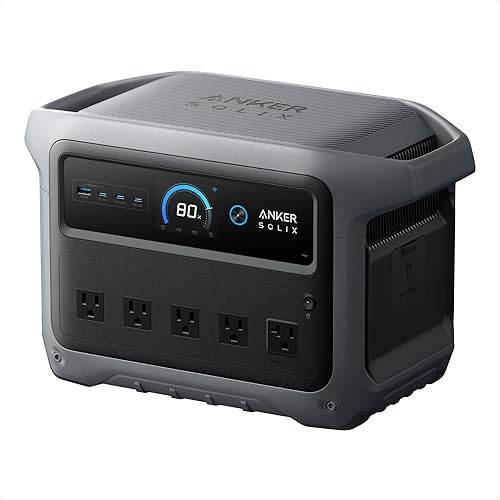 Best for easy carryingAnker SOLIX C1000 Gen 2View on Amazon
These two have the same 2,000 W output, but they differ in size. Choose the Goal Zero Yeti 1500 if you want about 47% more capacity and can handle the weight. Choose the Anker SOLIX C1000 Gen 2 if you’d rather carry less than half the weight.
Both sets of numbers come from published specs we checked in November 2026. We haven’t tested the Yeti 1500 or C1000 Gen 2.
Side by side
| Spec | Goal Zero Yeti 1500 | Anker SOLIX C1000 Gen 2 |
|---|---|---|
| Capacity | 1,505 Wh | 1,024 Wh |
| AC output | 2,000 W | 2,000 W |
| Listed peak | 3,600 W surge | 3,000 W peak |
| Solar input | 900 W | 600 W |
| Full AC charge | About 1.1 hours | 49 minutes |
| Weight | 52.75 lb | 24.9 lb |
| Capacity per pound | 28.5 Wh | 41.1 Wh |
| Expandable | No | No |
| Battery rating | 4,000 cycles to 80% | 4,000 cycles to 80% |
| Switchover | Under 15 ms | Under 10 ms |
| Use down to | -4°F | -4°F |
| Charge down to | 32°F | 32°F |
Where the Yeti 1500 wins
Capacity: at 85% efficiency, a 100 W load would run for about 13 hours, compared with about 9 hours on the Anker.
Startup power: Goal Zero lists 3,600 W of surge, compared with a 3,000 W peak for the Anker.
Solar input: it takes up to 900 W across two ports. Goal Zero lists 600 W at 12.3 to 60 V on the HPP port and 300 W at 13.2 to 30 V on the 8mm port.
Weather rating: Goal Zero lists IPX4 water resistance. We didn’t find a water rating on Anker’s page.
Goal Zero Yeti 1500
- Capacity
- 1,505 Wh
- AC output
- 2,000 W
- Solar input
- 900 W
- Weight
- 52.75 lb
Who it's for: People who want a mid-size station for cold trips and can handle the weight.
Strengths
- Rated for use down to -4°F
- 900 W of solar input
- Rated to keep 80% capacity after 4,000 cycles
Weaknesses
- Heavy for its capacity at 52.75 lb
- Not compatible with expansion batteries
Where the C1000 Gen 2 wins
Weight: it’s 27.85 lb lighter, which is the biggest difference between the two. It also gives you much more energy per pound.
AC charging: Anker lists a full charge in 49 minutes with UltraFast charging. Goal Zero lists about 1.1 hours with fast charging.
Switchover: Anker lists under 10 ms for UPS use, while Goal Zero lists under 15 ms for moving from grid to battery.
Anker SOLIX C1000 Gen 2
- Capacity
- 1,024 Wh
- AC output
- 2,000 W
- Solar input
- 600 W
- Weight
- 24.9 lb
Who it's for: People who want about 1 kWh and 2,000 W in a portable box, and don't need to add batteries.
Strengths
- 49-minute full AC charge
- 2,000 W output, 3,000 W peak
- Rated to keep 80% capacity after 4,000 cycles
Weaknesses
- Not expandable
- Lower solar input than the DELTA 3 Plus
Where they’re close
Both have 2,000 W of output, and both are rated to keep 80% of their capacity after 4,000 cycles. They also share the same temperature ratings: use from -4°F to 104°F, and charging from 32°F to 104°F. Neither can be expanded, so buy the size you need.
For more on the Goal Zero model, read our full Yeti 1500 review.
How to choose
- Longer trips or outages: Yeti 1500
- Larger solar setups: Yeti 1500
- Carrying it by hand: C1000 Gen 2
- Fast top-ups from a wall outlet: C1000 Gen 2
If both fall short on capacity, look at a 2 kWh model instead, as neither can take extra batteries.
FAQ
Do they have the same output?
Yes. Both are rated at 2,000 W, so the extra capacity on the Yeti 1500 gives you longer runtime, not more power.
Which one is better in the cold?
The Goal Zero Yeti 1500 and Anker SOLIX C1000 Gen 2 share the same listed cold limits, with use down to -4°F and charging down to 32°F. See our cold-weather guide for tips.
Can I add batteries to the Yeti 1500 or C1000 Gen 2?
No. Goal Zero says the Yeti 1500 isn’t compatible with its expansion modules, and Anker says the C1000 Gen 2 has no expansion feature.
For lighter options, see our lightweight guide.