Goal Zero Yeti 1500 Review: What the Specs Tell You
As an Amazon Associate I earn from qualifying purchases. Read our affiliate disclosure.
At a glance
 Best for cold, wet conditionsGoal Zero Yeti 1500View on Amazon
The Goal Zero Yeti 1500 suits rough use, with a -4°F rating, IPX4 water resistance, and 900 W of solar input. The catch is weight. At 52.75 lb, it’s as heavy as some 2 kWh stations, with about 1.5 kWh of capacity.
Goal Zero’s published specs, checked in November 2026, are the basis for this review. We haven’t tested the Yeti 1500.
Goal Zero Yeti 1500 key specs
| Spec | Goal Zero Yeti 1500 |
|---|---|
| Capacity | 1,505 Wh |
| Battery rating | 4,000 cycles to 80% capacity |
| AC output | 2,000 W, 3,600 W surge |
| Solar input | 900 W across two ports |
| AC charge | About 1.1 hours on fast charge |
| Grid-to-battery switching | Under 15 ms |
| Water resistance | IPX4 |
| Use and charge range | -4°F to 104°F, 32°F to 104°F |
| Weight | 52.75 lb |
| Warranty | 5 years |
Who is the Goal Zero Yeti 1500 for?
- Campers and overlanders who stay out in cold or damp conditions
- People who keep their station in a truck or camper
- Anyone who wants a size between 1 kWh and 2 kWh
Skip it if you carry your station by hand, or want to add batteries later.
Goal Zero Yeti 1500 strengths
Cold rating: it’s rated for use down to -4°F, the lowest limit we could confirm.
Water resistance: Goal Zero lists IPX4, which isn’t something we’ve confirmed on most of the stations we compare.
Solar input: it takes up to 900 W, with 600 W on the HPP port and 300 W on the 8mm port.
Goal Zero Yeti 1500 weaknesses
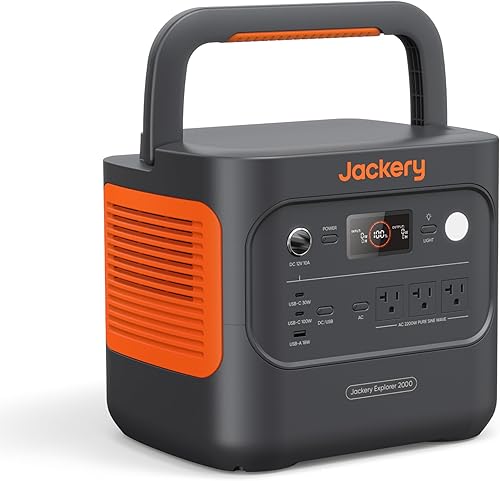
Weight: it offers 28.5 Wh per lb, which is low for the models we compare. The Jackery Explorer 2000 v2 holds more at 39.5 lb.
No expansion: Goal Zero says it isn’t compatible with its expansion modules or the external batteries used on earlier Yeti models.
Charging limits: like the others here, it isn’t rated to charge below 32°F.
Goal Zero Yeti 1500
- Capacity
- 1,505 Wh
- AC output
- 2,000 W
- Solar input
- 900 W
- Weight
- 52.75 lb
Who it's for: People who want a mid-size station for cold trips and can handle the weight.
Strengths
- Rated for use down to -4°F
- 900 W of solar input
- Rated to keep 80% capacity after 4,000 cycles
Weaknesses
- Heavy for its capacity at 52.75 lb
- Not compatible with expansion batteries
How long will the Goal Zero Yeti 1500 run?
We assume 85% efficiency here, so 1,505 Wh becomes about 1,279 Wh at the outlet.
| Load | Estimated runtime |
|---|---|
| 100 W | About 13 hours |
| 500 W | About 2.6 hours |
| 1,000 W | About 1.3 hours |
How does the Goal Zero Yeti 1500 compare?
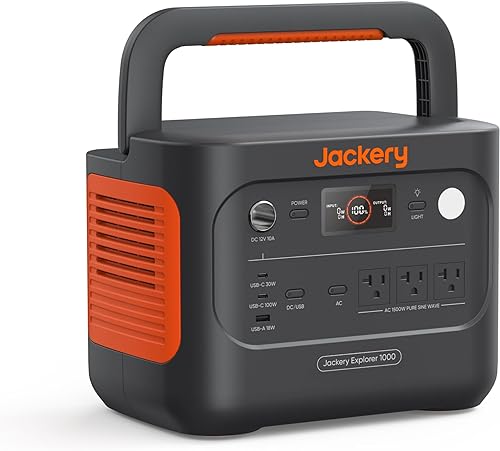
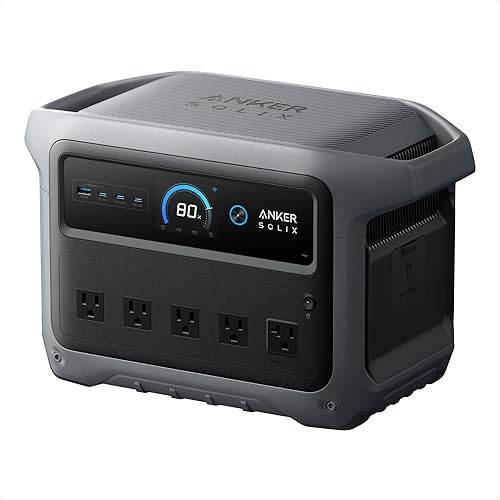
The Anker SOLIX C1000 Gen 2 and Jackery Explorer 1000 v2 are the closest we cover, and both are much lighter. That’s why its 28.5 Wh/lb trails them. We calculated that column, and the others come straight from brand specs.
| Model | Capacity | AC output | Weight | Capacity per pound |
|---|---|---|---|---|
| Anker SOLIX C1000 Gen 2 | 1,024 Wh | 2,000 W | 24.9 lb | 41.1 Wh/lb |
| Jackery Explorer 1000 v2 | 1,070 Wh | 1,500 W | 23.8 lb | 45.0 Wh/lb |
| Goal Zero Yeti 1500 | 1,505 Wh | 2,000 W | 52.75 lb | 28.5 Wh/lb |
How to choose
The Yeti 1500 is the pick if durability and cold use matter more than weight. If you’d rather carry less, compare it with the Anker C1000 Gen 2. For more cold-weather options, see our cold-weather picks.
FAQ
Is this the same as the Yeti 1500X?
No. The 1500X is an older model. This 6th Gen Yeti 1500 uses a LiFePO4 battery.
Can it use older Yeti expansion batteries?
No. Goal Zero says it isn’t compatible with the expansion modules or external batteries used on earlier Yeti models.
Can I leave it out in the rain?
IPX4 is a water resistance rating, not a waterproof one. Follow the manual, and don’t leave it exposed.