Best EcoFlow DELTA Pro 3 Alternatives
As an Amazon Associate I earn from qualifying purchases. Read our affiliate disclosure.
Top picks at a glance
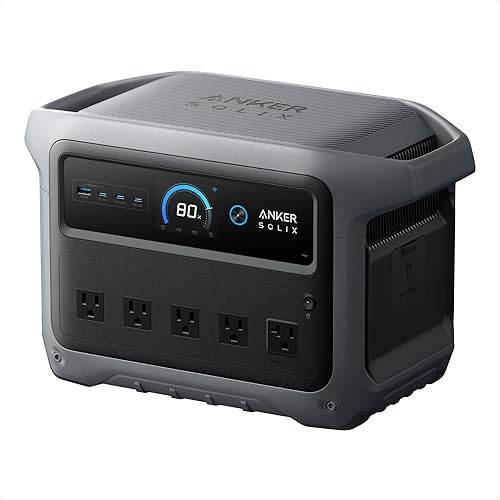
 Best for more outputAnker SOLIX F3800 PlusView on Amazon
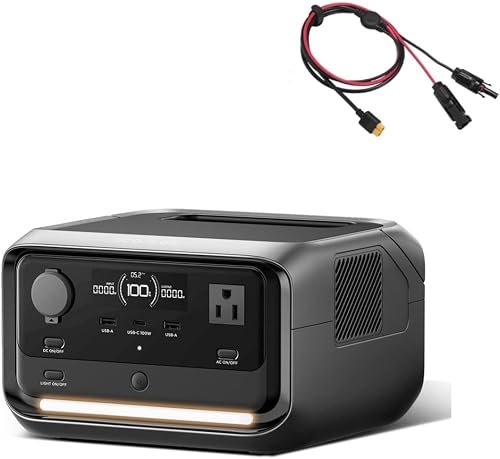
 Best smaller start that growsDJI Power 2000View on Amazon
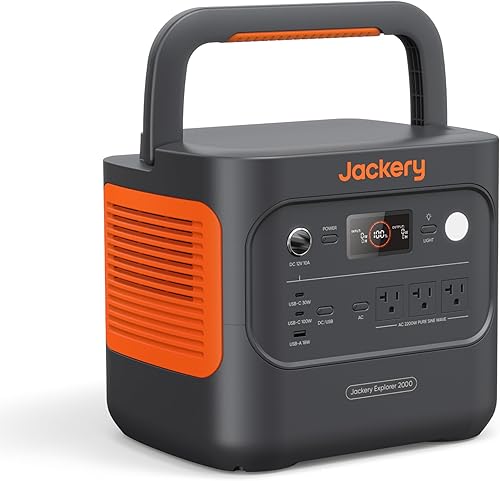 Best to lift by handJackery Explorer 2000 v2View on Amazon
If you want a station as big as the DELTA Pro 3 with even more muscle, the Anker SOLIX F3800 Plus is the alternative to consider. It outputs 6,000 W as standard and takes 3,200 W of solar. If 4 kWh and 113.54 lb is more than you need, step down to the DJI Power 2000, which you can grow with extra batteries, or the Jackery Explorer 2000 v2, the lightest 2 kWh station we cover.
These picks come from the makers’ published spec pages, checked in November 2026. We haven’t owned or tested any of these stations.
Why look for a DELTA Pro 3 alternative?
The DELTA Pro 3 is a strong home backup unit, as our DELTA Pro 3 review shows. It has 120V and 240V output, 4,000 cycles to 80%, and expansion to 12 kWh on one unit. People usually look elsewhere for one of three reasons:
- They need more standard output. It gives 4,000 W, or 6,000 W only with X-Boost.
- It’s too heavy to move. At 113.54 lb, it lives on its wheels.
- It’s more than they need. For a fridge, Wi-Fi, and lights during a short outage, 4 kWh can be more battery than the job calls for.
DELTA Pro 3 alternatives compared
| Model | Capacity | AC output | 240V output | Solar input | Weight | Add batteries? |
|---|---|---|---|---|---|---|
| EcoFlow DELTA Pro 3 | 4,096 Wh | 4,000 W | Yes | 2,600 W | 113.54 lb | Yes, to 12 kWh per unit |
| Anker SOLIX F3800 Plus | 3,840 Wh | 6,000 W | Yes | 3,200 W | 136.7 lb | Yes, up to six 3.84 kWh batteries |
| DJI Power 2000 | 2,048 Wh | 3,000 W | No, 120V only in the US | 400 W, or 1,800 W with a separate charger | About 48.5 lb | Yes, to 22,528 Wh |
| Jackery Explorer 2000 v2 | 2,042 Wh | 2,200 W | Not listed | 400 W | 39.5 lb | No |
Anker SOLIX F3800 Plus: best for more output
Anker’s 6,000 W is standard output, with no boost mode needed, and it’s 2,000 W more than the DELTA Pro 3’s standard figure. It also takes 3,200 W of solar across two ports, so a large roof or ground array can refill it faster. Like the EcoFlow, it has both 120V and 240V output. It adds a TT-30 RV port rated to 3,000 W.
The trade-offs are clear on paper. At 136.7 lb, it’s about 23 lb heavier. Anker lists 3,000+ cycles, while EcoFlow lists 4,000 to 80%. Anker’s UPS switchover is 20 ms on a 120V wall outlet, compared with 10 ms on the DELTA Pro 3. Our DELTA Pro 3 vs. F3800 Plus comparison goes through each spec.
Anker SOLIX F3800 Plus
- Capacity
- 3,840 Wh
- AC output
- 6,000 W
- Solar input
- 3,200 W
- Weight
- 136.7 lb
Who it's for: RV owners and homeowners with heavy or 240V loads who can keep a large unit in one place.
The photo also shows the Home Power Panel, which Amazon sells with this model in some listings. Check what's included before you buy.
Strengths
- 120V and 240V output
- TT-30 RV port
- Supports up to six 3.84 kWh expansion batteries
Weaknesses
- Very heavy at 136.7 lb, though it has wheels
- AC charging input is 1,800 W
DJI Power 2000: best smaller start that grows
The DJI starts at half the DELTA Pro 3’s capacity and about 65 lb less weight. You can add up to 10 batteries, for a total of 22,528 Wh. That lets you begin with what a short outage needs and build up later.
Two limits matter for home backup. DJI’s US model is 120V only, so it won’t run 240V appliances, such as some well pumps and central air units. Its built-in solar path is also small, at 400 W through an adapter module, unless you buy DJI’s separate 1.8 kW charger.
DJI Power 2000
- Capacity
- 2,048 Wh
- AC output
- 3,000 W
- Expansion
- Up to 22,528 Wh
- Weight
- About 48.5 lb
Who it's for: People who want high output from a 2 kWh station and may add batteries later.
Strengths
- 3,000 W output
- Takes up to 10 expansion batteries
- Rated to keep over 80% capacity after 4,000 cycles
Weaknesses
- Solar charging needs a separate DJI module or charger
- Heavy to carry at about 48.5 lb
Jackery Explorer 2000 v2: best to lift by hand
At 39.5 lb, the Jackery is the alternative most people can carry from a closet to the kitchen without wheels. It holds about half the DELTA Pro 3’s energy, enough for a few hours of moderate loads, as the runtime table below shows.
You give up a lot of headroom. Output is 2,200 W, solar input is 400 W, and Jackery says you can’t add batteries. It also lists 4,000 cycles to 70% or more, a lower bar than the 80% on the other three.
Jackery Explorer 2000 v2
- Capacity
- 2,042 Wh
- AC output
- 2,200 W
- Surge
- 4,400 W
- Weight
- 39.5 lb
Who it's for: Households that want about 2 kWh one person can move, with no plans to expand.
Strengths
- About 2 kWh at 39.5 lb
- 4,400 W surge rating
- LFP battery
Weaknesses
- Heavier to move than 1 kWh models
- Not expandable
How long would each one run at 400 W?
Say your essentials average 400 W across an outage. Add up your own devices, as your total will differ. We assume 85% of each battery reaches the outlet.
| Model | Usable energy | Hours at 400 W |
|---|---|---|
| EcoFlow DELTA Pro 3 | About 3,482 Wh | About 8.7 hours |
| Anker SOLIX F3800 Plus | About 3,264 Wh | About 8.2 hours |
| DJI Power 2000, base unit | About 1,741 Wh | About 4.4 hours |
| Jackery Explorer 2000 v2 | About 1,736 Wh | About 4.3 hours |
How to choose
- Do you have 240V loads? If yes, stay with the DELTA Pro 3 or choose the F3800 Plus. The DJI is 120V only in the US.
- Do you need more than 4,000 W at once? The F3800 Plus gives 6,000 W without a boost mode.
- Will you move it often? If it goes up and down stairs, look at the Jackery or the DJI.
- Do you expect your needs to grow? The DJI and F3800 Plus both take extra batteries. The Jackery doesn’t.
For a broader look at backup sizes, see our power outage picks and whole-home backup guide.
FAQ
What is the best alternative to the EcoFlow DELTA Pro 3?
The Anker SOLIX F3800 Plus is the closest match with more power. It has 3,840 Wh, 6,000 W of standard output, 120V and 240V, and 3,200 W of solar input. It is heavier, at 136.7 lb.
Is there a lighter alternative to the DELTA Pro 3 with 240V output?
Not among the stations we compare. The only other 240V model here is the Anker SOLIX F3800 Plus, which weighs 136.7 lb. Lighter options like the DJI Power 2000 and Jackery Explorer 2000 v2 don’t list 240V output.
Which DELTA Pro 3 alternative can grow the most?
The DJI Power 2000. DJI lists up to 10 expansion batteries, for 22,528 Wh in total. It’s 120V only in the US, though.
Do I need an electrician to connect any of these to my home?
To feed your home’s circuits, you need a transfer switch or a compatible home panel installed by a licensed electrician. Plugging appliances straight into the station’s outlets doesn’t need one.