EcoFlow DELTA Pro 3 vs. Anker SOLIX F3800 Plus
As an Amazon Associate I earn from qualifying purchases. Read our affiliate disclosure.
Top picks at a glance
 Best battery rating and weightEcoFlow DELTA Pro 3View on Amazon
 Best for high-power loadsAnker SOLIX F3800 PlusView on Amazon
These are two of the largest portable systems we compare. Choose the Anker SOLIX F3800 Plus if you need the most output and solar input. Choose the EcoFlow DELTA Pro 3 if you value a lighter unit, a stronger cycle rating, and faster UPS switching.
We compared these two large systems on published specs in November 2026, and we haven’t tested either.
Side by side
| Spec | EcoFlow DELTA Pro 3 | Anker SOLIX F3800 Plus |
|---|---|---|
| Capacity | 4,096 Wh | 3,840 Wh |
| AC output | 4,000 W | 6,000 W |
| With boost mode | 6,000 W with X-Boost | Not listed |
| Voltage | 120V and 240V | 120V and 240V |
| Solar input | 2,600 W | 3,200 W |
| Weight | 113.5 lb | 136.7 lb |
| Maximum on one unit | 12 kWh | About 26.9 kWh |
| Battery rating | 4,000 cycles to 80% | 3,000+ cycles |
| UPS switchover | 10 ms | 20 ms |
| Warranty | 5 years | 5 years |
The F3800 Plus maximum is our sum of the main unit plus six 3.84 kWh batteries.
Where the DELTA Pro 3 wins
Weight: it’s about 23 lb lighter. Both have wheels, but you’ll feel that difference on stairs, ramps, or a trailer.
Battery rating: EcoFlow lists 4,000 cycles to 80% capacity. Anker lists 3,000+ cycles without the same detail, so the two aren’t directly comparable, but EcoFlow’s published figure is higher.
UPS time: 10 ms is quicker than Anker’s 20 ms. Anker’s figure applies when the station is plugged into a 120V wall outlet.
Weather protection: EcoFlow lists an IP65 rating. We didn’t find one on Anker’s page.
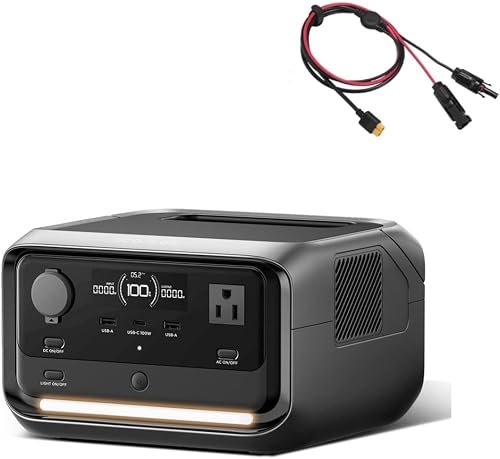
EcoFlow DELTA Pro 3
- Capacity
- 4 kWh
- AC output
- 4,000 W
- Voltage
- 120V and 240V
- Expansion
- Up to 12 kWh per unit
Who it's for: Homeowners who want 120V and 240V backup and may add batteries over time.
Strengths
- Expands to 12 kWh on one unit, more as a multi-unit system
- 120V and 240V output
- Rated to keep 80% capacity after 4,000 cycles
Weaknesses
- Lower continuous output than the F3800 Plus
- More capacity than small essential loads need
Where the F3800 Plus wins
Continuous output: 6,000 W is the highest rating we compare. EcoFlow reaches that level only with its X-Boost mode.
Solar input: 3,200 W is the highest here too. Anker says it can recharge in under two hours in optimal sunlight, if you have that many panels.
Expansion: Anker supports up to six batteries on one unit, compared with two for EcoFlow. Each BP3800 battery weighs 72.8 lb.
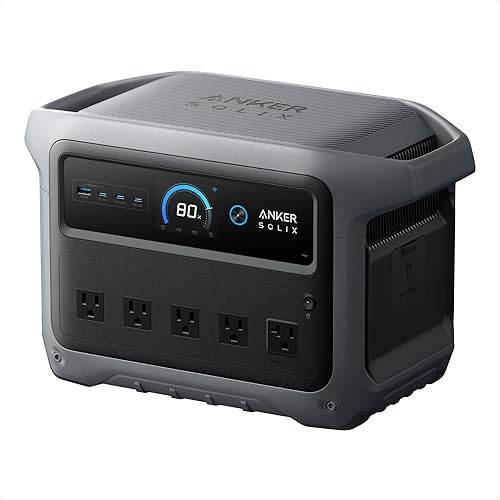
Anker SOLIX F3800 Plus
- Capacity
- 3,840 Wh
- AC output
- 6,000 W
- Solar input
- 3,200 W
- Weight
- 136.7 lb
Who it's for: RV owners and homeowners with heavy or 240V loads who can keep a large unit in one place.
The photo also shows the Home Power Panel, which Amazon sells with this model in some listings. Check what's included before you buy.
Strengths
- 120V and 240V output
- TT-30 RV port
- Supports up to six 3.84 kWh expansion batteries
Weaknesses
- Very heavy at 136.7 lb, though it has wheels
- AC charging input is 1,800 W
What they share
Both offer a NEMA TT-30 port for RVs and a NEMA L14-30 port for 120V and 240V loads. Both are large enough that you should plan where they’ll live, rather than expecting to carry them around.
If you want to connect either one to your home’s circuits, you’ll need a proper transfer switch or compatible system, installed by a licensed electrician.
How to choose
- Well pump, large AC, or other heavy 240V loads: F3800 Plus
- A big solar array: F3800 Plus
- Moving it between home and RV: DELTA Pro 3
- Protecting computers and network gear: DELTA Pro 3
For the full picture, read about expandable stations and off-grid cabins.
FAQ
Do both have 240V output?
Yes. Both list 120V and 240V output, including a NEMA L14-30 port.
Which one is easier to move?
The DELTA Pro 3, at 113.5 lb compared with 136.7 lb. Both have wheels.
How far can each one expand?
The DELTA Pro 3 reaches 12 kWh on one unit, with two extra batteries. The F3800 Plus takes up to six 3.84 kWh batteries, which adds up to about 26.9 kWh.