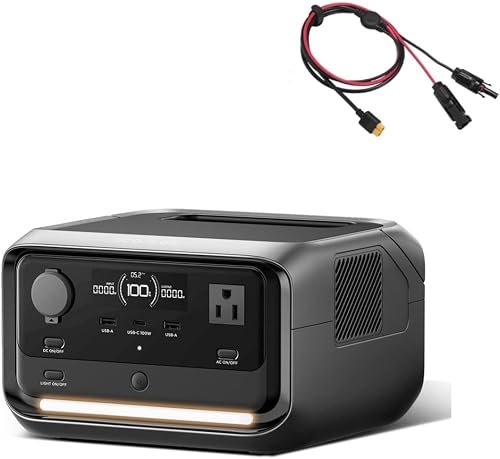
DJI Power 2000 vs. Jackery Explorer 2000 v2
As an Amazon Associate I earn from qualifying purchases. Read our affiliate disclosure.
Top picks at a glance
 Best for high output and expansionDJI Power 2000View on Amazon
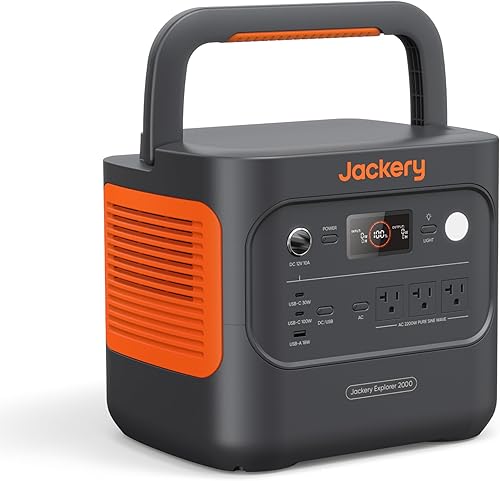 Best if you'll move it oftenJackery Explorer 2000 v2View on Amazon
Both stations hold about 2 kWh, so the choice comes down to output, weight, and whether you’ll grow. Choose the DJI Power 2000 for more output and room to add batteries. Choose the Jackery Explorer 2000 v2 for a lighter station that’s ready to use on its own.
This DJI vs. Jackery comparison uses published specs from November 2026. We haven’t tested either one.
Side by side
| Spec | DJI Power 2000 | Jackery Explorer 2000 v2 |
|---|---|---|
| Capacity | 2,048 Wh | 2,042 Wh |
| AC output | 3,000 W | 2,200 W |
| Listed surge | Not found | 4,400 W |
| Solar input | Up to 1,800 W with a separate DJI charger | 400 W |
| Weight | About 48.5 lb | 39.5 lb |
| Expandable | Up to 22,528 Wh | No |
| Battery rating | Over 80% after 4,000 cycles | 4,000 cycles to 70%+ |
| UPS switchover | 0.01 seconds | Under 20 ms |
| Use down to | 14°F | 14°F |
| Charge down to | 32°F | 32°F |
| Warranty | 5 years | 5 years (3+2) |
Where the DJI wins
Output: 3,000 W is 800 W more than the Jackery, which gives you more room to run several appliances together.
Expansion: DJI says up to 10 expansion batteries can take it to 22,528 Wh. Jackery says the Explorer 2000 v2 isn’t expandable.
Battery rating: DJI lists over 80% capacity after 4,000 cycles. Jackery lists 70% or more after the same number, so DJI’s published figure is stronger.
Solar potential: DJI lists up to 1,800 W with its 1.8 kW Solar/Car Super Fast Charger, or up to 400 W with its solar adapter module. Either way, you’ll need one of those accessories for solar.
DJI Power 2000
- Capacity
- 2,048 Wh
- AC output
- 3,000 W
- Expansion
- Up to 22,528 Wh
- Weight
- About 48.5 lb
Who it's for: People who want high output from a 2 kWh station and may add batteries later.
Strengths
- 3,000 W output
- Takes up to 10 expansion batteries
- Rated to keep over 80% capacity after 4,000 cycles
Weaknesses
- Solar charging needs a separate DJI module or charger
- Heavy to carry at about 48.5 lb
Where the Jackery wins
Weight: it’s about 9 lb lighter, which matters if you carry it in and out of storage.
Startup power: Jackery lists a 4,400 W surge rating, which helps motors and compressors start. We didn’t find a surge figure on DJI’s pages.
Simplicity: you can plug panels straight into its DC ports, as long as they fit its voltage and connector limits. It takes up to 400 W.
Jackery Explorer 2000 v2
- Capacity
- 2,042 Wh
- AC output
- 2,200 W
- Surge
- 4,400 W
- Weight
- 39.5 lb
Who it's for: Households that want about 2 kWh one person can move, with no plans to expand.
Strengths
- About 2 kWh at 39.5 lb
- 4,400 W surge rating
- LFP battery
Weaknesses
- Heavier to move than 1 kWh models
- Not expandable
Where they’re close
Capacity is almost the same, and both list the same operating limits: 14°F for use and 32°F for charging. Both also come with five years of warranty cover, though Jackery’s is 3+2 years and applies to purchases from its site, Jackery-branded third-party platforms, or authorized dealers.
Charging times are harder to compare. Jackery lists about 1.75 hours for a full AC charge. DJI’s pages give different figures for reaching 80%, at 45 and 55 minutes, so check the current listing.
How to choose
- Running several appliances at once: DJI Power 2000
- Planning to add batteries later: DJI Power 2000
- Moving it often: Jackery Explorer 2000 v2
- Starting a motor or compressor: Jackery Explorer 2000 v2, thanks to its published surge rating
- Adding solar without extra accessories: Jackery Explorer 2000 v2
FAQ
Which one has more output?
The DJI Power 2000, with 3,000 W compared with 2,200 W for the Jackery.
Can I add batteries to the Jackery?
No. Jackery says the Explorer 2000 v2 isn’t expandable, and points buyers to its Solar Generator 2000 Plus for that.
Does the DJI need an extra part for solar?
Yes. DJI lists its Solar Panel Adapter Module, which takes up to 400 W, and its 1.8 kW Solar/Car Super Fast Charger, which takes up to 1,800 W.
For more options, see our picks for power outages and expandable stations.