Best Power Station for a Chest Freezer
As an Amazon Associate I earn from qualifying purchases. Read our affiliate disclosure.
Top picks at a glance
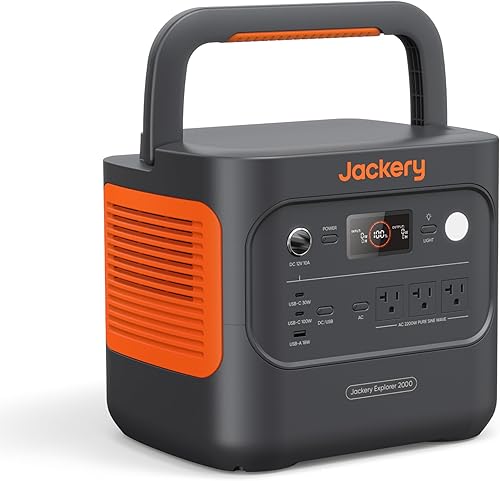 Best for most freezersJackery Explorer 2000 v2View on Amazon
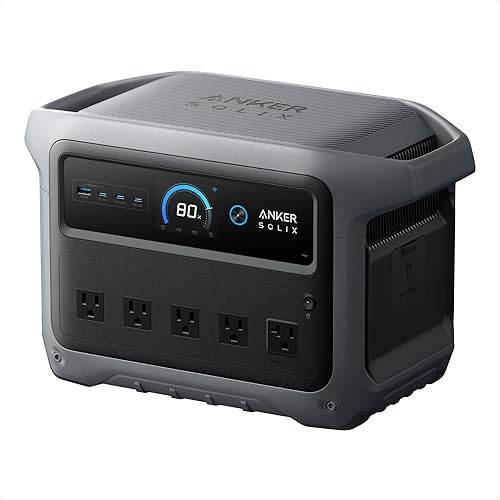 Best for short outagesAnker SOLIX C1000 Gen 2View on Amazon
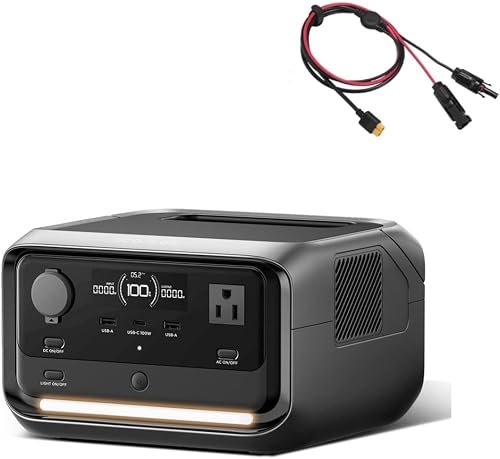
 Best for long outagesEcoFlow DELTA Pro 3View on Amazon
For most freezers, we’d pick the Jackery Explorer 2000 v2. Using ENERGY STAR’s typical figure, it could run a certified chest freezer for close to three days. For shorter outages, the Anker SOLIX C1000 Gen 2 covers more than a day at a much lower weight.
We picked these from published specs in November 2026. We haven’t run a freezer on any of them.
Quick comparison
| Model | Capacity | AC output | Weight |
|---|---|---|---|
| Jackery Explorer 2000 v2 | 2,042 Wh | 2,200 W | 39.5 lb |
| Anker SOLIX C1000 Gen 2 | 1,024 Wh | 2,000 W | 24.9 lb |
| EcoFlow DELTA Pro 3 | 4 kWh | 4,000 W | 113.5 lb |
How much power a freezer uses
ENERGY STAR says a certified chest freezer uses about 215 kWh a year, and a certified upright uses about 395 kWh. That works out to:
| Freezer type | Energy per day | Average draw |
|---|---|---|
| Chest | About 590 Wh | About 25 W |
| Upright | About 1,080 Wh | About 45 W |
For your own model, check the yellow EnergyGuide label. Older freezers can use a lot more.
Estimated runtime
These estimates use the average draw above and 85% efficiency.
| Model | Chest freezer | Upright freezer |
|---|---|---|
| Anker SOLIX C1000 Gen 2 | About 35 hours | About 19 hours |
| Jackery Explorer 2000 v2 | About 71 hours | About 39 hours |
| EcoFlow DELTA Pro 3 | About 140 hours | About 77 hours |
Treat these as upper limits. A station’s inverter uses some power just by staying on, and that matters more with a small load like this. A warm garage or frequent door opening will also shorten the runtime.
Check the startup power
Like a fridge, a freezer’s compressor draws extra power as it starts. We use the same rule as in our fridge guide: allow for three times the running watts. Every station here has far more output than a typical freezer needs.
You may not need to run it all day
A freezer holds its temperature well on its own. USDA guidance says a full freezer stays cold for about 48 hours with the door closed, and a half-full one for about 24 hours.
That gives you some options. You can save the battery for your fridge, then use it for the freezer if an outage drags on. Keep an appliance thermometer inside so you can see what’s happening without guessing.
Jackery Explorer 2000 v2: best for most freezers
It has enough capacity for a chest freezer plus a fridge for a while, and you can still move it yourself. Jackery lists a full AC charge in about 1.75 hours, which helps during on-and-off outages.
Jackery Explorer 2000 v2
- Capacity
- 2,042 Wh
- AC output
- 2,200 W
- Surge
- 4,400 W
- Weight
- 39.5 lb
Who it's for: Households that want about 2 kWh one person can move, with no plans to expand.
Strengths
- About 2 kWh at 39.5 lb
- 4,400 W surge rating
- LFP battery
Weaknesses
- Heavier to move than 1 kWh models
- Not expandable
Anker SOLIX C1000 Gen 2: best for short outages
If outages in your area tend to last a few hours, this is enough to bridge the gap. Combined with the time a closed freezer holds its temperature, it can also stretch across a longer outage.
Anker SOLIX C1000 Gen 2
- Capacity
- 1,024 Wh
- AC output
- 2,000 W
- Solar input
- 600 W
- Weight
- 24.9 lb
Who it's for: People who want about 1 kWh and 2,000 W in a portable box, and don't need to add batteries.
Strengths
- 49-minute full AC charge
- 2,000 W output, 3,000 W peak
- Rated to keep 80% capacity after 4,000 cycles
Weaknesses
- Not expandable
- Lower solar input than the DELTA 3 Plus
EcoFlow DELTA Pro 3: best for long outages
This is a much larger system. It makes sense if you want to keep several appliances going for days, and it has room to add batteries. It’s overkill for a single chest freezer.
EcoFlow DELTA Pro 3
- Capacity
- 4 kWh
- AC output
- 4,000 W
- Voltage
- 120V and 240V
- Expansion
- Up to 12 kWh per unit
Who it's for: Homeowners who want 120V and 240V backup and may add batteries over time.
Strengths
- Expands to 12 kWh on one unit, more as a multi-unit system
- 120V and 240V output
- Rated to keep 80% capacity after 4,000 cycles
Weaknesses
- Lower continuous output than the F3800 Plus
- More capacity than small essential loads need
Tips
- Keep it full: USDA suggests filling empty space with frozen jugs of water or ice.
- Plug in directly: avoid long extension cords if you can.
- Mind the garage: check the station’s temperature range, since a hot or freezing garage may fall outside it.
See our picks for power outages if you’re planning for the whole house.
How to choose
- Check your freezer’s label. The EnergyGuide label gives you a yearly figure to work from.
- Decide how long you need to cover. Remember that a closed freezer holds its temperature for a while.
- Count your other loads. If a fridge shares the station, the runtime drops.
- Think about where it will sit. Check the temperature range if it will be in a garage.
FAQ
Can a 1 kWh station run a chest freezer?
Based on ENERGY STAR’s typical figure, the C1000 Gen 2 could run a certified chest freezer for up to about 35 hours. Your freezer may use more.
Why does an upright freezer run for less time?
ENERGY STAR’s typical figure for a certified upright is about 395 kWh a year, compared with about 215 kWh for a chest freezer.
What temperatures can these stations run in?
Anker lists -4°F to 104°F for the C1000 Gen 2. Jackery and EcoFlow list 14°F to 113°F for the Explorer 2000 v2 and DELTA Pro 3.