Best EcoFlow DELTA 3 Plus Alternatives
As an Amazon Associate I earn from qualifying purchases. Read our affiliate disclosure.
Top picks at a glance
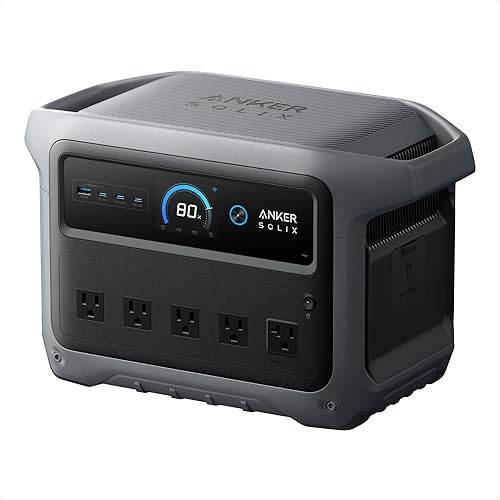 Best for output and fast chargingAnker SOLIX C1000 Gen 2Check price on Amazon
 Best for a lighter 1 kWh stationJackery Explorer 1000 v2Check price on Amazon
 Best for cold trips and more capacityGoal Zero Yeti 1500Check price on Amazon
For most buyers looking for an alternative to the EcoFlow DELTA 3 Plus, the Anker SOLIX C1000 Gen 2 is the strongest pick. The Jackery Explorer 1000 v2 is the lighter pick, and the Goal Zero Yeti 1500 is the pick for more capacity and cold trips.
This guide is based on the makers’ published specs, current in November 2026. PowerPicked Editorial did not test the stations in this guide.
How do the DELTA 3 Plus alternatives compare?
| Spec | Anker SOLIX C1000 Gen 2 | Jackery Explorer 1000 v2 | Goal Zero Yeti 1500 |
|---|---|---|---|
| Capacity | 1,024 Wh | 1,070 Wh | 1,505 Wh |
| AC output | 2,000 W | 1,500 W | 2,000 W |
| Solar input | 600 W | 400 W | 900 W |
| Weight | 24.9 lb | 23.8 lb | 52.75 lb |
Wh is short for watt-hour, a count of stored energy. W is short for watt, a count of power. AC output is the power a station sends to plug-in devices. Solar input is the most power a station can take from panels.
The Anker and the Yeti give 2,000 W of AC output, above the 1,800 W of the DELTA 3 Plus. The Jackery gives 1,500 W. The Yeti lists the highest solar input here, at 900 W.
For more detail, see the Anker SOLIX C1000 Gen 2 review, the Jackery Explorer 1000 v2 review, the Goal Zero Yeti 1500 review, and the EcoFlow DELTA 3 Plus review.
Why pick the Anker SOLIX C1000 Gen 2 instead of the DELTA 3 Plus?
This station fits a buyer who wants about 1 kWh and 2,000 W in a portable box, without a plan to add batteries.
Anker SOLIX C1000 Gen 2
- Capacity
- 1,024 Wh
- AC output
- 2,000 W
- Solar input
- 600 W
- Weight
- 24.9 lb
Who it's for: People who want about 1 kWh and 2,000 W in a portable box, and don't need to add batteries.
Strengths
- 49-minute full AC charge
- 2,000 W output, 3,000 W peak
- Rated to keep 80% capacity after 4,000 cycles
Weaknesses
- Not expandable
- Lower solar input than the DELTA 3 Plus
Output and charging speed are the main strengths. Its AC output is 2,000 W, with a 3,000 W peak. A full AC charge takes 49 minutes. After 4,000 cycles, it is rated to keep 80% of its capacity.
The drawbacks are expansion and solar. It is not expandable, so its capacity stays at 1,024 Wh. Its solar input is lower than the DELTA 3 Plus, at 600 W against 1,000 W.
This section assumes 85% of the listed capacity reaches your devices. On that basis, the C1000 Gen 2 gives about 870.4 Wh, from 1,024 Wh times 0.85. A 100 W load would run for about 8.7 hours on that amount. The C1000 Gen 2 holds about 41.1 Wh for each pound, from 1,024 Wh over 24.9 lb.
Why pick the Jackery Explorer 1000 v2 instead of the DELTA 3 Plus?
This station fits a camper who wants about 1 kWh at a low weight and will not run appliances over 1,500 W.
Jackery Explorer 1000 v2
- Capacity
- 1,070 Wh
- AC output
- 1,500 W
- Solar input
- 400 W
- Weight
- 23.8 lb
Who it's for: Campers who want about 1 kWh at a low weight and don't run appliances over 1,500 W.
Strengths
- Lightest 1 kWh model we compare
- LiFePO4 battery
- 3,000 W surge rating
Weaknesses
- Lower AC output than the Anker C1000 Gen 2
- Cycle rating is listed to 70% or more, not 80%
Weight and battery type are the main strengths. At 23.8 lb, it is lighter than the DELTA 3 Plus, which weighs 27.6 lb. Its battery type is LFP, short for lithium iron phosphate. Its surge rating is 3,000 W.
The drawbacks are output and cycles. Its AC output is lower than the Anker C1000 Gen 2, at 1,500 W against 2,000 W. Its cycle rating is listed to 70% or more, rather than 80%.
The usable figure below assumes 85% of the listed capacity reaches your devices. From 1,070 Wh times 0.85, the Explorer 1000 v2 gives about 909.5 Wh of usable energy. That amount runs a 100 W load for about 9.1 hours. Per pound, the Explorer 1000 v2 holds about 45.0 Wh, from 1,070 Wh over 23.8 lb.
Why pick the Goal Zero Yeti 1500 instead of the DELTA 3 Plus?
This station fits a buyer who wants a mid-size station for cold trips and can handle the weight.
Goal Zero Yeti 1500
- Capacity
- 1,505 Wh
- AC output
- 2,000 W
- Solar input
- 900 W
- Weight
- 52.75 lb
Who it's for: People who want a mid-size station for cold trips and can handle the weight.
Strengths
- Rated for use down to -4°F
- 900 W of solar input
- Rated to keep 80% capacity after 4,000 cycles
Weaknesses
- Heavy for its capacity at 52.75 lb
- Not compatible with expansion batteries
Capacity and cold use are the main strengths. Its capacity is 1,505 Wh, above the 1,024 Wh of the DELTA 3 Plus. Its AC output is 2,000 W. It lists 900 W of solar input. The published rating is over 80% capacity after 4,000 cycles.
The drawbacks are weight and expansion. At 52.75 lb, it is heavy for its capacity. It is not compatible with expansion batteries, so its capacity stays at 1,505 Wh.
For the usable figure, this guide assumes 85% of the listed capacity reaches your devices. From 1,505 Wh times 0.85, the Yeti 1500 gives about 1,279.3 Wh of usable energy. A 100 W load would run for about 12.8 hours on that amount. Per pound, the Yeti 1500 holds about 28.5 Wh, from 1,505 Wh over 52.75 lb.
How to choose
Start by comparing AC output. The Anker gives 2,000 W, the Yeti gives 2,000 W, and the Jackery gives 1,500 W.
Next, compare solar input. The Yeti lists 900 W, the Anker lists 600 W, and the Jackery lists 400 W.
Last, compare weight and capacity. The Jackery weighs 23.8 lb, the Anker weighs 24.9 lb, and the Yeti weighs 52.75 lb.
FAQ
Which of these alternatives weighs the least?
The Jackery Explorer 1000 v2 weighs the least, at 23.8 lb. The Anker SOLIX C1000 Gen 2 weighs 24.9 lb, and the Goal Zero Yeti 1500 weighs 52.75 lb.
Which alternative has the highest AC output?
The Anker SOLIX C1000 Gen 2 and the Goal Zero Yeti 1500 share the highest AC output, at 2,000 W each. The Jackery Explorer 1000 v2 gives 1,500 W.
Which of these alternatives can expand?
The Anker SOLIX C1000 Gen 2 is not expandable, and the Goal Zero Yeti 1500 is not compatible with expansion batteries. An expansion figure for the Jackery Explorer 1000 v2 is not listed in the reference files. The DELTA 3 Plus can expand to 5 kWh.
Which alternative suits cold trips best?
The Goal Zero Yeti 1500 suits cold trips best. Its rating covers use down to -4°F. The Anker SOLIX C1000 Gen 2 and the Jackery Explorer 1000 v2 do not list a cold-weather rating in the reference files.


