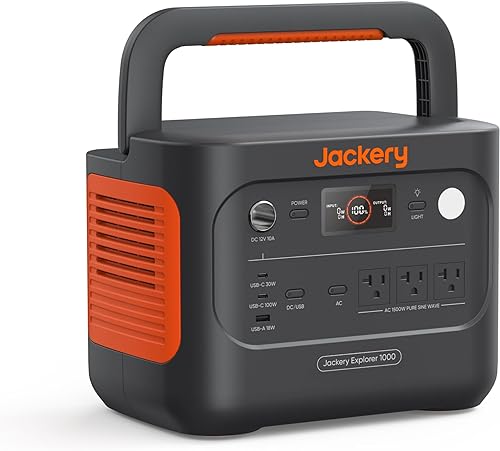
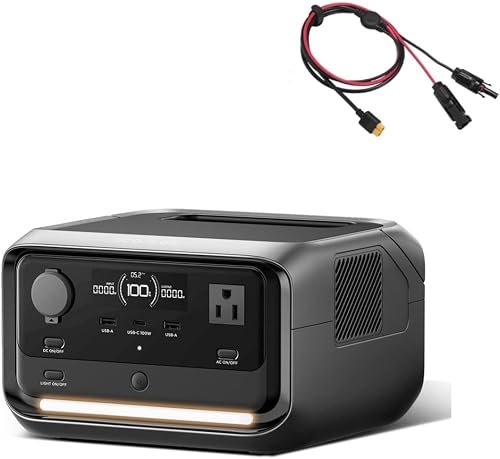
Jackery Explorer 2000 v2 vs. BLUETTI Elite 200 V2
As an Amazon Associate I earn from qualifying purchases. Read our affiliate disclosure.
Top picks at a glance
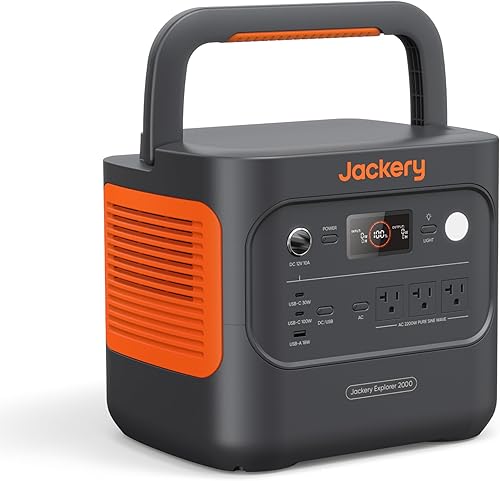 Best if you'll move it oftenJackery Explorer 2000 v2View on Amazon
 Best for solar and heavy loadsBLUETTI Elite 200 V2View on Amazon
Both stations hold about 2 kWh, but they suit different buyers. Choose the Jackery Explorer 2000 v2 if weight matters, since it’s 13.9 lb lighter. Choose the BLUETTI Elite 200 V2 if you want more continuous output and much faster solar charging.
Our verdict uses published specs from November 2026. We haven’t tested the Jackery or BLUETTI.
Side by side
| Spec | Jackery Explorer 2000 v2 | BLUETTI Elite 200 V2 |
|---|---|---|
| Capacity | 2,042 Wh | 2,073.6 Wh |
| AC output | 2,200 W | 2,600 W |
| Listed peak | 4,400 W surge | 3,900 W for resistive loads |
| Solar input | 400 W | 1,000 W |
| Full AC charge | About 1.75 hours | 1.4 hours |
| Weight | 39.5 lb | 53.4 lb |
| Expandable | No | Not confirmed |
| Battery | LFP, 4,000 cycles to 70%+ | LiFePO4, cycles not found |
| Warranty | 5 years (3+2) | 5 years |
Where the Jackery wins
Weight: this is the biggest difference between them. At 39.5 lb, one person can usually move the Jackery around the house. The BLUETTI’s 53.4 lb is a much bigger lift.
Startup power: Jackery lists a 4,400 W surge rating, which helps motors and compressors start. BLUETTI’s 3,900 W mode only applies to pure resistive loads, and we didn’t find a separate surge rating on its page.
Published details: Jackery lists its operating temperatures, cycle rating, and UPS time. We couldn’t find these on BLUETTI’s page when we checked. Jackery’s warranty note says the coverage applies to purchases from its site, Jackery-branded third-party platforms, or authorized dealers.
Jackery Explorer 2000 v2
- Capacity
- 2,042 Wh
- AC output
- 2,200 W
- Surge
- 4,400 W
- Weight
- 39.5 lb
Who it's for: Households that want about 2 kWh one person can move, with no plans to expand.
Strengths
- About 2 kWh at 39.5 lb
- 4,400 W surge rating
- LFP battery
Weaknesses
- Heavier to move than 1 kWh models
- Not expandable
Where the BLUETTI wins
Solar input: at 1,000 W, it accepts two and a half times as much as the Jackery. In ideal sun, that’s the difference between about 2 hours and about 5 hours for a full charge. Real results will be slower, but the gap remains.
Continuous output: the extra 400 W lets you run more at once, such as a microwave alongside a fridge.
AC charging: BLUETTI lists 1.4 hours with TurboBoost, a little quicker than the Jackery.
It’s weak on one point, though. Car charging is listed at only 96 W on 12V or 192 W on 24V, so it’s a poor match for road trips.
BLUETTI Elite 200 V2
- Capacity
- 2,073.6 Wh
- AC output
- 2,600 W
- Solar input
- 1,000 W
- Weight
- 53.4 lb
Who it's for: People who stay parked, run on solar, and don't need to carry their station far.
Strengths
- About 2 kWh in one unit
- 1,000 W of solar input
- LiFePO4 battery
Weaknesses
- Heavy to carry at 53.4 lb
- Car input is only 96 W on 12V or 192 W on 24V
How to choose
- Home backup, moved in and out of storage: Jackery
- Running a fridge or pump with a hard start: Jackery
- Off-grid use with several panels: BLUETTI
- Running several appliances together: BLUETTI
Still deciding? See our picks for power outages and off-grid cabins.
FAQ
How much lighter is the Jackery?
The Jackery Explorer 2000 v2 is 13.9 lb lighter than the BLUETTI Elite 200 V2, at 39.5 lb compared with 53.4 lb.
Can I add batteries to the Jackery or the BLUETTI?
Jackery says the Explorer 2000 v2 isn’t expandable. We couldn’t confirm expansion for the Elite 200 V2 on BLUETTI’s page.
Which one suits solar better?
The BLUETTI, with 1,000 W of solar input compared with 400 W for the Jackery.