BLUETTI AC180 Review: Who It Suits, Based on Specs
As an Amazon Associate I earn from qualifying purchases. Read our affiliate disclosure.
At a glance
 Best for fast wall chargingBLUETTI AC180Check price on Amazon
The BLUETTI AC180 is worth a look for buyers who want just over 1 kWh, fast wall charging, and a 35 lb box they don’t mind carrying. Its 1,440 W Turbo AC charging fills it in about 1.3 to 1.8 hours, and it gives 1,800 W of AC output.
This review is based on the maker’s published specs, current in November 2026. PowerPicked Editorial did not put this station through tests.
What does the AC180 offer?
Just over 1 kWh with fast wall charging, for buyers who don’t mind carrying 35 lb, is what this station gives. It holds 1,152 Wh, gives 1,800 W of AC output, lists 500 W of solar input, and weighs 35.3 lb.
BLUETTI AC180
- Capacity
- 1,152 Wh
- AC output
- 1,800 W
- Solar input
- 500 W
- Weight
- 35.3 lb
Who it's for: Buyers who want just over 1 kWh with fast wall charging and don't mind carrying 35 lb.
Strengths
- 1,440 W turbo AC charging, about 1.3 to 1.8 hours to full
- Rated to discharge down to -4°F
- 15 W wireless charging pad
Weaknesses
- Solar input tops out at 500 W
- UPS switchover listed at 20 ms
Turbo AC charging runs at 1,440 W, reaching full in about 1.3 to 1.8 hours. It discharges down to -4°F. It has a 15 W wireless charging pad. Solar input stops at 500 W. UPS switchover is listed at 20 ms.
A watt-hour counts stored energy and is written Wh. A watt counts power and is written W. AC output feeds devices that plug in. Solar input is the greatest power a station can take in from panels.
Its battery is LiFePO4, rated for 3,500 or more cycles. It gives four AC outlets at 120 V, with 1,800 W total. Power Lifting mode runs resistive loads like heaters and hair dryers at up to 2,700 W. Other outputs are a 100 W USB-C port, four USB-A ports, a 12 V, 10 A car outlet, and the 15 W wireless charging pad.
AC input runs at 1,440 W in Turbo mode and 1,000 W in Standard mode. Solar input is 500 W at most, at 12 to 60 V and 10 A, taking about 2.8 to 3.3 hours. It takes 12 V or 24 V from a car outlet. Pass-through charging works. In UPS mode, it switches in 20 ms. Noise is listed at 40 dB in BLUETTI’s comparison table.
It charges from 32°F to 104°F and discharges from -4°F to 104°F, with output limited to 1,500 W from 86°F to 104°F. It measures 13.39 by 9.72 by 12.48 inches. BLUETTI lists UL Standard among its certifications. The BLUETTI app connects over Bluetooth. It carries a 5-year warranty. BLUETTI lists B80, B230, and B300 batteries for it, taking total capacity to 4,224 Wh.
This part’s numbers assume 85% of the listed capacity reaches your devices. Usable energy is about 979.2 Wh, from 1,152 Wh times 0.85. A 100 W load runs for about 9.8 hours on that amount. The AC180 holds about 32.6 Wh for each pound, from 1,152 Wh over 35.3 lb.
How does the AC180 compare?
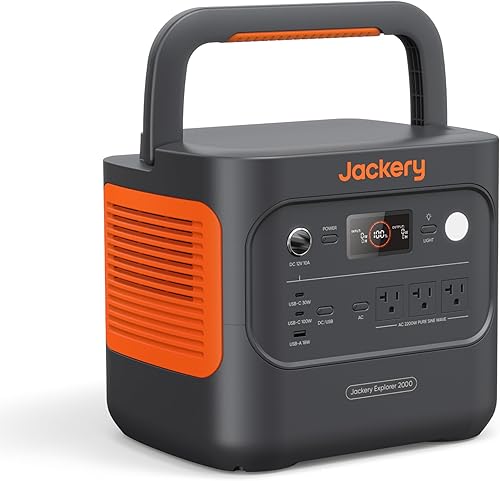
| Spec | BLUETTI AC180 | Jackery Explorer 1000 v2 | EcoFlow DELTA 3 Plus |
|---|---|---|---|
| Capacity | 1,152 Wh | 1,070 Wh | 1,024 Wh |
| AC output | 1,800 W | 1,500 W | 1,800 W |
| Solar input | 500 W | 400 W | 1,000 W |
| Weight | 35.3 lb | 23.8 lb | 27.6 lb |
The AC180 holds more energy than both, at 1,152 Wh against 1,070 Wh and 1,024 Wh. It matches the DELTA 3 Plus on AC output, at 1,800 W, and gives 300 W more than the Explorer 1000 v2. Its solar input sits between the two, at 500 W against 400 W and 1,000 W. It is the heaviest of the three, at 35.3 lb against 23.8 lb and 27.6 lb.
To read the full DELTA 3 Plus review, see the EcoFlow DELTA 3 Plus review.
How to choose
First, weigh wall charging speed. The AC180 charges from AC at 1,440 W in Turbo mode and reaches full in about 1.3 to 1.8 hours. Pick it if a fast wall charge matters most to you.
Second, weigh solar. The AC180 lists 500 W of solar input, while the DELTA 3 Plus lists 1,000 W. Pick the DELTA 3 Plus if faster solar charging matters most to you.
Third, weigh carry weight. The AC180 weighs 35.3 lb, while the Explorer 1000 v2 weighs 23.8 lb. Pick the Explorer 1000 v2 if you will carry the station by hand.
FAQ
How fast does the AC180 charge from AC?
It charges from AC in about 1.3 to 1.8 hours, at 1,440 W in Turbo mode.
How much solar input does the AC180 list?
It lists 500 W of solar input, at 12 to 60 V and 10 A.
Can the AC180 add batteries?
Yes, it can add batteries, taking total capacity to 4,224 Wh with B80, B230, and B300 batteries.
How heavy is the AC180?
It weighs 35.3 lb. That is heavier than the Jackery Explorer 1000 v2 at 23.8 lb and the EcoFlow DELTA 3 Plus at 27.6 lb.