Best Power Station for Commuters
As an Amazon Associate I earn from qualifying purchases. Read our affiliate disclosure.
Top picks at a glance
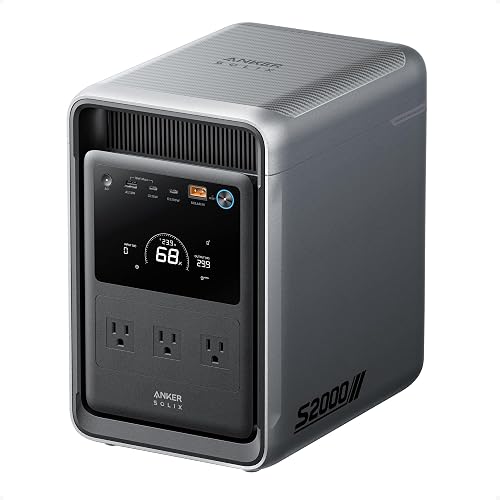
 Best for commutersAnker SOLIX C300Check price on Amazon
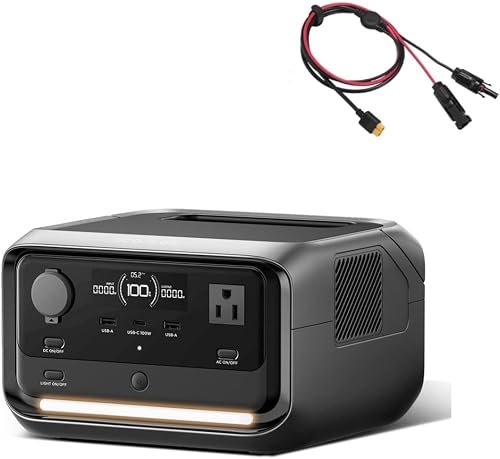 Best for more AC outputEcoFlow RIVER 3 PlusCheck price on Amazon
 Best for more stored energyGoal Zero Yeti 700Check price on Amazon
The best power station for commuters is the Anker SOLIX C300. The EcoFlow RIVER 3 Plus is the pick if you want more AC output, and the Goal Zero Yeti 700 is the pick if you want more stored energy.
This guide uses the makers’ published specs, current in November 2026. PowerPicked Editorial did not run any tests on these stations.
What does a commuter need?
A commuter carries a station on a train, in a car, or in a bag. Weight matters most, then USB-C power for a laptop and a phone, then enough stored energy for a day away from a wall outlet. All three stations here weigh 20.3 lb or less.
Wh stands for watt-hour and counts stored energy. W means watt, a measure of power. AC output runs devices that plug in. Solar input is the largest power a station can take in from panels.
Anker SOLIX C300: best for commuters
Campers and commuters who mainly charge phones, laptops, and cameras will like this small 9 lb box. It holds 288 Wh and weighs 9.1 lb, with 300 W of AC output and 100 W solar input.
Anker SOLIX C300
- Capacity
- 288 Wh
- AC output
- 300 W
- Solar input
- 100 W
- Weight
- 9.1 lb
Who it's for: Campers and commuters who mainly charge phones, laptops, and cameras and want a small 9 lb box.
Strengths
- Two 140 W USB-C ports
- Rated 3,000+ cycles to 80%
- 10 ms UPS switchover
Weaknesses
- 300 W AC output limits what it can run
- Solar input tops out at 100 W
It gives two 140 W USB-C ports. It is rated for 3,000 or more cycles to 80% capacity. Its UPS switchover takes 10 ms. At 300 W, its AC output limits what it can run. Solar input stops at 100 W.
The battery uses LiFePO4, rated for 3,000 or more cycles to 80% of its capacity. Three AC outlets give 300 W rated and 600 W surge, at 120 V. Two 140 W USB-C ports, one 15 W USB-C port, one 12 W USB-A port, and a 120 W car outlet are the other outputs. It accepts 330 W from AC. At most, solar input is 100 W, at 11 to 28 V and up to 8.2 A. A 12 V car input is also listed. It measures 6.46 by 6.34 by 9.45 inches. Its operating range is -4°F to 104°F. An app connects through Wi-Fi and Bluetooth. Warranty coverage runs 5 years.
Assume 85% of the listed capacity reaches your devices in this part. From 288 Wh times 0.85, usable energy is about 244.8 Wh. That amount gives a 100 W load about 2.4 hours of run time. For each pound, the C300 holds about 31.6 Wh, from 288 Wh over 9.1 lb.
The C300 review is at the Anker SOLIX C300 review.
EcoFlow RIVER 3 Plus: best for more AC output
People who mainly charge phones and laptops or keep Wi-Fi on will like this station, which is easy to carry. It holds 286 Wh and weighs 10.4 lb, with 600 W of AC output.
EcoFlow RIVER 3 Plus
- Capacity
- 286 Wh
- AC output
- 600 W
- AC charge
- 1 hour
- Weight
- 10.4 lb
Who it's for: People who mainly charge phones and laptops or keep Wi-Fi on, and want a station that's easy to carry.
Strengths
- Easy to carry at 10.4 lb
- Expandable to 858 Wh
- Listed at under 30 dB
Weaknesses
- Small capacity for high-power devices
- 600 W limits what you can run
Carrying it is easy at 10.4 lb. It can expand to 858 Wh. It is listed at under 30 dB. Its small capacity limits it for high-power devices. Its 600 W limit restricts what it can run.
A full AC charge takes about 1 hour.
Use 85% of the listed capacity for the numbers in this part. From 286 Wh times 0.85, usable energy is about 243.1 Wh. At 100 W, the run time is about 2.4 hours on that amount. For each pound, the RIVER 3 Plus holds about 27.5 Wh, from 286 Wh over 10.4 lb.
To read the full RIVER 3 Plus review, see the EcoFlow RIVER 3 Plus review.
Goal Zero Yeti 700: best for more stored energy
More energy than a small station holds, for people who mostly run low-power devices, is what this station gives. It holds 677 Wh, gives 600 W of AC output, lists 200 W of solar input, and weighs 20.3 lb.
Goal Zero Yeti 700
- Capacity
- 677 Wh
- AC output
- 600 W
- Solar input
- 200 W
- Weight
- 20.3 lb
Who it's for: People who need more energy than a small station holds, but mostly run low-power devices.
Strengths
- Rated for use down to -4°F
- Fills the gap between small and 1 kWh stations
- Rated to keep 80% capacity after 4,000+ cycles
Weaknesses
- 600 W limits what you can run
- 200 W of solar input is low
It works in cold down to -4°F. It fills the space between small stations and 1 kWh stations. It keeps 80% of its capacity after 4,000 or more cycles. At 600 W, its AC output limits what it can run. Solar input of 200 W is low.
The numbers in this section assume 85% of the listed capacity. From 677 Wh times 0.85 comes the usable energy. A 100 W load runs for about 5.8 hours on that amount. Per pound, the Yeti 700 holds about 33.3 Wh, from 677 Wh over 20.3 lb.
The full Yeti 700 review is at the Goal Zero Yeti 700 review.
How to choose
First, weigh carry weight. The C300 weighs 9.1 lb, the RIVER 3 Plus weighs 10.4 lb, and the Yeti 700 weighs 20.3 lb. Pick the C300 if you will carry the station in a bag every day.
Second, weigh USB-C power. The C300 gives two 140 W USB-C ports. Pick the C300 if a laptop charges through USB-C.
Third, weigh stored energy. The Yeti 700 holds 677 Wh, while the C300 holds 288 Wh and the RIVER 3 Plus holds 286 Wh. Pick the Yeti 700 if you need more energy and can handle 20.3 lb.
FAQ
Which one weighs the least?
The Anker SOLIX C300 weighs the least. It weighs 9.1 lb, while the EcoFlow RIVER 3 Plus weighs 10.4 lb and the Goal Zero Yeti 700 weighs 20.3 lb.
Which station lists the most AC output?
The EcoFlow RIVER 3 Plus and the Goal Zero Yeti 700 give the most AC output. Both give 600 W, while the Anker SOLIX C300 gives 300 W.
Which station holds the most energy?
The Goal Zero Yeti 700 holds the most energy. It holds 677 Wh, while the Anker SOLIX C300 holds 288 Wh and the EcoFlow RIVER 3 Plus holds 286 Wh.
Which station is best for a commuter?
The Anker SOLIX C300 is best for a commuter. It weighs 9.1 lb, gives two 140 W USB-C ports, and switches to UPS mode in 10 ms. The RIVER 3 Plus and the Yeti 700 are heavier.