Best EcoFlow DELTA 3 Ultra Plus Alternatives
As an Amazon Associate I earn from qualifying purchases. Read our affiliate disclosure.
Top picks at a glance
 Best for 240V powerBLUETTI Apex 300Check price on Amazon
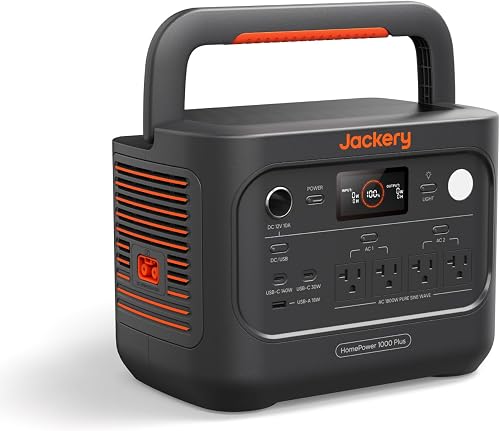
 Best lighter alternativeJackery HomePower 3000Check price on Amazon
 Best for more capacityBLUETTI Elite 400Check price on Amazon
The best alternative to the EcoFlow DELTA 3 Ultra Plus is the BLUETTI Apex 300, if what you’re missing is 240V power or faster solar charging. Shoppers who want the same capacity in a lighter box should look at the Jackery HomePower 3000. For the most energy in one unit, the BLUETTI Elite 400 is the pick.
Everything here is drawn from the spec pages that EcoFlow, BLUETTI, and Jackery publish for the US, checked in November 2026. We have not used any of these stations ourselves, so the comparison rests on those published numbers.
Where does the DELTA 3 Ultra Plus fall short?
The DELTA 3 Ultra Plus sets a high bar. It stores 3,072 Wh, puts out 3,600 W at 120V with a 7,200 W surge, and takes up to 1,600 W of solar. It switches to battery in under 10 ms, is listed at 25 dB or less at 600 W, and grows from 3 to 11 kWh with extra batteries. Its weak points are a weight of about 74.3 lb and a 5-year warranty that needs app registration. Its spec sheet also lists 120V output only. Read the DELTA 3 Ultra Plus review for the full breakdown.
The three alternatives below each beat it on one of those points, and each gives something up in return.
BLUETTI Apex 300
- Capacity
- 2,764.8 Wh
- AC output
- 3,840 W
- Solar input
- 2,400 W
- Weight
- 83.78 lb
Who it's for: Home backup and RV owners who want 240V output, a 50 A RV outlet, and room to add batteries.
Strengths
- 120/240V output through a NEMA 14-50R outlet
- Expands with up to 6 B300K batteries
- Two solar inputs, 2,400 W in total
Weaknesses
- USB and DC ports need the separate Hub D1
- Heavy at 83.78 lb
Jackery HomePower 3000
- Capacity
- 3,072 Wh
- AC output
- 3,600 W
- Solar input
- 1,000 W
- Weight
- 59.52 lb
Who it's for: Home backup buyers who want 3 kWh and a 30 A outlet without adding battery packs.
Strengths
- 3,072 Wh at 59.52 lb
- 3,600 W output, 7,200 W surge
- 30 A outlet rated 3,600 W
Weaknesses
- Can't add expansion batteries
- AC charging takes 2.2 hours
- Bypass mode limited to 1,440 W
BLUETTI Elite 400
- Capacity
- 3,840 Wh
- AC output
- 2,600 W
- Solar input
- 1,000 W
- Weight
- 85.98 lb
Who it's for: Home backup buyers who want almost 4 kWh in one box they can roll between rooms.
Strengths
- 3,840 Wh in one unit
- Telescoping handle for rolling it
- 5,200 W surge
Weaknesses
- Heavy at 85.98 lb
- Only 4 AC outlets
- 15 ms UPS switchover
BLUETTI Apex 300: when you need 240V
The Apex 300 is for home and RV owners whose loads go past what a 120V station can feed. A NEMA 14-50R outlet gives 120/240V at 50 A, and a TT-30R outlet covers 30 A RV hookups. Total output is 3,840 W, a little above the EcoFlow’s 3,600 W.
Solar is its other edge: two inputs at 1,200 W each give 2,400 W, against the EcoFlow’s 1,600 W. Like the EcoFlow, it can grow, linking to up to six B300K, B300S, or B300 batteries.
What you give up: the base unit holds 2,764.8 Wh, less than the EcoFlow, and weighs 83.78 lb, about 9.5 lb more. USB and 12V ports sit on the separate Hub D1, rated at 700 W. More in the Apex 300 review.
Jackery HomePower 3000: the same capacity, lighter
The HomePower 3000 matches the EcoFlow on the headline numbers: 3,072 Wh, 3,600 W, and a 7,200 W surge peak. It weighs about 59.52 lb, which makes it close to 15 lb lighter. It has four 20 A outlets plus a 30 A outlet, and USB ports built in.
That lighter box gives up flexibility. Jackery says it can’t connect extra batteries, so it stays at 3,072 Wh. Solar input stops at 1,000 W, it switches to battery within 20 ms instead of under 10 ms, and bypass mode is capped at 1,440 W. More in the HomePower 3000 review.
BLUETTI Elite 400: the most energy in one box
The Elite 400 holds 3,840 Wh, the largest single-unit battery of these four. BLUETTI’s Amazon listing photos show a telescoping handle and two rear wheels, so you can roll it rather than lift it. Surge is listed at 5,200 W.
It is the weakest on output, though: 2,600 W from 4 AC outlets, well below the EcoFlow’s 3,600 W. Solar input is 1,000 W, UPS switching takes 15 ms, and an expansion battery isn’t listed. At 85.98 lb, it is the heaviest of the four. More in the Elite 400 review.
How long would each one run a 500 W load?
These figures assume 85% of each listed capacity reaches your devices, with the rest lost in conversion.
| Usable energy at 85% | Hours at 500 W | Wh per lb | |
|---|---|---|---|
| DELTA 3 Ultra Plus | 2,611.2 Wh | about 5.2 | about 41.3 |
| Apex 300 | 2,350.08 Wh | about 4.7 | about 33.0 |
| HomePower 3000 | 2,611.2 Wh | about 5.2 | about 51.6 |
| Elite 400 | 3,264 Wh | about 6.5 | about 44.7 |
The Elite 400 runs longest on one charge. The HomePower 3000 matches the EcoFlow’s runtime while packing the most energy per pound.
How to choose
Start with the one thing the DELTA 3 Ultra Plus doesn’t do for you:
- No 240V output listed: choose the Apex 300.
- Too heavy to move around: choose the HomePower 3000, if you can live without expansion.
- Not enough energy in one box: choose the Elite 400, if 2,600 W covers your loads.
If none of those is a problem, the DELTA 3 Ultra Plus itself may still be the better fit. Whichever you lean toward, read the nameplate on the appliances you plan to run and compare it with the station’s rated and surge output.
FAQ
Which DELTA 3 Ultra Plus alternative has 240V output?
The BLUETTI Apex 300. It has a NEMA 14-50R outlet rated at 120/240V and 50 A. The DELTA 3 Ultra Plus, the Jackery HomePower 3000, and the BLUETTI Elite 400 list 120V output.
Is there a lighter station with the same capacity as the DELTA 3 Ultra Plus?
Yes. The Jackery HomePower 3000 also holds 3,072 Wh and puts out 3,600 W, but weighs about 59.52 lb against the EcoFlow’s 74.3 lb. It can’t take extra batteries, though.
Which pick here has the biggest battery in a single unit?
The BLUETTI Elite 400, at 3,840 Wh in one unit. Its output is 2,600 W, lower than the DELTA 3 Ultra Plus’s 3,600 W.
Do any of these alternatives switch to battery faster than the DELTA 3 Ultra Plus?
Not among the listed times. EcoFlow lists under 10 ms for the DELTA 3 Ultra Plus. Of the alternatives, the Elite 400 lists 15 ms and the HomePower 3000 lists 20 ms.