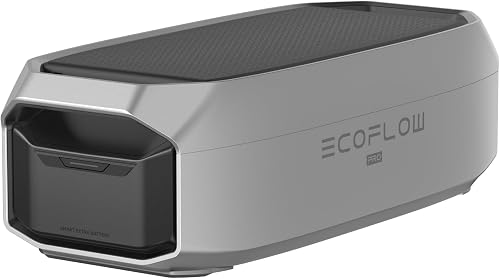
Best Anker SOLIX F3800 Plus Alternatives
As an Amazon Associate I earn from qualifying purchases. Read our affiliate disclosure.
Top picks at a glance
 Best for 240V and expansionEcoFlow DELTA Pro 3Check price on Amazon
 Best for TT-30 at 3,014 WhBLUETTI Elite 300Check price on Amazon
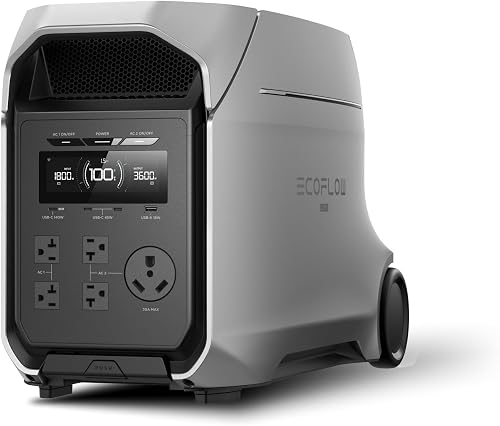 Best for 3,600 W outputEcoFlow DELTA 3 Ultra PlusCheck price on Amazon
The EcoFlow DELTA Pro 3 is the best F3800 Plus alternative for most buyers, with 4 kWh and 120V and 240V output. The BLUETTI Elite 300 and the EcoFlow DELTA 3 Ultra Plus are both about 3 kWh, and the Elite 300 adds a TT-30 outlet.
This guide judges the alternatives on the makers’ published specs, current in November 2026. PowerPicked Editorial did not test any alternative here.
Wh is short for watt-hour. It counts stored energy in a battery. Power is counted in watts. One watt is written W. AC output is the power for plug-in big gear. Solar input is the most power panels can push from a panel.
How do the three alternatives compare?
| DELTA Pro 3 | Elite 300 | DELTA 3 Ultra Plus | |
|---|---|---|---|
| Capacity | 4 kWh | 3,014 Wh | 3,072 Wh |
| AC output | 4,000 W | 2,400 W | 3,600 W |
| Weight | Not listed | 58 lb | 74.3 lb |
The DELTA Pro 3 leads on capacity, at 4 kWh. The DELTA Pro 3 offers the highest AC output of the three. The Elite 300 is the lightest of the three, at 58 lb.
Why does the EcoFlow DELTA Pro 3 lead here?
EcoFlow DELTA Pro 3
- Capacity
- 4 kWh
- AC output
- 4,000 W
- Voltage
- 120V and 240V
- Expansion
- Up to 12 kWh per unit
Who it's for: Homeowners who want 120V and 240V backup and may add batteries over time.
Strengths
- Expands to 12 kWh on one unit, more as a multi-unit system
- 120V and 240V output
- Rated to keep 80% capacity after 4,000 cycles
Weaknesses
- Lower continuous output than the F3800 Plus
- More capacity than small essential loads need
The DELTA Pro 3 fits a homeowner who wants 120V and 240V backup, with extra batteries that can join over time. It gives 4,000 W of AC output.
For this part, take 85% of the listed capacity for the runtime numbers. From 4 kWh times 0.85, usable energy is 3,400 Wh. A 100 W load gets about 34.0 hours of runtime from that energy.
A unit can reach 12 kWh on its own, and more as a multi-unit system. AC output is 4,000 W. The listing puts its cycle rating at 4,000 cycles to 80%. It gives less continuous output than the F3800 Plus. Small essential loads need less than this.
The DELTA Pro 3 review can be found at /guides/ecoflow-delta-pro-3-review/.
Does the BLUETTI Elite 300 suit a big backup job?
BLUETTI Elite 300
- Capacity
- 3,014 Wh
- AC output
- 2,400 W
- Solar input
- 1,200 W
- Weight
- 58 lb
Who it's for: RV owners and home backup buyers who want about 3 kWh with a TT-30 outlet, without adding batteries.
Strengths
- Built-in TT-30 RV outlet and 12V/30 A DC port
- 1,200 W solar input
- Rated for 6,000+ cycles to 80%
Weaknesses
- Can't add expansion batteries
- Heavy to carry at about 58 lb
The Elite 300 is made for an RV owner or home backup buyer who wants about 3 kWh and a TT-30 outlet, with no extra batteries. Its AC output is 2,400 W.
The runtime numbers in this part take 85% of the listed capacity. From 3,014 Wh times 0.85, usable energy comes to 2,561.9 Wh. On that amount, a 100 W load runs for about 25.6 hours. About 52.0 Wh sits in each pound, from 3,014 Wh over 58 lb.
It has a TT-30 RV outlet and a 12V/30 A DC port on it. Solar input is 1,200 W. Its cycle rating is 6,000 to 80%. Extra batteries cannot join it. It is hard to carry at 58 lb.
The Elite 300 review sits at /guides/bluetti-elite-300-review/.
Does the EcoFlow DELTA 3 Ultra Plus suit a heavy backup job?
EcoFlow DELTA 3 Ultra Plus
- Capacity
- 3,072 Wh
- AC output
- 3,600 W
- Solar input
- 1,600 W
- Weight
- 74.3 lb
Who it's for: Home backup buyers who want about 3 kWh and 3,600 W in one unit that can grow to 11 kWh.
Strengths
- 3,600 W output with a 7,200 W surge rating
- 1,600 W solar input
- Listed at 25 dB or less at 600 W
Weaknesses
- Heavy at about 74.3 lb
- Full 5-year warranty needs app registration
The DELTA 3 Ultra Plus is for a home backup buyer who wants about 3 kWh and 3,600 W in one unit that can grow. Its AC output is 3,600 W, with a 7,200 W surge.
For the runtime numbers in this part, work out from 85% of the listed capacity. From 3,072 Wh times 0.85, usable energy is 2,611.2 Wh. On that energy, a 100 W load runs about 26.1 hours. Per pound, it holds about 41.3 Wh. That is 3,072 Wh over 74.3 lb.
One 140 W USB-C port is on it, plus two 45 W USB-C ports. Solar input is 1,600 W. Its noise at 600 W is listed at 25 dB or less. It is heavy at about 74.3 lb. App registration unlocks the full 5-year warranty.
See the DELTA 3 Ultra Plus review at /guides/ecoflow-delta-3-ultra-plus-review/.
How to choose
Pick the output your gear needs first. Capacity sets the run time before a recharge. A 240V outlet suits heavy loads. Weight decides how easy the station is to carry around. Expansion lets a station add extra batteries. Solar input sets how fast panels fill the station.
FAQ
Which alternative stores the most energy of the three?
The DELTA Pro 3 leads on energy, at 4 kWh. The DELTA 3 Ultra Plus stores 3,072 Wh. The Elite 300 stores 3,014 Wh.
Which alternative offers the most AC output here?
The DELTA Pro 3 offers the most AC output, at 4,000 W. The DELTA 3 Ultra Plus puts out 3,600 W. The Elite 300 offers 2,400 W.
Which alternative weighs the least of the three?
The Elite 300 is the lightest, at 58 lb. The DELTA 3 Ultra Plus is 74.3 lb. The DELTA Pro 3 lists no weight.
Which alternative here grows with extra batteries?
The DELTA Pro 3 takes extra batteries, up to 12 kWh on one unit. The DELTA 3 Ultra Plus grows from 3 kWh to 11 kWh. The Elite 300 cannot take extra batteries.