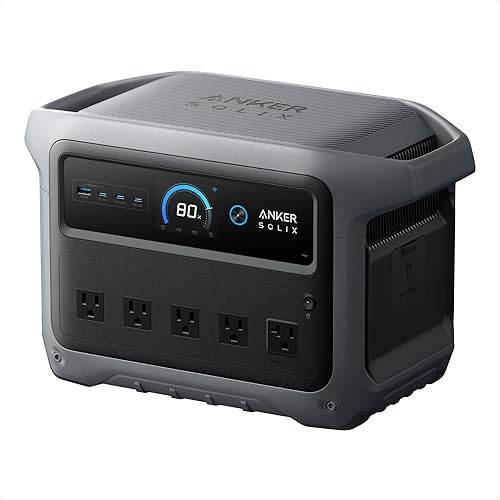
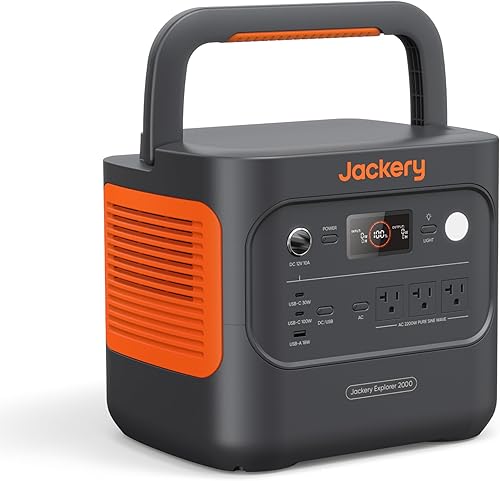
EcoFlow DELTA 3 Ultra Plus vs. BLUETTI Apex 300
As an Amazon Associate I earn from qualifying purchases. Read our affiliate disclosure.
Top picks at a glance
 Best for 240V and 50 A RV hookupsBLUETTI Apex 300Check price on Amazon
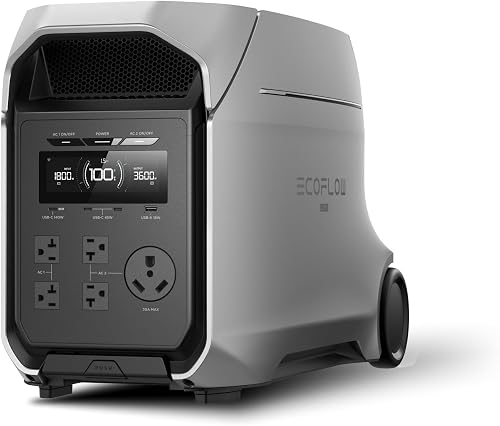 Best all-in-one 120V backupEcoFlow DELTA 3 Ultra PlusCheck price on Amazon
Your RV plug or your home’s 240V needs should decide this one. The BLUETTI Apex 300 has a NEMA 14-50R outlet with 120/240V at 50 A, which the EcoFlow DELTA 3 Ultra Plus doesn’t offer. If 120V covers everything, the DELTA 3 Ultra Plus is the easier box to live with: more capacity, less weight, and USB ports built in.
We based this on EcoFlow’s and BLUETTI’s US product pages, plus one FAQ answer on BLUETTI’s Amazon listing, as they read in November 2026. Neither unit has been tested by us, so every point comes from published specs.
BLUETTI Apex 300: for 240V and big RVs
BLUETTI Apex 300
- Capacity
- 2,764.8 Wh
- AC output
- 3,840 W
- Solar input
- 2,400 W
- Weight
- 83.78 lb
Who it's for: Home backup and RV owners who want 240V output, a 50 A RV outlet, and room to add batteries.
Strengths
- 120/240V output through a NEMA 14-50R outlet
- Expands with up to 6 B300K batteries
- Two solar inputs, 2,400 W in total
Weaknesses
- USB and DC ports need the separate Hub D1
- Heavy at 83.78 lb
The Apex 300 is built around its outlets. Next to four 20 A outlets, it has a NEMA TT-30R at 120V and 30 A, and a NEMA 14-50R at 120/240V and 50 A. Total output is 3,840 W, with a lifting power of 7,680 W, and the output is pure sine wave.
Charging is a strength. Turbo Charging accepts up to 3,840 W and reaches 80% in 45 minutes at 59-77°F. Two solar inputs take 1,200 W each, 2,400 W in total. It can also charge from a car at 12V or 24V. Each unit takes up to 6 B300K, B300S, or B300 batteries. Its LiFePO4 cells are rated for 6,000+ cycles to 80% of original capacity, and the warranty is 5 years. BLUETTI’s Amazon FAQ says it can black start from solar or other sources with no power at all.
The trade-offs: USB-C, USB-A, car, DC5521, and Anderson ports all need the separate Hub D1, rated at 700 W. It weighs 83.78 lb and only charges between 32°F and 104°F.
EcoFlow DELTA 3 Ultra Plus: for 120V homes
EcoFlow DELTA 3 Ultra Plus
- Capacity
- 3,072 Wh
- AC output
- 3,600 W
- Solar input
- 1,600 W
- Weight
- 74.3 lb
Who it's for: Home backup buyers who want about 3 kWh and 3,600 W in one unit that can grow to 11 kWh.
Strengths
- 3,600 W output with a 7,200 W surge rating
- 1,600 W solar input
- Listed at 25 dB or less at 600 W
Weaknesses
- Heavy at about 74.3 lb
- Full 5-year warranty needs app registration
The DELTA 3 Ultra Plus packs 3,072 Wh of LFP with everything built in. Four 20 A outlets and one 30 A outlet share 3,600 W, with a 7,200 W surge rating and X-Boost for resistive appliances up to 4,600 W. A 140 W USB-C port, two 45 W USB-C ports, an 18 W USB-A port, a 126 W car port, and a 30 A Anderson port need no add-on.
EcoFlow lists a UPS switchover under 10 ms and 25 dB or less at 600 W. Solar input reaches 1,600 W, and dual solar plus generator charging gets it to 80% in about 48 minutes. It expands from 3 to 11 kWh with extra batteries and connects to a home through a manual transfer switch or inlet box.
Its weak points: it has no 240V output, solar input is 800 W lower than the Apex 300’s, and it weighs about 74.3 lb. The full 5-year warranty requires app registration; the standard term is 3 years.
How do the specs compare?
| Apex 300 | DELTA 3 Ultra Plus | |
|---|---|---|
| Capacity | 2,764.8 Wh | 3,072 Wh |
| Battery | LiFePO4, 6,000+ cycles to 80% | LFP |
| AC output | 3,840 W, 7,680 W lifting power | 3,600 W, 7,200 W surge |
| 240V | Yes, NEMA 14-50R | Not listed |
| 30 A outlet | NEMA TT-30R | One 30 A outlet |
| USB ports | Need the Hub D1 | Built in, up to 140 W USB-C |
| Solar input | 2,400 W | 1,600 W |
| Fast charging | 80% in 45 minutes | 80% in about 48 minutes, solar plus generator |
| Expansion | Up to 6 B300K, B300S, or B300 | 3 to 11 kWh |
| Weight | 83.78 lb | About 74.3 lb |
| Warranty | 5 years | 5 years with app registration |
How far does each base unit go?
Assuming 85% of capacity reaches your devices, the DELTA 3 Ultra Plus delivers about 2,611.2 Wh and the Apex 300 about 2,350.08 Wh. At a steady 300 W, that is roughly 8.7 hours against 7.8 hours, before you add any batteries.
The EcoFlow also stores more per pound, about 41.3 Wh against about 33 Wh. The Apex 300’s extra 9.48 lb buys its 240V outlet and higher charging limits rather than energy.
How to choose
- A 50 A RV or 240V appliance: only the Apex 300 has a 14-50R outlet with 120/240V.
- Phones, laptops, and DC gear without extra parts: the DELTA 3 Ultra Plus has its USB and DC ports built in.
- A big solar array: the Apex 300 takes 2,400 W against 1,600 W.
- A quiet station indoors: EcoFlow lists 25 dB or less at 600 W and an under 10 ms switchover.
- Cold-weather use: the Apex 300 discharges down to -4°F; the EcoFlow down to 14°F.
FAQ
Does the EcoFlow DELTA 3 Ultra Plus have 240V output?
EcoFlow lists 120V output for the DELTA 3 Ultra Plus, with four 20 A outlets and one 30 A outlet. The BLUETTI Apex 300 offers 120/240V through a NEMA 14-50R outlet.
Does the BLUETTI Apex 300 have USB ports?
Not on the main unit. BLUETTI says the Apex 300’s USB-C, USB-A, car, DC5521, and Anderson ports all need the separate Hub D1, which is rated at 700 W.
Which one holds more energy, the Apex 300 or the DELTA 3 Ultra Plus?
The EcoFlow DELTA 3 Ultra Plus holds 3,072 Wh and the BLUETTI Apex 300 holds 2,764.8 Wh. Both can add batteries: the EcoFlow up to 11 kWh, and the Apex 300 with up to 6 B300-series batteries.
Which station charges faster from solar?
The BLUETTI Apex 300 accepts up to 2,400 W of solar through two 1,200 W inputs. On the EcoFlow DELTA 3 Ultra Plus, the solar limit is 1,600 W, so the BLUETTI can use 800 W more panel power.