Best Power Station for a Basement
As an Amazon Associate I earn from qualifying purchases. Read our affiliate disclosure.
Top picks at a glance
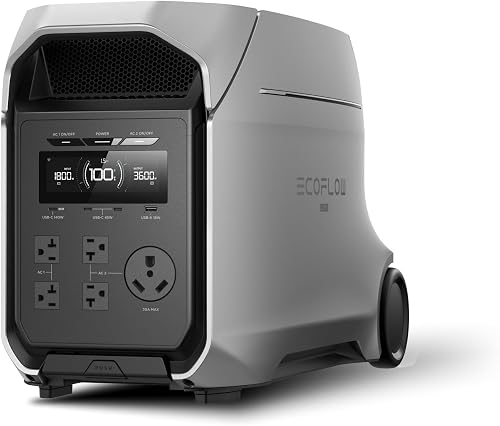 Best for a big basementEcoFlow DELTA 3 Ultra PlusCheck price on Amazon
 Best for a TT-30 outletBLUETTI Elite 300Check price on Amazon
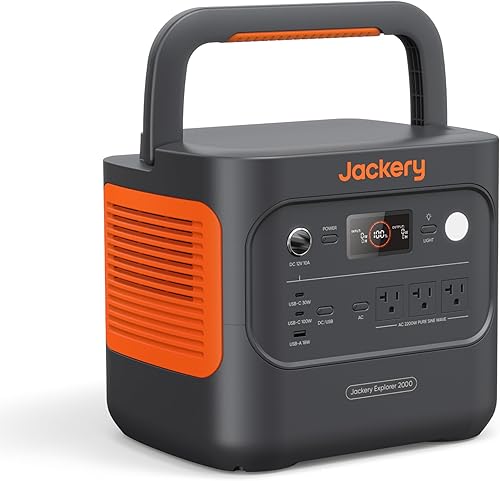 Best for a lighter backupJackery Explorer 2000 v2Check price on Amazon
The EcoFlow DELTA 3 Ultra Plus is the best power station for a basement. Its 3,072 Wh capacity and 3,600 W output suit a fixed spot downstairs, and it lists noise of 25 dB or less at 600 W. The BLUETTI Elite 300 and the Jackery Explorer 2000 v2 are the other picks. The Elite 300 suits buyers who want a TT-30 outlet, and the Jackery suits buyers who want a lighter box.
The makers’ published specs, current in November 2026, form the groundwork for this guide. PowerPicked Editorial did not run tests on any station in this guide.
Wh is short for watt-hour. It counts stored energy. W means watt. It counts power. AC output is the power for plug-in basement gear. Solar input caps the power from panels.
Which station suits a basement best?
| Spec | EcoFlow DELTA 3 Ultra Plus | BLUETTI Elite 300 | Jackery Explorer 2000 v2 |
|---|---|---|---|
| Capacity | 3,072 Wh | 3,014 Wh | 2,042 Wh |
| AC output | 3,600 W | 2,400 W | 2,200 W |
| Weight | 74.3 lb | 58 lb | 39.5 lb |
The DELTA 3 Ultra Plus leads because it holds the most energy and offers the strongest output at 3,600 W, and it lists noise of 25 dB or less at 600 W. The Elite 300 is close on capacity at 3,014 Wh and adds a TT-30 RV outlet, while the Jackery is the lightest at 39.5 lb. A buyer who wants the most power in a fixed spot should pick the DELTA 3 Ultra Plus, while a buyer who carries the station upstairs should pick the Jackery.
EcoFlow DELTA 3 Ultra Plus
EcoFlow DELTA 3 Ultra Plus
- Capacity
- 3,072 Wh
- AC output
- 3,600 W
- Solar input
- 1,600 W
- Weight
- 74.3 lb
Who it's for: Home backup buyers who want about 3 kWh and 3,600 W in one unit that can grow to 11 kWh.
Strengths
- 3,600 W output with a 7,200 W surge rating
- 1,600 W solar input
- Listed at 25 dB or less at 600 W
Weaknesses
- Heavy at about 74.3 lb
- Full 5-year warranty needs app registration
The DELTA 3 Ultra Plus suits a home backup buyer who wants about 3 kWh and 3,600 W in one unit that can grow to 11 kWh. Its output is 3,600 W with a 7,200 W surge rating, and its solar input goes up to 1,600 W. Its noise is listed as 25 dB or less at 600 W, and its UPS switchover is under 10 ms. With solar and generator dual charging, it reaches 0 to 80% in about 48 minutes.
For the runtime math in this section, assume 85% of the listed capacity. Usable energy comes to 2,611.2 Wh, from 3,072 Wh times 0.85. A 100 W load gets about 26.1 hours from that energy. It holds about 41.3 Wh per pound, from 3,072 Wh over 74.3 lb.
The limits are weight and warranty. It is heavy at about 74.3 lb, and the full 5-year warranty needs app registration. The DELTA 3 Ultra Plus review is at /guides/ecoflow-delta-3-ultra-plus-review/.
BLUETTI Elite 300
BLUETTI Elite 300
- Capacity
- 3,014 Wh
- AC output
- 2,400 W
- Solar input
- 1,200 W
- Weight
- 58 lb
Who it's for: RV owners and home backup buyers who want about 3 kWh with a TT-30 outlet, without adding batteries.
Strengths
- Built-in TT-30 RV outlet and 12V/30 A DC port
- 1,200 W solar input
- Rated for 6,000+ cycles to 80%
Weaknesses
- Can't add expansion batteries
- Heavy to carry at about 58 lb
The Elite 300 suits an RV owner or home backup buyer who wants about 3 kWh and a TT-30 outlet, without adding batteries. Its TT-30 RV outlet is built in. Its 12V/30 A DC port suits RV life, and its USB-C ports offer 100 W and 140 W. The cycle rating is 6,000+ cycles to 80%. AC charging at 1,800 W fills it in about 2 hours. Solar input goes up to 1,200 W, filling it in about 4.1 hours. The UPS switches over in 10 ms or less.
For the runtime math in this part, assume 85% of the listed capacity. Usable energy is 2,561.9 Wh, from 3,014 Wh times 0.85. On that energy, a 100 W load runs about 25.6 hours. Per pound, it holds about 52.0 Wh. That is 3,014 Wh over 58 lb.
The limits are growth and weight. It cannot link extra batteries. At about 58 lb, it is a heavy box to carry. The Elite 300 review is at /guides/bluetti-elite-300-review/.
Jackery Explorer 2000 v2
Jackery Explorer 2000 v2
- Capacity
- 2,042 Wh
- AC output
- 2,200 W
- Surge
- 4,400 W
- Weight
- 39.5 lb
Who it's for: Households that want about 2 kWh one person can move, with no plans to expand.
Strengths
- About 2 kWh at 39.5 lb
- 4,400 W surge rating
- LFP battery
Weaknesses
- Heavier to move than 1 kWh models
- Not expandable
The Jackery suits a household that wants about 2 kWh in one box, moved by one person. Output reaches 2,200 W, with a 4,400 W surge rating for the short spike when a device starts. Its battery is LFP.
The runtime math in this part assumes 85% of the listed capacity. From 2,042 Wh times 0.85, usable energy is 1,735.7 Wh. A 100 W load runs about 17.4 hours on that amount. Weight works out to about 51.7 Wh per pound, from 2,042 Wh over 39.5 lb.
The trade-offs are weight and growth. It is heavier to move than a 1 kWh model. No extra batteries fit it. Find the Jackery Explorer 2000 v2 review at /guides/jackery-explorer-2000-v2-review/.
How to choose
Start with capacity. A basement station stays in one place, so a bigger battery means a longer run. The DELTA 3 Ultra Plus gives a 100 W load about 26.1 hours, the Elite 300 gives about 25.6 hours, and the Jackery gives about 17.4 hours. Next, check output. The DELTA 3 Ultra Plus offers 3,600 W, the Elite 300 offers 2,400 W, and the Jackery offers 2,200 W. Then check noise. The DELTA 3 Ultra Plus lists 25 dB or less at 600 W. Finally, check weight. The Jackery at 39.5 lb is the easiest to carry upstairs, while the DELTA 3 Ultra Plus at 74.3 lb suits a fixed spot.
FAQ
Which pick stores the most energy?
The EcoFlow DELTA 3 Ultra Plus holds the most, at 3,072 Wh. The BLUETTI Elite 300 holds 3,014 Wh, and the Jackery Explorer 2000 v2 holds 2,042 Wh.
Does the DELTA 3 Ultra Plus list a noise figure?
Yes. It lists 25 dB or less at 600 W.
Can the DELTA 3 Ultra Plus add batteries later?
Yes. It can grow from 3 kWh to 11 kWh with extra batteries. No other pick here grows as much.
Which pick is lightest here?
The Jackery Explorer 2000 v2 weighs the least, at 39.5 lb. The BLUETTI Elite 300 weighs about 58 lb, and the EcoFlow DELTA 3 Ultra Plus weighs 74.3 lb.