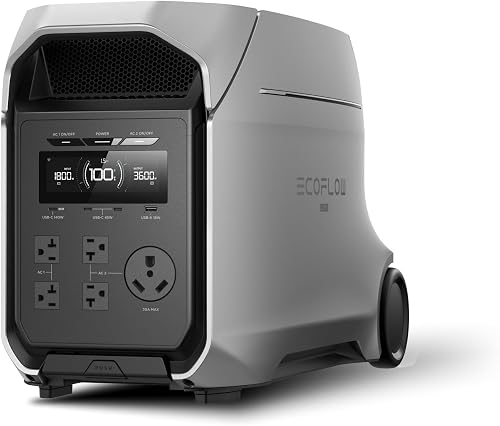
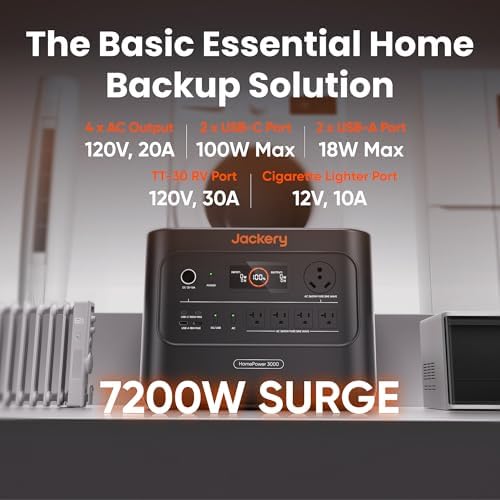
Best EcoFlow DELTA 3 Classic Alternatives
As an Amazon Associate I earn from qualifying purchases. Read our affiliate disclosure.
Top picks at a glance
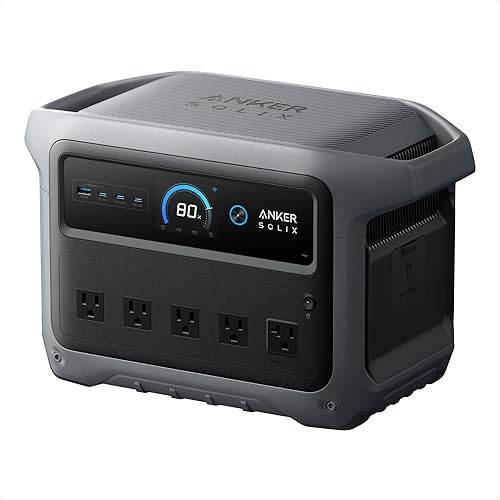 Best DELTA 3 Classic alternativeAnker SOLIX C1000 Gen 2Check price on Amazon
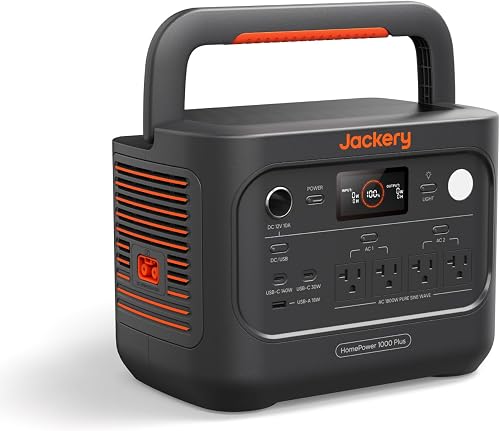 Best fast-charge alternativeJackery HomePower 1000 Plus v2Check price on Amazon
 Best solar-input alternativeBLUETTI Elite 100 V2Check price on Amazon
A DELTA 3 Classic buyer who wants faster wall charging or more solar input has three close alternatives. The Anker SOLIX C1000 Gen 2 leads them, with a 49-minute full AC charge and 2,000 W of output.
This guide weighs the Classic alternatives on the makers’ published specs, current in November 2026. PowerPicked Editorial did not test any Classic alternative here.
Wh is the energy a battery stores, written Wh. One watt is written W, and it counts power. AC output is the plug-in power a station sends to gear. Solar input is the ceiling on panel power a station takes in.
You can read the DELTA 3 Classic review.
Anker SOLIX C1000 Gen 2
- Capacity
- 1,024 Wh
- AC output
- 2,000 W
- Solar input
- 600 W
- Weight
- 24.9 lb
Who it's for: People who want about 1 kWh and 2,000 W in a portable box, and don't need to add batteries.
Strengths
- 49-minute full AC charge
- 2,000 W output, 3,000 W peak
- Rated to keep 80% capacity after 4,000 cycles
Weaknesses
- Not expandable
- Lower solar input than the DELTA 3 Plus
Jackery HomePower 1000 Plus v2
- Capacity
- 1,024 Wh
- AC output
- 1,800 W
- Solar input
- 400 W
- Weight
- 23.8 lb
Who it's for: Buyers who want about 1 kWh now, light enough to carry one-handed, with room to add batteries later.
Strengths
- Expands to about 11 kWh with Battery Pack 2000 Plus v2 units
- Full AC charge in about 50 minutes
- Rated for 6,000 cycles
Weaknesses
- Solar input tops out at 400 W
- Works only with the Battery Pack 2000 Plus v2, not older Jackery packs
BLUETTI Elite 100 V2
- Capacity
- 1,024 Wh
- AC output
- 1,800 W
- Solar input
- 1,000 W
- Weight
- 25 lb
Who it's for: Campers and small-space buyers who want about 1 kWh and 1,800 W at around 25 lb.
Strengths
- 1,000 W solar input, full in about 70 minutes
- 80% AC charge in about 45 minutes
- Listed at 30 dB under 600 W
Weaknesses
- AC charging tops out at 1,200 W
- Holds less than BLUETTI's own AC180
Anker SOLIX C1000 Gen 2: the fastest charger here
It suits a buyer who wants about 1 kWh and 2,000 W in a portable box, with no plans to add batteries. It fills from AC in 49 minutes. It gives 2,000 W, with a 3,000 W peak. It runs as a single unit. Solar input runs to 600 W.
The runtime math in this section works from an assumed 85% of the listed capacity. Usable energy is 870.4 Wh, from 85% of 1,024 Wh. That energy keeps a 100 W load running for about 8.7 hours. Per pound, it holds about 41.1 Wh. That is 1,024 Wh over 24.9 lb.
Read the C1000 Gen 2 review.
Jackery HomePower 1000 Plus v2: the other fast charger
It suits a buyer who wants about 1 kWh in a light box, with room to add batteries later. It fills on AC in about 50 minutes. It puts out 1,800 W, with a 3,600 W peak. Five Battery Pack 2000 Plus v2 units at most take it to about 11 kWh. Solar input is capped at 400 W.
Work the runtime numbers in this section out from 85% of the listed capacity, assumed. At 85%, the listed 1,024 Wh gives 870.4 Wh of usable energy. A 100 W load runs for about 8.7 hours from that amount. Per pound, it holds about 43.0 Wh. That is 1,024 Wh over 23.8 lb.
You can read the HomePower review.
BLUETTI Elite 100 V2: the solar leader here
It suits a camper or small-space buyer who wants about 1 kWh and 1,800 W in a 25 lb box. AC charging brings it to 80% in about 45 minutes. Solar input runs to 1,000 W, with a full charge in about 70 minutes.
Work out the runtime numbers in this section from 85% of the listed capacity, assumed. From 85% of the listed 1,024 Wh, usable energy is 870.4 Wh. A 100 W load gets 8.7 hours on that amount. Each pound holds about 41.0 Wh, with 1,024 Wh over 25 lb.
Look up the Elite 100 V2 review.
How to choose
Start with the AC output your gear needs. Capacity sets how many hours the station runs before a refill. A faster AC charge suits a buyer in a hurry. More solar input means a faster refill from panels. Weight sets how easy the box is to move. Expansion lets the station grow.
FAQ
Which pick charges fastest from AC?
The C1000 Gen 2, in 49 minutes. The HomePower takes about 50 minutes.
Which pick leads on solar input?
The Elite 100 V2, at 1,000 W. The C1000 Gen 2 takes 600 W, and the HomePower takes 400 W.
Which of the picks is lightest?
The HomePower, at 23.8 lb. The C1000 Gen 2 weighs 24.9 lb, and the Elite 100 V2 weighs 25 lb.
Which alternative holds the most energy per pound?
The HomePower, at about 43.0 Wh per pound. The C1000 Gen 2 holds about 41.1 Wh per pound, and the Elite 100 V2 holds about 41.0.