Goal Zero Yeti 1500 vs. DJI Power 2000
As an Amazon Associate I earn from qualifying purchases. Read our affiliate disclosure.
Top picks at a glance
 Best for cold tripsGoal Zero Yeti 1500Check price on Amazon
 Best for 2 kWh and 3,000 WDJI Power 2000Check price on Amazon
The DJI Power 2000 is the better pick for most buyers, with 3,000 W of output and room to add batteries. The Goal Zero Yeti 1500 suits cold trips, with 900 W of solar input and a rating down to -4°F.
This head-to-head is built on the makers’ published specs, current in November 2026. PowerPicked Editorial did not test either station for this head-to-head.
Wh is short for watt-hour. It tells the energy a battery holds. A watt counts power. W is short for watt. AC output is the power for plug-in cold-weather gear. Solar input caps how much power panels can push to a station.
How do the two stations compare?
| Yeti 1500 | DJI Power 2000 | |
|---|---|---|
| Capacity | 1505 Wh | 2,048 Wh |
| AC output | 2,000 W | 3,000 W |
| Weight | 52.75 lb | 48.5 lb |
The DJI Power 2000 holds the larger capacity of the two. The DJI Power 2000 gives the higher AC output of the two. The Yeti 1500 is the heavier one here.
Does the Goal Zero Yeti 1500 suit cold trips?
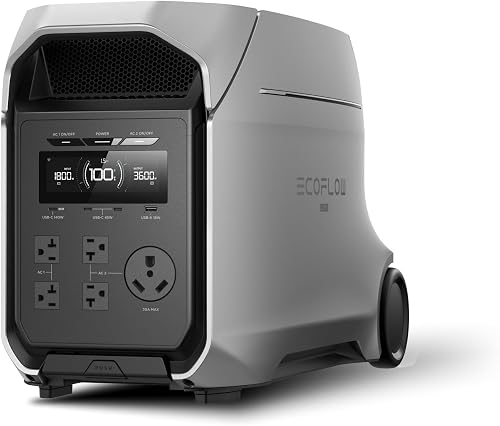
Goal Zero Yeti 1500
- Capacity
- 1,505 Wh
- AC output
- 2,000 W
- Solar input
- 900 W
- Weight
- 52.75 lb
Who it's for: People who want a mid-size station for cold trips and can handle the weight.
Strengths
- Rated for use down to -4°F
- 900 W of solar input
- Rated to keep 80% capacity after 4,000 cycles
Weaknesses
- Heavy for its capacity at 52.75 lb
- Not compatible with expansion batteries
The Yeti 1500 is a mid-size station for cold trips, for a person who can handle the weight. It gives 2,000 W of AC output.
The runtime numbers in this part are worked out from an assumed 85% of the listed capacity. Usable energy comes from 1505 Wh times 0.85, with no rounding. From that energy, a 100 W load runs for about 12.8 hours. Dividing 1505 Wh by 52.75 lb gives about 28.5 Wh per pound.
It can be used down to -4°F, by the listing. Its solar input is 900 W. 80% of its capacity stays after 4,000 cycles. It cannot take expansion batteries.
Find the Yeti 1500 review at /guides/goal-zero-yeti-1500-review/.
Does the DJI Power 2000 suit a bigger box?
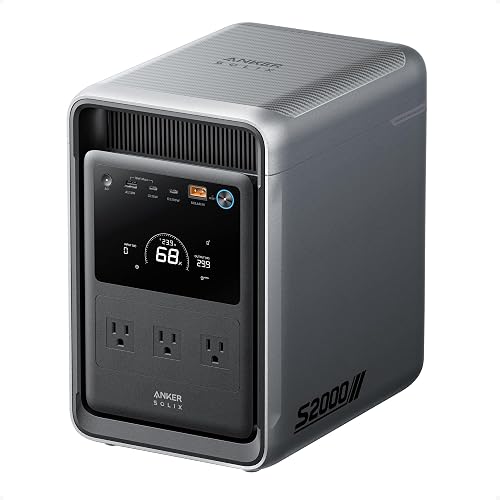
DJI Power 2000
- Capacity
- 2,048 Wh
- AC output
- 3,000 W
- Expansion
- Up to 22,528 Wh
- Weight
- About 48.5 lb
Who it's for: People who want high output from a 2 kWh station and may add batteries later.
Strengths
- 3,000 W output
- Takes up to 10 expansion batteries
- Rated to keep over 80% capacity after 4,000 cycles
Weaknesses
- Solar charging needs a separate DJI module or charger
- Heavy to carry at about 48.5 lb
The DJI Power 2000 is a 2 kWh station with 3,000 W of output, and extra batteries can join later. It takes up to 10 expansion batteries.
Work out the runtime numbers in this part from an assumed 85% of the listed capacity. Multiplying 2,048 Wh by 0.85 gives 1,740.8 Wh of usable energy. A 100 W load gets about 17.4 hours of runtime from that energy. About 42.2 Wh sits in each pound, from 2,048 Wh over 48.5 lb.
After 4,000 cycles, it keeps over 80% of its capacity. For solar charging, a DJI module or charger of its own is needed. Carrying it is hard work at 48.5 lb.
Look up the DJI Power 2000 review at /guides/dji-power-2000-review/.
How to choose
Check the output your gear needs first. Capacity sets the length of a run before it needs a recharge. Solar input sets how quick a panel refill is. Weight decides how easy the station is to tote. Expansion lets the station grow with more batteries. Cold ratings suit winter trips.
FAQ
Which station stores the most energy here?
The DJI Power 2000 stores the most energy, at 2,048 Wh. The Yeti 1500 stores 1505 Wh.
Which station here offers more AC output?
The DJI Power 2000 offers more AC output, at 3,000 W. The Yeti 1500 offers 2,000 W.
Which station is lighter here?
The DJI Power 2000 is lighter, at 48.5 lb. The Yeti 1500 weighs 52.75 lb.
Can the DJI Power 2000 add batteries?
Yes. It takes up to 10 expansion batteries. The Yeti 1500 cannot take expansion batteries.