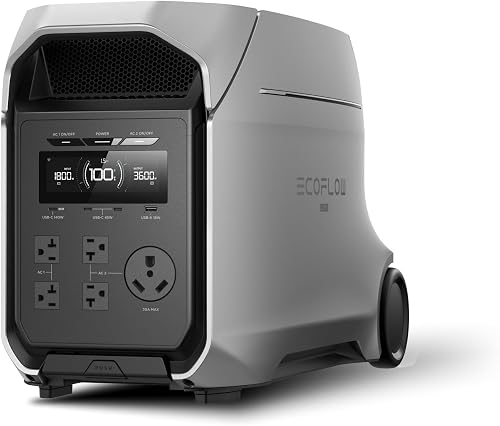
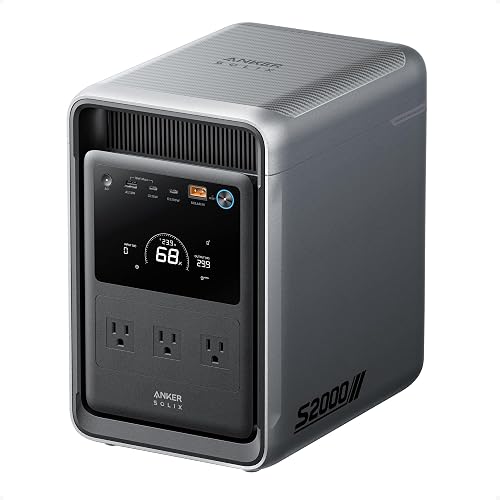
BLUETTI AC180 vs. Jackery Explorer 1000 v2
As an Amazon Associate I earn from qualifying purchases. Read our affiliate disclosure.
Top picks at a glance
 Best for fast wall chargingBLUETTI AC180Check price on Amazon
 Best for a light 1 kWh boxJackery Explorer 1000 v2Check price on Amazon
The BLUETTI AC180 is the better pick for most buyers, with 1,800 W of output and a 1,440 W turbo AC charge. The Jackery Explorer 1000 v2 is lighter, at 23.8 lb, and holds 1,070 Wh.
This head-to-head rests on the makers’ published specs, current in November 2026. PowerPicked Editorial did not test either station in this head-to-head.
A watt-hour measures the energy a battery holds. It is written Wh. A watt measures power, written W. AC output is the power for plug-in camp devices. Solar input is the most power panels can push to a station.
How do the two stations compare?
| AC180 | Explorer 1000 v2 | |
|---|---|---|
| Capacity | 1,152 Wh | 1,070 Wh |
| AC output | 1,800 W | 1,500 W |
| Weight | 35.3 lb | 23.8 lb |
The AC180 holds the larger capacity of the two. The AC180 has the higher AC output of the two. The Explorer 1000 v2 is the lighter one here.
Does the BLUETTI AC180 suit fast charging?
BLUETTI AC180
- Capacity
- 1,152 Wh
- AC output
- 1,800 W
- Solar input
- 500 W
- Weight
- 35.3 lb
Who it's for: Buyers who want just over 1 kWh with fast wall charging and don't mind carrying 35 lb.
Strengths
- 1,440 W turbo AC charging, about 1.3 to 1.8 hours to full
- Rated to discharge down to -4°F
- 15 W wireless charging pad
Weaknesses
- Solar input tops out at 500 W
- UPS switchover listed at 20 ms
The AC180 is for a buyer who wants just over 1 kWh and fast wall charging, and does not mind carrying 35 lb. Its AC output is 1,800 W, with 2,700 W of Power Lifting.
Use 85% of the listed capacity when working out the runtime numbers in this part. 979.2 Wh is the usable energy, from 1,152 Wh times 0.85. From that energy, a 100 W load runs for about 9.8 hours. Dividing 1,152 Wh by 35.3 lb gives about 32.6 Wh per pound.
Its turbo AC charging is 1,440 W, with a full charge in about 1.3 to 1.8 hours. It can discharge down to -4°F, by the listing. A 15 W wireless charging pad is on top. Its solar input is 500 W at most. The UPS switchover is listed at 20 ms.
Find the AC180 review at /guides/bluetti-ac180-review/.
Does the Jackery Explorer 1000 v2 suit a light 1 kWh box?
Jackery Explorer 1000 v2
- Capacity
- 1,070 Wh
- AC output
- 1,500 W
- Solar input
- 400 W
- Weight
- 23.8 lb
Who it's for: Campers who want about 1 kWh at a low weight and don't run appliances over 1,500 W.
Strengths
- Lightest 1 kWh model we compare
- LiFePO4 battery
- 3,000 W surge rating
Weaknesses
- Lower AC output than the Anker C1000 Gen 2
- Cycle rating is listed to 70% or more, not 80%
The Explorer 1000 v2 is for a camper who wants about 1 kWh in a light box, and does not run appliances over 1,500 W. It gives 1,500 W of AC output, with a 3,000 W surge rating.
In this part, work out the runtime numbers from 85% of the listed capacity. 909.5 Wh is the usable energy, from 1,070 Wh times 0.85. That energy gives a 100 W load about 9.1 hours. Dividing 1,070 Wh by 23.8 lb gives about 45.0 Wh per pound.
Its battery is LiFePO4. The Anker C1000 Gen 2 gives more AC output than this station. Its cycle rating reaches 70% or more, not 80%.
The Explorer 1000 v2 review is at /guides/jackery-explorer-1000-v2-review/.
How to choose
Look first at the output your gear needs. Capacity sets the length of a run before a recharge. Solar input sets the pace of a panel refill. Weight decides how easy the station is to haul. Expansion lets a station take extra batteries. Charge speed sets how fast the station fills from a wall outlet.
FAQ
Which station stores more energy here?
The AC180 stores more energy, at 1,152 Wh. The Explorer 1000 v2 stores 1,070 Wh.
Which station gives more AC output here?
The AC180 gives more AC output, at 1,800 W. The Explorer 1000 v2 gives 1,500 W.
Which station is the lighter one here?
The Explorer 1000 v2 is the lighter one, at 23.8 lb. The AC180 weighs 35.3 lb.
Does the AC180 grow with extra batteries?
Yes. The AC180 takes B80, B230 and B300 packs, up to 4,224 Wh in total.