Best Power Station for a Drone
As an Amazon Associate I earn from qualifying purchases. Read our affiliate disclosure.
Top picks at a glance
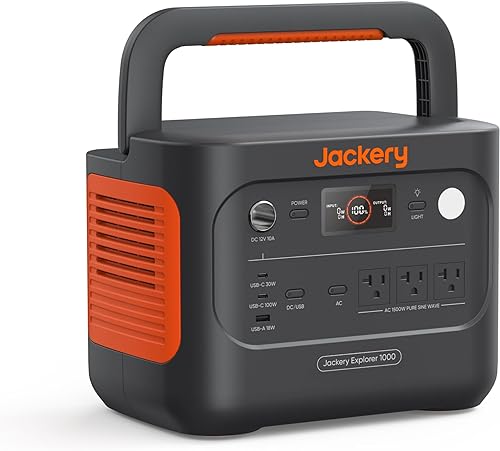
 Best for DJI drone pilotsDJI Power 2000Check price on Amazon
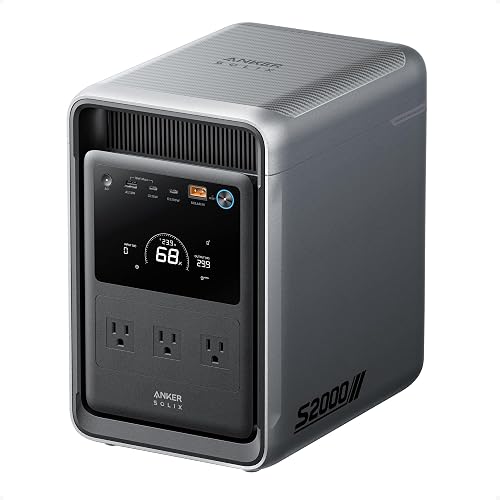
 Best for USB-C chargingAnker SOLIX C300Check price on Amazon
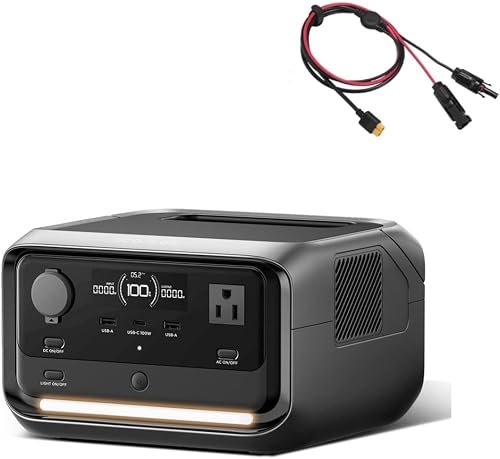 Best for a light field kitEcoFlow RIVER 3 PlusCheck price on Amazon
The DJI Power 2000 is the best power station for a drone. Its 2,048 Wh capacity and 3,000 W output cover a full day of flying and charging in the field, and it can grow with up to 10 expansion batteries. The Anker SOLIX C300 and the EcoFlow RIVER 3 Plus are the other picks, for pilots who want a lighter box.
The makers’ published specs, current in November 2026, steer this guide. PowerPicked Editorial did not run tests on any station named here.
Wh stands for watt-hour. It counts stored energy. A watt is a measure of power. It is written W. AC output is the power for plug-in drone gear. Solar input is the greatest power a station can pull from panels.
Which station suits a drone pilot best?
| Spec | DJI Power 2000 | Anker SOLIX C300 | EcoFlow RIVER 3 Plus |
|---|---|---|---|
| Capacity | 2,048 Wh | 288 Wh | 286 Wh |
| AC output | 3,000 W | 300 W | 600 W |
| Weight | 48.5 lb | 9.1 lb | 10.4 lb |
The DJI leads because it holds far more energy than the two small picks and offers the strongest output at 3,000 W. The C300 is the lightest at 9.1 lb and offers two 140 W USB-C ports. The RIVER 3 Plus is only slightly heavier at 10.4 lb and can grow to 858 Wh. A pilot who charges all day should pick the DJI, while a pilot who walks far from the car should pick the C300.
DJI Power 2000
DJI Power 2000
- Capacity
- 2,048 Wh
- AC output
- 3,000 W
- Expansion
- Up to 22,528 Wh
- Weight
- About 48.5 lb
Who it's for: People who want high output from a 2 kWh station and may add batteries later.
Strengths
- 3,000 W output
- Takes up to 10 expansion batteries
- Rated to keep over 80% capacity after 4,000 cycles
Weaknesses
- Solar charging needs a separate DJI module or charger
- Heavy to carry at about 48.5 lb
The DJI suits a buyer who wants high output from a 2 kWh station and may add batteries later. Its output is 3,000 W, and it takes up to 10 expansion batteries, growing to 22,528 Wh. After 4,000 cycles, the rating keeps over 80% capacity.
For this section, the runtime numbers assume 85% of the listed capacity. Usable energy is about 1,740.8 Wh, from 2,048 Wh times 0.85. That energy gives a 100 W load about 17.4 hours of runtime. Each pound holds about 42.2 Wh, with 2,048 Wh over 48.5 lb.
Solar and weight are the limits. For solar charging, a separate DJI module or charger is needed. At about 48.5 lb, it is not a light box. The DJI Power 2000 review is at /guides/dji-power-2000-review/.
Anker SOLIX C300
Anker SOLIX C300
- Capacity
- 288 Wh
- AC output
- 300 W
- Solar input
- 100 W
- Weight
- 9.1 lb
Who it's for: Campers and commuters who mainly charge phones, laptops, and cameras and want a small 9 lb box.
Strengths
- Two 140 W USB-C ports
- Rated 3,000+ cycles to 80%
- 10 ms UPS switchover
Weaknesses
- 300 W AC output limits what it can run
- Solar input tops out at 100 W
The C300 suits a camper or commuter who mainly charges phones, laptops, and cameras and wants a small 9 lb box. Its two 140 W USB-C ports suit drone batteries that charge by USB-C, and its 10 ms UPS switchover covers short outages. Its cycle rating is 3,000+ cycles to 80%, and its warranty is 5 years.
This part’s runtime numbers use an assumed 85% of the listed capacity. Usable energy is 244.8 Wh, from 288 Wh times 0.85. A 100 W load runs about 2.4 hours on that energy. It holds about 31.6 Wh per pound, from 288 Wh over 9.1 lb.
The limits are output and solar input. Its AC output is 300 W, which limits what it can run, and solar panels feed it at most 100 W. The C300 review is at /guides/anker-solix-c300-review/.
EcoFlow RIVER 3 Plus
EcoFlow RIVER 3 Plus
- Capacity
- 286 Wh
- AC output
- 600 W
- AC charge
- 1 hour
- Weight
- 10.4 lb
Who it's for: People who mainly charge phones and laptops or keep Wi-Fi on, and want a station that's easy to carry.
Strengths
- Easy to carry at 10.4 lb
- Expandable to 858 Wh
- Listed at under 30 dB
Weaknesses
- Small capacity for high-power devices
- 600 W limits what you can run
The RIVER 3 Plus suits a buyer who mostly charges phones and laptops, or keeps Wi-Fi on, and wants a light box to carry. At 10.4 lb it is the lightest pick here after the C300, and its noise is listed below 30 dB. Extra batteries can take it to 858 Wh, which helps if a pilot’s needs grow. It fills in about 1 hour from a wall outlet.
The runtime numbers here are based on an assumed 85% of the listed capacity. From 286 Wh times 0.85, usable energy is 243.1 Wh. That amount gives a 100 W load about 2.4 hours. Weight works out to about 27.5 Wh per pound, from 286 Wh over 10.4 lb.
Its weak points are a small base capacity and a 600 W output. They rule out bigger appliances. A pilot who runs a phone and a laptop will be fine, but a pilot who wants to run a heater needs a larger station. Find the RIVER 3 Plus review at /guides/ecoflow-river-3-plus-review/.
How to choose
Start with output. A drone pilot charges batteries by USB-C or by wall outlet, so check both. The C300 offers two 140 W USB-C ports. The RIVER 3 Plus offers 600 W of AC output, and the DJI offers 3,000 W. Next, check capacity. The DJI gives a 100 W load about 17.4 hours, while the C300 and the RIVER 3 Plus each give about 2.4 hours, so a pilot who charges all day should pick the DJI. Then check weight. The C300 at 9.1 lb is the easiest to carry to a launch spot, while the DJI at 48.5 lb suits a fixed base. Finally, think about growth. The DJI and the RIVER 3 Plus take extra batteries, so a pilot who may need more energy later should pick one of them.
FAQ
Which pick here holds the most energy?
The DJI Power 2000 holds the most, at 2,048 Wh. The Anker SOLIX C300 holds 288 Wh, and the EcoFlow RIVER 3 Plus holds 286 Wh.
Which pick is best for charging drone batteries by USB-C?
The Anker SOLIX C300 is best for USB-C charging. It offers two 140 W USB-C ports, which suit drone batteries that charge by USB-C.
Can the DJI Power 2000 grow if a drone pilot needs more energy?
Yes. It takes up to 10 expansion batteries, growing to 22,528 Wh. That is the most growth of the three picks here.
Which of the three is lightest?
The Anker SOLIX C300 is lightest, at 9.1 lb. The EcoFlow RIVER 3 Plus weighs 10.4 lb, and the DJI Power 2000 weighs 48.5 lb.