Best Power Station for a Boat
As an Amazon Associate I earn from qualifying purchases. Read our affiliate disclosure.
Top picks at a glance
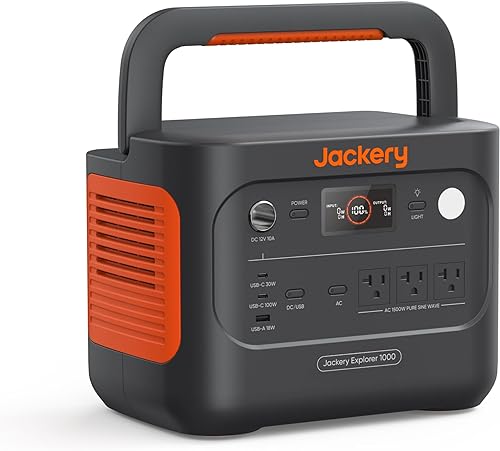
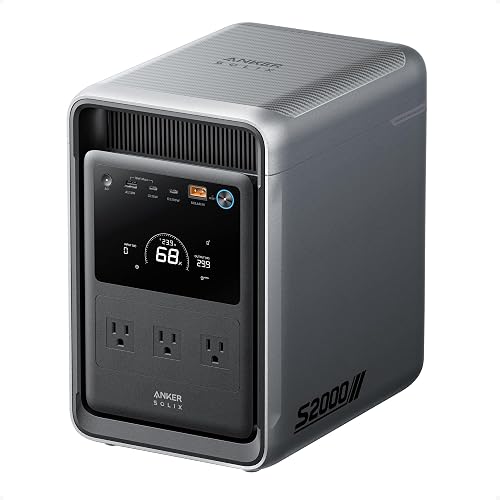
 Best for water and weatherJackery Explorer 1500 UltraCheck price on Amazon
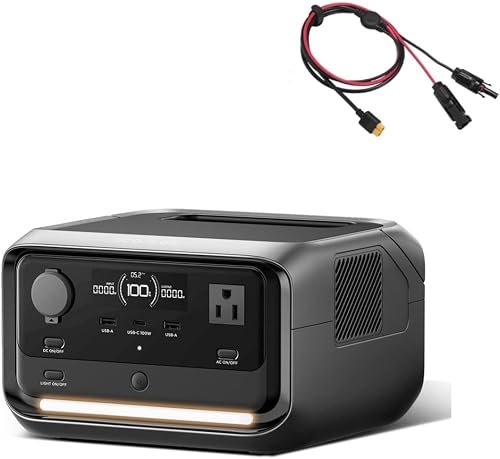 Best for a light boat bagEcoFlow RIVER 3 PlusCheck price on Amazon
 Best for cold-water tripsGoal Zero Yeti 700Check price on Amazon
The Jackery Explorer 1500 Ultra is the best power station for a boat. Its IP65 rating for dust and water, with the port covers closed, suits life on the water, and its 1,536 Wh capacity covers a full day on board. The EcoFlow RIVER 3 Plus and the Goal Zero Yeti 700 are the other picks, for boaters who want a lighter box or a lower weight.
The makers’ published specs, current in November 2026, are the groundwork for this guide. PowerPicked Editorial did not test any station named in this guide.
Wh means watt-hour. It counts stored energy. W means watt. It counts power. AC output is the power plug-in devices can draw. Solar input is the most power panels can send a station.
Which station suits a boat best?
| Spec | Jackery Explorer 1500 Ultra | EcoFlow RIVER 3 Plus | Goal Zero Yeti 700 |
|---|---|---|---|
| Capacity | 1,536 Wh | 286 Wh | 677 Wh |
| AC output | 1,800 W | 600 W | 600 W |
| Weight | 38.6 lb | 10.4 lb | 20.3 lb |
The 1500 Ultra leads because it is the only pick here with a dust and water rating, and it holds the most energy at 1,536 Wh. The RIVER 3 Plus is the lightest at 10.4 lb and suits a small boat, while the Yeti 700 sits in the middle with 677 Wh and 20.3 lb. A boater who wants weather protection should pick the 1500 Ultra, while a boater who carries the station by hand should pick the RIVER 3 Plus.
Jackery Explorer 1500 Ultra
Jackery Explorer 1500 Ultra
- Capacity
- 1,536 Wh
- AC output
- 1,800 W
- Solar input
- 800 W
- Weight
- 38.6 lb
Who it's for: Campers, overlanders, and outdoor workers who want about 1.5 kWh in a sealed, weather-ready box.
Strengths
- IP65 dust and water rating with the port covers closed
- Full AC charge in about 1.5 hours
- 3,600 W surge peak
Weaknesses
- Jackery says it can't take an extra battery pack
- Cycle rating is 4,000 to 70%+, not 80%
The 1500 Ultra suits a camper, overlander, or outdoor worker who wants about 1.5 kWh in a sealed, weather-ready box. Its IP65 rating for dust and water applies with the port covers closed, and it is drop-resistant to 1 meter. A full AC charge takes about 1.5 hours, and its surge peak is 3,600 W. Its UPS bypass works within 20 ms, and it takes solar input up to 800 W.
The runtime numbers in this section are based on an assumed 85% of the listed capacity. Usable energy works out to 1,305.6 Wh, from 1,536 Wh times 0.85. A 100 W load would run for about 13.1 hours on that energy. Per pound, it holds about 39.8 Wh. That is 1,536 Wh over 38.6 lb.
The limits are growth and cycle life. It cannot take an extra battery pack, and its cycle rating is 4,000 to 70% or more, rather than 80%. The 1500 Ultra review is at /guides/jackery-explorer-1500-ultra-review/.
EcoFlow RIVER 3 Plus
EcoFlow RIVER 3 Plus
- Capacity
- 286 Wh
- AC output
- 600 W
- AC charge
- 1 hour
- Weight
- 10.4 lb
Who it's for: People who mainly charge phones and laptops or keep Wi-Fi on, and want a station that's easy to carry.
Strengths
- Easy to carry at 10.4 lb
- Expandable to 858 Wh
- Listed at under 30 dB
Weaknesses
- Small capacity for high-power devices
- 600 W limits what you can run
The RIVER 3 Plus suits people who mainly charge phones and laptops or keep Wi-Fi on, and want a station that is easy to carry. At 10.4 lb it is the lightest pick here, and its noise is listed below 30 dB. It can expand to 858 Wh with extra batteries, which helps if a boater’s needs grow. It fills from a wall outlet in about 1 hour.
For this part, the runtime numbers are based on an assumed 85% of the listed capacity. Usable energy works out to 243.1 Wh, from 286 Wh times 0.85. A 100 W load gets about 2.4 hours from that energy. Per pound, it holds about 27.5 Wh. That is 286 Wh over 10.4 lb.
A small base capacity and 600 W output are its weak points, since they rule out bigger appliances. A boater who runs a phone and a laptop will be fine, but a boater who wants to run a heater will need a larger station. Read the RIVER 3 Plus review at /guides/ecoflow-river-3-plus-review/.
Goal Zero Yeti 700
Goal Zero Yeti 700
- Capacity
- 677 Wh
- AC output
- 600 W
- Solar input
- 200 W
- Weight
- 20.3 lb
Who it's for: People who need more energy than a small station holds, but mostly run low-power devices.
Strengths
- Rated for use down to -4°F
- Fills the gap between small and 1 kWh stations
- Rated to keep 80% capacity after 4,000+ cycles
Weaknesses
- 600 W limits what you can run
- 200 W of solar input is low
The Yeti 700 suits a boater who stays in one spot and wants more energy than the two small picks hold. Its 677 Wh capacity is more than double the RIVER 3 Plus, and it takes solar input up to 200 W. It is rated down to -4°F for cold weather, and its cycle rating is 4,000+ cycles, keeping 80% capacity.
In this part, use 85% of the listed capacity for the runtime numbers. The usable energy is 677 Wh times 0.85. A 100 W load gets about 5.8 hours from that energy. It holds about 33.3 Wh per pound, from 677 Wh over 20.3 lb.
The trade-off is weight. At 20.3 lb it is not a station to carry on every trip. Its 600 W output rules out bigger appliances. Its 200 W solar input is modest next to larger stations. Read the Yeti 700 review at /guides/goal-zero-yeti-700-review/.
How to choose
Start with water protection. Only the 1500 Ultra lists a dust and water rating here, at IP65 with the port covers closed. Next, check weight. A station that moves from dock to boat should stay light, which points to the RIVER 3 Plus at 10.4 lb. Then check capacity. A 100 W load runs for about 13.1 hours on the 1500 Ultra, about 5.8 hours on the Yeti 700, and about 2.4 hours on the RIVER 3 Plus. Finally, check solar input. The 1500 Ultra takes 800 W from panels, against 200 W for the Yeti 700.
FAQ
Which pick is best protected against water?
The Jackery Explorer 1500 Ultra is best protected. It lists an IP65 rating for dust and water with the port covers closed.
Which pick is the lightest?
The EcoFlow RIVER 3 Plus is the lightest, at 10.4 lb. The Goal Zero Yeti 700 weighs 20.3 lb, and the Jackery Explorer 1500 Ultra weighs 38.6 lb.
Can the RIVER 3 Plus grow if a boater needs more energy?
Yes. It can expand to 858 Wh with extra batteries. That is useful if a boater’s needs grow over time, though its base capacity is only 286 Wh.
Can the Yeti 700 charge from panels?
Yes. Panels can charge it at up to 200 W. That is modest, but it still refills on a sunny day.