Best EcoFlow Power Station: Which Model Fits Your Need
As an Amazon Associate I earn from qualifying purchases. Read our affiliate disclosure.
Top picks at a glance
 Best EcoFlow for most buyersEcoFlow DELTA 3 PlusCheck price on Amazon
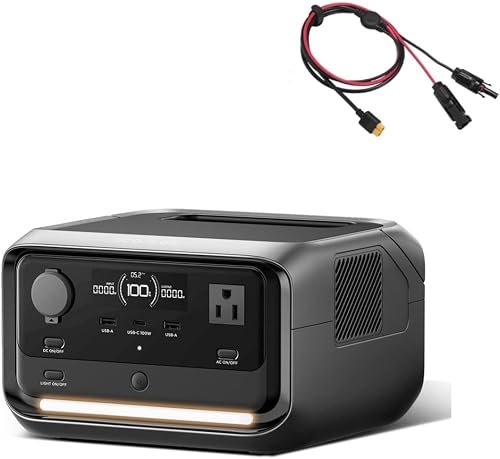 Best EcoFlow to carryEcoFlow RIVER 3 PlusCheck price on Amazon
 Best EcoFlow for quiet backupEcoFlow DELTA 3 MaxCheck price on Amazon
 Best EcoFlow for 240V homesEcoFlow DELTA Pro 3Check price on Amazon
If you’ve settled on EcoFlow and want one model that covers camping and short outages, get the EcoFlow DELTA 3 Plus. It pairs 1,024 Wh with 1,800 W of output and 1,000 W of solar input, and it can grow to 5 kWh later. The RIVER 3 Plus is the light one, the DELTA 3 Max doubles the battery for home use, and the DELTA Pro 3 is the only one here with 240V.
Every figure below comes from EcoFlow’s US spec pages and our earlier spec-based reviews of these four units, as published in November 2026. We haven’t plugged anything into these stations ourselves, so read this as a guide to the lineup on paper.
How is the EcoFlow lineup laid out?
EcoFlow splits its stations into families. RIVER units are small and light. DELTA units carry roughly 1 to 3 kWh for camping and home backup, and DELTA Pro is the large 120V and 240V tier. Within the same family, the main choices are battery size, solar input, and whether you can add a battery later.
Two things are shared across these four picks: each one lists a 5-year warranty, and each one lists a UPS switchover of 10 ms or less.
EcoFlow DELTA 3 Plus: the all-rounder
EcoFlow DELTA 3 Plus
- Capacity
- 1,024 Wh
- AC output
- 1,800 W
- Solar input
- 1,000 W
- Weight
- 27.6 lb
Who it's for: Campers and van owners who want fast recharging, strong solar input, and the option to add batteries later.
Strengths
- Expandable to 5 kWh
- 1,000 W of solar input
- Full charge in about 1.3 hours from an 800 W car source
Weaknesses
- Fast car charging needs a separate Alternator Charger
- 1 kWh base capacity is modest for full-time use
The DELTA 3 Plus is the one to start with. Its 1,800 W output rises to 2,200 W with X-Boost, and EcoFlow lists a 3,600 W surge. Two solar inputs accept 1,000 W in total, which is a lot for a 1 kWh battery, and a wall outlet charges it in 56 minutes at 1,500 W.
It weighs 27.6 lb and is listed at 30 dB. The battery is rated for 4,000 cycles to 80% capacity, and you can expand it to 5 kWh when your needs grow.
The limit is the base battery. At 1,024 Wh it covers a night or two of small loads, not a long outage with a full-size fridge, unless you add extra batteries.
EcoFlow RIVER 3 Plus: the one to carry
EcoFlow RIVER 3 Plus
- Capacity
- 286 Wh
- AC output
- 600 W
- AC charge
- 1 hour
- Weight
- 10.4 lb
Who it's for: People who mainly charge phones and laptops or keep Wi-Fi on, and want a station that's easy to carry.
Strengths
- Easy to carry at 10.4 lb
- Expandable to 858 Wh
- Listed at under 30 dB
Weaknesses
- Small capacity for high-power devices
- 600 W limits what you can run
At 10.4 lb, the RIVER 3 Plus is the EcoFlow you can grab with one hand. It holds 286 Wh of LiFePO4, expands to 858 Wh, and charges from a wall outlet in 1 hour. EcoFlow lists it under 30 dB, and its switchover is under 10 ms, so it can keep a router or modem running through a short blackout.
The trade-off is power. Its 600 W AC output rules out kettles, microwaves, and most power tools, and 286 Wh is small for anything beyond phones, laptops, lights, and network gear.
EcoFlow DELTA 3 Max: quiet 2 kWh for the house
EcoFlow DELTA 3 Max
- Capacity
- 2,048 Wh
- AC output
- 2,400 W
- Solar input
- 500 W
- Weight
- 44.7 lb
Who it's for: Home backup buyers who want 2 kWh with 20 A outlets in a quiet box.
Strengths
- 2,048 Wh with 2,400 W output
- 25 dB at 600 W (maker's test)
- Under 10 ms UPS switchover
Weaknesses
- Solar input only 500 W for a 2 kWh battery
- 0-80% takes 68 minutes on AC
- Heavy at 44.7 lb
The DELTA 3 Max doubles the DELTA 3 Plus battery to 2,048 Wh and raises output to 2,400 W, or 3,400 W with X-Boost. Its four 120 V outlets are rated at 20 A each. EcoFlow lists 25 dB or less at 600 W, measured at 1 m, plus a switchover under 10 ms, so it suits a bedroom or home office.
The weak spots are charging and expansion. Solar input is only 500 W, so a full solar refill is slow, and 0-80% from the wall takes 68 minutes. EcoFlow lists no add-on battery for it, and at 44.7 lb it’s a two-hand lift. Its 5-year warranty needs EcoFlow app registration; 3 years is standard.
EcoFlow DELTA Pro 3: the home system
EcoFlow DELTA Pro 3
- Capacity
- 4 kWh
- AC output
- 4,000 W
- Voltage
- 120V and 240V
- Expansion
- Up to 12 kWh per unit
Who it's for: Homeowners who want 120V and 240V backup and may add batteries over time.
Strengths
- Expands to 12 kWh on one unit, more as a multi-unit system
- 120V and 240V output
- Rated to keep 80% capacity after 4,000 cycles
Weaknesses
- Lower continuous output than the F3800 Plus
- More capacity than small essential loads need
The DELTA Pro 3 is the EcoFlow for a house that needs 240V. It stores 4,096 Wh, puts out 4,000 W at 120V and 240V, or 6,000 W with X-Boost, and lists an 8,000 W surge. It expands to 12 kWh on one unit and takes 2,600 W of solar.
It also carries an IP65 water and dust rating and a 10 ms switchover. The catch is size: 113.54 lb is a station you park, not one you carry, and 4 kWh is more than you need for a few small essentials.
How do the four EcoFlow picks compare?
| RIVER 3 Plus | DELTA 3 Plus | DELTA 3 Max | DELTA Pro 3 | |
|---|---|---|---|---|
| Capacity | 286 Wh | 1,024 Wh | 2,048 Wh | 4,096 Wh |
| Expansion | To 858 Wh | To 5 kWh | Not listed | To 12 kWh |
| AC output | 600 W | 1,800 W | 2,400 W | 4,000 W |
| Solar input | Not listed | 1,000 W | 500 W | 2,600 W |
| 240V | Not listed | Not listed | Not listed | Yes |
| Weight | 10.4 lb | 27.6 lb | 44.7 lb | 113.54 lb |
How long does each EcoFlow run a 200 W load?
If 85% of each battery reaches your devices and you draw a steady 200 W, about what a router, a laptop, a TV, and some lights add up to, the RIVER 3 Plus lasts about 1.2 hours, the DELTA 3 Plus about 4.4 hours, the DELTA 3 Max about 8.7 hours, and the DELTA Pro 3 about 17.4 hours. Add up the watt labels on your own devices for a closer figure.
How to choose
- Weekend camping plus short outages: the DELTA 3 Plus, for its 1,000 W solar input and 5 kWh expansion.
- Phones, laptops, and Wi-Fi on the go: the RIVER 3 Plus at 10.4 lb.
- A quiet station for the house: the DELTA 3 Max, with 2,048 Wh and 25 dB or less at 600 W.
- A well pump, dryer circuit, or other 240V load: the DELTA Pro 3.
- Plenty of panels on the roof of a van: skip the DELTA 3 Max, whose solar input stops at 500 W.
FAQ
Which EcoFlow power station is best for most people?
The EcoFlow DELTA 3 Plus is the most balanced pick. It has 1,024 Wh, 1,800 W of output, 1,000 W of solar input, and expansion to 5 kWh, at 27.6 lb.
Which EcoFlow power station has 240V output?
Among these picks, only the EcoFlow DELTA Pro 3 lists 120V and 240V output. It holds 4,096 Wh and expands to 12 kWh on one unit.
What is the lightest EcoFlow in this guide?
The EcoFlow RIVER 3 Plus weighs 10.4 lb and holds 286 Wh, expandable to 858 Wh. Its AC output is 600 W, so it suits small electronics rather than appliances.
Can I add a battery to the EcoFlow DELTA 3 Max?
EcoFlow’s spec page for the DELTA 3 Max doesn’t list an expansion battery. If you want to add capacity later, the DELTA 3 Plus expands to 5 kWh and the DELTA Pro 3 to 12 kWh.